
Olive Oil vs Butter for Grilled Cheese Sandwich - Exploring Healthier Grilling Methods
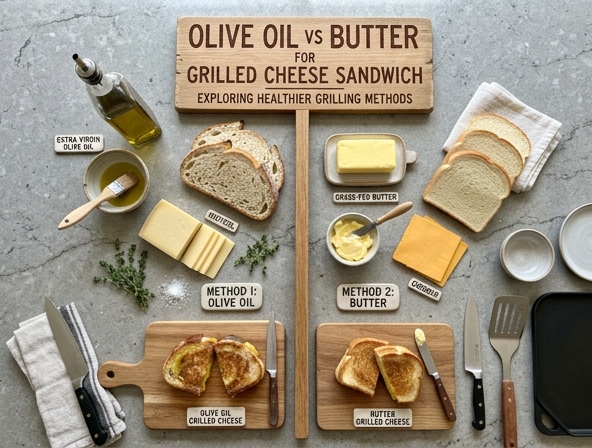
| Comparison Factor | Butter | Olive Oil |
|---|---|---|
| Health Profile | Traditional; higher saturated fat content. | Heart-healthy; rich in monounsaturated fats. |
| Flavor Outcome | Rich, classic flavor profile. | Lighter, distinct taste. |
| Texture | Standard grilled finish. | Provides superior crispness. |
| Cooking Requirements | Stable under standard heat. | Requires lower heat to prevent smoking. |
| Culinary Trend | The traditional standard. | Increasingly favored by professionals for results and health. |
The Great Grilled Cheese Debate: Olive Oil vs. Butter for a Healthier Griddle
The grilled cheese sandwich is perhaps the ultimate comfort food-a nostalgic masterpiece of melted cheddar, toasted bread, and the satisfying crunch of a golden-brown crust. For decades, the undisputed champion of this culinary staple has been butter. It is the culinary equivalent of a warm hug, providing a rich, creamy flavor that perfectly complements the salty tang of melted cheese. However, as modern dietary consciousness evolves, home cooks are increasingly looking for ways to balance indulgence with heart-healthy choices. This brings us to the great debate: can olive oil compete with butter in the pursuit of the perfect grilled cheese, and is it truly a healthier alternative?
The Case for Butter: Tradition and Flavor
To understand why butter remains the gold standard, we must look at the science of flavor. Butter is composed of water, milk solids, and fat. When butter hits a hot skillet, the water evaporates, and the milk solids begin to brown-a process known as the Maillard reaction. This reaction creates the distinct, nutty, toasted aroma that we associate with a "proper" grilled cheese.
From a culinary standpoint, butter offers a luxurious mouthfeel that is difficult to replicate. Its low melting point allows it to spread easily across the bread, ensuring that every corner of the crust browns evenly. However, there is a technical drawback: butter has a relatively low smoking point (around 302°F or 150°C). If your skillet is too hot, those precious milk solids can turn bitter and black, potentially ruining the delicate profile of the sandwich.
The Case for Olive Oil: The Mediterranean Upgrade
Olive oil, particularly extra virgin olive oil (EVOO), introduces a completely different philosophy to the griddle. For those focused on cardiovascular health, swapping butter for olive oil is a significant step forward. Olive oil is rich in monounsaturated fats-specifically oleic acid-which have been linked to reduced inflammation and improved cholesterol levels. Unlike butter, which is high in saturated fats, olive oil is a staple of the Mediterranean diet, widely regarded as one of the healthiest eating patterns in the world.
Beyond the health metrics, olive oil offers a distinct textural advantage. Because it is a pure fat, it provides a "shattering" crispness to the bread that is lighter than the heavy, buttery soak you get with dairy. Many chefs prefer the way olive oil interacts with sourdough or artisan breads, as it highlights the grain's natural acidity rather than masking it with the heavy richness of cream.
Smoking Points and Performance
When grilling a sandwich, heat management is crucial. If you are a fan of a slow-cooked, deeply melted sandwich, butter is often more forgiving because its flavor is so robust. However, if you prefer your sandwich with a high-heat sear, olive oil is the superior choice. Extra virgin olive oil generally has a smoke point between 375°F and 405°F, making it far more stable than butter under high heat. This means you can achieve a dark, golden-brown exterior without the risk of burnt milk solids.
One caveat: the flavor of the oil matters. If you use a very peppery, high-quality finishing oil, the flavor might overpower the cheese. For a grilled cheese, look for a "mild" or "delicate" olive oil to ensure the savory notes of the cheese remain the star of the show.
The "Mayo" Middle Ground: A Culinary Secret
While the debate usually centers on butter vs. olive oil, no discussion of grilled cheese is complete without mentioning the "mayonnaise trick." Many restaurant chefs have swapped fats entirely in favor of mayonnaise. Because mayonnaise is essentially an emulsion of oil and egg, it offers the high smoke point of oil with the creamy consistency of butter. It browns incredibly well and results in a tangy, crispy crust that many find superior to either of the two traditional options. It is a fantastic compromise for those who want a health-conscious fat source while maintaining that classic "diner-style" crust.
Health Considerations: Making an Informed Choice
When deciding between butter and olive oil, consider your overall dietary goals. If you are monitoring your saturated fat intake, olive oil is the clear winner. However, portion control remains key regardless of the fat used. One tablespoon of butter contains approximately 100 calories and 7 grams of saturated fat, whereas one tablespoon of olive oil contains roughly 120 calories but is primarily made up of heart-healthy monounsaturated fats.
For the healthiest sandwich possible, pair your olive oil-grilled bread with nutrient-dense additions. Consider adding fresh spinach, sliced tomatoes, or even thinly sliced apples to your cheese. Choosing a whole-grain bread instead of white bread will add fiber, making the meal more satiating and better for your blood sugar levels.
Conclusion: Which Should You Choose?
Ultimately, the choice between olive oil and butter comes down to your personal palate and your nutritional priorities.
- Choose Butter if: You are craving the nostalgic, comforting flavor of a classic sandwich and are cooking at a medium-low temperature to prevent burning.
- Choose Olive Oil if: You prefer a lighter, crunchier texture, are cooking at a higher heat, or are actively looking to reduce your saturated fat intake for heart health.
- The Expert Tip: Don't be afraid to experiment! Using a 50/50 blend of butter and olive oil provides the best of both worlds: the flavor profile of the butter with the higher smoke point and crispness of the oil.
A grilled cheese sandwich shouldn't be a source of stress-it should be a source of joy. Whether you reach for the butter dish or the olive oil cruet, the most important ingredients are the quality of your cheese and the patience you bring to the griddle. By understanding the properties of your fats, you can elevate this simple meal into a gourmet, health-conscious experience that satisfies both the body and the soul.
Disclaimer:
The information provided on Eateryn is for general educational and informational purposes only and is not intended as medical, nutritional, or healthcare advice. It should not be used to diagnose, treat, cure, or prevent any disease or medical condition.
Always consult a qualified physician, registered dietitian, or other certified healthcare professional before making changes to your diet, exercise routine, or lifestyle, or regarding any medical questions or concerns you may have. Never disregard or delay seeking professional medical advice because of something you have read on this website.