
Nutmeg vs Mustard Powder for Macaroni and Cheese - Essential Secret Ingredient Debate
Achieving professional-grade macaroni and cheese often feels elusive. While many cooks master the basic roux of butter and milk, the true distinction lies in secondary seasonings. Choosing between nutmeg and mustard powder fundamentally alters the sauce's character; nutmeg imparts a sophisticated, earthy floral note, whereas mustard powder provides a sharp, piquant acidity. While preference is subjective, each ingredient uniquely shapes the dish's complexity. The following analysis explores how these additions influence your final palate.
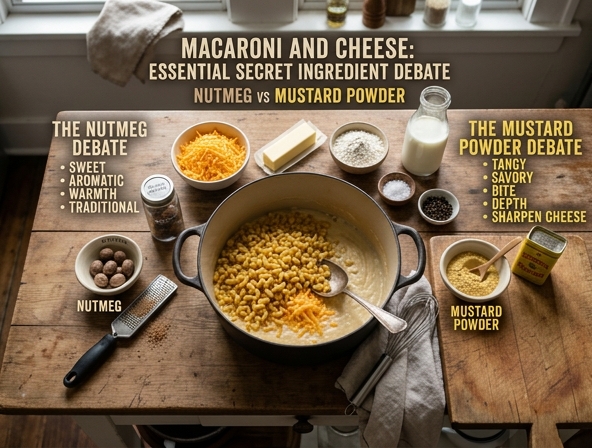
| Ingredient | Flavor Profile | Impact on Mac & Cheese |
|---|---|---|
| Nutmeg | Earthy, floral, sophisticated | Adds an elegant, warm complexity to the cheese sauce. |
| Mustard Powder | Sharp, piquant, acidic | Provides a tangy bite that cuts through the richness of the cheese. |
| Both ingredients are essential for elevating the dish; the final choice depends on the desired flavor character. | ||
The Great Macaroni Debate: Nutmeg vs. Mustard Powder
Macaroni and cheese is more than just a dish; it is a cultural institution. From the humble, boxed variety that defined our childhoods to the sophisticated, artisanal versions featuring aged Gruyère and truffle oil, the fundamental architecture remains the same: a velvety cheese sauce cloaking tender pasta. Yet, within the culinary world, a quiet, long-standing debate persists. Behind every great mac and cheese lies a “secret ingredient”-a microscopic addition designed to elevate the dish from merely cheesy to transcendent. The two heavyweights in this battle? Nutmeg and mustard powder.
The Foundation: Why We Need a Secret Ingredient
To understand the debate, one must first understand the physics of a cheese sauce. Whether you are using a classic French béchamel base-roux, milk, and cheese-or a modern emulsified sauce using sodium citrate, the goal is richness. However, fat and dairy can often become one-dimensional. Without a bridge to connect the sharp notes of the cheese to the creamy starch of the pasta, the palate quickly experiences “flavor fatigue.” You need something that cuts through the heaviness, something that adds a top note of brightness or a bass note of warmth. Enter the aromatics.
Mustard Powder: The Zesty Emulsifier
For many home cooks and professional chefs, dry mustard powder is the non-negotiable king of mac and cheese. But its role is not merely decorative; it is functional.
Mustard powder provides a sharp, tangy, and slightly floral heat that acts as a counterpoint to the high-fat content of cheddar or fontina. Because cheese is essentially a collection of fats and proteins, it can feel “heavy” on the tongue. The compounds in mustard-specifically allyl isothiocyanate-stimulate the olfactory senses in a way that suggests “sharpness,” tricking the brain into perceiving the cheese as more pungent and flavorful than it might actually be.
Beyond flavor, there is a science to the choice. Mustard acts as an emulsifier. It helps stabilize the oil-in-water emulsion that occurs when melting cheese into a milk-based sauce. By adding a pinch of mustard powder, you are less likely to encounter a “broken” sauce where the butter separates from the cheese. It is a workhorse ingredient that respects the integrity of the dairy while ensuring a smooth, cohesive bite.
Nutmeg: The Aromatic Alchemist
On the other side of the aisle, proponents of nutmeg argue that mac and cheese is, at its heart, a derivative of the classic French Mornay sauce. In classical culinary technique, a béchamel sauce is traditionally seasoned with a mere whisper of fresh nutmeg. This practice has been imported into the world of macaroni and cheese with great success.
Nutmeg is an aromatic spice, rich in volatile oils that provide a warm, slightly sweet, and earthy depth. Unlike the sharpness of mustard, nutmeg leans into the comfort of the dish. It creates a bridge between the creaminess of the milk and the funk of the cheese. When you use an aged, nutty cheese like Comté or an extra-sharp white cheddar, nutmeg accentuates those nuances, rounding out the flavor profile rather than cutting through it.
The danger, of course, lies in over-application. Nutmeg is potent. In a sauce, it should be an “invisible” flavor-a hint that leaves the eater wondering why the dish tastes so complex and “expensive,” rather than a detectable spice. When used correctly, it adds a sophisticated, velvet-like quality to the finish.
The Comparative Clash: Which One Wins?
Choosing between the two often comes down to the specific cheese blend you are using. If your goal is a classic, punchy “diner-style” mac and cheese-perhaps using a vibrant, orange cheddar-mustard powder is your best friend. It reinforces the tanginess of the orange cheddar and provides that nostalgic, savory kick that makes you want to reach for a second helping. It is the ingredient of the people; it is accessible, reliable, and bold.
Conversely, if you are crafting a high-end, elegant mac and cheese-perhaps with Gruyère, Emmental, or a mix of Alpine cheeses-nutmeg is the superior choice. The spice profile of these cheeses is already complex, and the warmth of the nutmeg highlights the natural sweetness in the dairy. In these instances, mustard might be too aggressive, masking the delicate notes of the artisanal cheeses.
Is There a Middle Ground?
The beauty of cooking is that rules are meant to be tested. Many modern chefs have begun to experiment with using both-in carefully measured, microscopic quantities. A dash of mustard powder for the structural integrity and sharp top note, and a tiny dusting of freshly grated nutmeg for the aromatic finish, creates a three-dimensional experience. The mustard hits the front of the tongue, while the nutmeg lingers at the back of the palate.
However, one must be cautious. The synergy of spices can quickly become chaotic if the balance is off. The secret to both is subtlety. If a guest can identify the exact spice you used, you have likely used too much. The goal is a seamless fusion where the cheese remains the protagonist, and the spice serves only to heighten the narrative.
Final Thoughts: The Importance of Personal Palate
The "Nutmeg vs. Mustard" debate is a reminder that cooking is a deeply personal endeavor. There is no right answer, only the one that best suits your vision of comfort. Whether you prefer the zesty, emulsifying bite of dry mustard or the warm, sophisticated whispers of nutmeg, these ingredients prove that a great macaroni and cheese is defined by its details.
So, the next time you find yourself at the stove, sauce bubbling and cheese ready to melt, take a moment to consider the philosophy of your seasoning. Do you want to challenge the palate or soothe the soul? The spice cabinet holds the answer, but the choice is yours. Whatever you decide, remember the golden rule: start small, stir well, and taste often. Your perfect mac and cheese is waiting to be perfected.
Disclaimer:
The information provided on Eateryn is for general educational and informational purposes only and is not intended as medical, nutritional, or healthcare advice. It should not be used to diagnose, treat, cure, or prevent any disease or medical condition.
Always consult a qualified physician, registered dietitian, or other certified healthcare professional before making changes to your diet, exercise routine, or lifestyle, or regarding any medical questions or concerns you may have. Never disregard or delay seeking professional medical advice because of something you have read on this website.