
New England vs Manhattan for Clam Chowder - Analyzing Regional Flavor Differences
Many diners struggle to distinguish between the complex flavor profiles of coastal chowders. While common expectations often categorize both as generic soups, this view ignores vital regional integrity. Understanding these differences grants enthusiasts the ability to appreciate authentic craftsmanship. Stipulation: Preference is subjective, reflecting local ingredient availability-from the dairy-rich Boston tradition to the acidic, tomato-forward Manhattan style. This analysis explores the regional histories and structural flavor foundations defining these two iconic seafood staples.
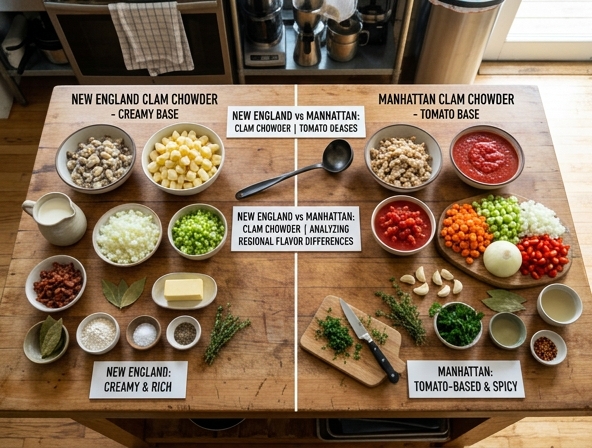
| Feature | New England Clam Chowder | Manhattan Clam Chowder |
|---|---|---|
| Base Ingredient | Cream or milk-based | Tomato-based |
| Flavor Profile | Rich, hearty, and creamy | Acidic, bright, and savory |
| Regional Tradition | Boston/New England coastal roots | New York/Urban coastal influence |
| Core Philosophy | Focuses on dairy-rich, heavy comfort | Focuses on tangy, tomato-forward zest |
| Note: Preference between these styles is largely subjective and rooted in local ingredient availability and historical culinary traditions. | ||
The Great Chowder Schism: A Deep Dive into New England vs. Manhattan
In the culinary world, few debates are as divisive, deeply rooted, and stubbornly persistent as the one concerning clam chowder. It is a rivalry that pits tradition against innovation, comfort against acidity, and the historic shores of Massachusetts against the bustling, melting-pot energy of New York City. At its core, the debate over "Red versus White" is more than just a preference for soup ingredients; it is a manifestation of regional identity, climate, and historical influence.
The New England Standard: Creamy, Decadent, and Stoic
To understand the New England Clam Chowder, one must understand the New England coastline. It is a dish born of long, harsh winters and the necessity of high-calorie, warming sustenance. The traditional recipe, which has remained largely unchanged for centuries, is a masterclass in simplicity and the power of fat.
At its heart, the New England style is built on a foundation of salt pork or bacon, which provides a smoky, savory baseline. The base is then thickened-often with flour-and bolstered by a mixture of heavy cream or milk, cubed potatoes, onions, and the star of the show: the hard-shell quahog. The resulting texture is velvety and thick, coating the palate with a richness that is undeniably comforting. It is a dish that treats the clam as a delicate companion to the cream, rather than the singular, sharp highlight of the bowl.
Critics of the New England style argue that it can be heavy, sometimes bordering on gluey if not prepared with a light hand. However, proponents argue that when properly executed, it is the ultimate expression of maritime hearth cooking-a dish that captures the essence of the North Atlantic, where the cooling temperature demands something soul-satisfyingly dense.
The Manhattan Maverick: Tomato, Acid, and Mediterranean Flair
Across the historical divide lies the Manhattan Clam Chowder-a dish that, for many traditionalists, is considered a heresy. Introduced to New York City by Portuguese immigrants in the late 19th century, the Manhattan style reflects a different regional philosophy. By replacing the dairy with a tomato-based broth, the soup transforms from a heavy, winter-leaning indulgence into something bright, light, and decidedly more complex.
The Manhattan recipe incorporates a mirepoix of celery, carrots, and onions, sautéed and simmered in a tomato-rich broth. The addition of fresh herbs-often thyme or parsley-and the sharp acidity of the tomatoes cut through the inherent brine of the clams, creating a palate-cleansing effect rather than a heavy, cloaking sensation. Some iterations even include peppers or a dash of hot sauce, leaning into the culinary diversity that has always defined New York.
The "Red" version is frequently dismissed by New England purists as "vegetable soup with clams," but this perspective overlooks the intentionality of the dish. It is a soup of clarity; it allows the natural, oceanic sweetness of the clam to shine through without the interference of butterfat, making it arguably more "honest" in its representation of seafood.
The Historical Friction: Legislation and Culinary Pride
The friction between these two camps reached an official fever pitch in 1939. A bill was actually introduced in the Maine state legislature that would have made it illegal to add tomatoes to clam chowder. While the bill failed, the sentiment persists to this day. To a New Englander, the intrusion of tomatoes into a chowder is a subversion of cultural history. To a New Yorker or a supporter of the Manhattan style, the insistence on heavy cream is an archaic refusal to embrace the brightness that a tomato base provides.
This "war" is essentially a clash of two different culinary ideologies. The New England approach is about the integration of flavors-where the fat, the starch, and the seafood meld into one unified, creamy experience. The Manhattan approach is about contrast-where the acidity of the tomato, the crunch of the vegetables, and the salinity of the clam stand out in relief against one another.
Comparative Flavor Profiles: Why It Matters
When analyzing these two styles, one should consider the "intended use" of the soup.
- New England: Best served on a cold, grey afternoon. It is designed to sustain the body and provide a sense of satiety. It pairs best with hard-shell oyster crackers and perhaps a crisp, dry white wine or an ale that can cut through the fat.
- Manhattan: Best served as an appetizer or a lighter meal. It is designed to stimulate the appetite rather than suppress it. The tomato base makes it a more versatile companion for a wide range of pairings, including sourdough bread or even a light salad.
The Verdict: A Matter of Geography and Taste
Ultimately, the "better" chowder is a subjective determination driven by context. If you value the tradition of the Atlantic coast and the historical development of colonial-era survival food, New England chowder remains the gold standard. It is the food of the lighthouse and the fisherman's tavern. If, however, you value the evolution of food and the incorporation of international influences into a classic base, Manhattan chowder stands as a testament to the transformative power of urban adaptation.
As the culinary world continues to blur regional lines-with chefs adding bacon to Manhattan chowder or incorporating fresh, bright aromatics into New England versions-the rigid divide is beginning to soften. Yet, the question remains: When you reach for that bowl, are you looking for the embrace of a warm, creamy blanket, or the sharp, vibrant sting of the sea? In that question, the answer to your personal preference lies.
Disclaimer:
The information provided on Eateryn is for general educational and informational purposes only and is not intended as medical, nutritional, or healthcare advice. It should not be used to diagnose, treat, cure, or prevent any disease or medical condition.
Always consult a qualified physician, registered dietitian, or other certified healthcare professional before making changes to your diet, exercise routine, or lifestyle, or regarding any medical questions or concerns you may have. Never disregard or delay seeking professional medical advice because of something you have read on this website.