
Mustard Binder vs Oil Binder for Barbecue Ribs - Ensuring Maximum Rub Adhesion
Many pitmasters struggle with dry rubs sliding off ribs, leaving bare spots that compromise flavor. While surface moisture is standard, achieving superior bark requires a reliable bonding agent. Binders provide the necessary tension to anchor spices, effectively transforming raw surfaces into seasoned crusts. Note that binders function primarily as seasoning vehicles rather than mere glue. By evaluating options like tangy mustard against neutral oils, you optimize texture. We will now compare these methods for your next smoke.
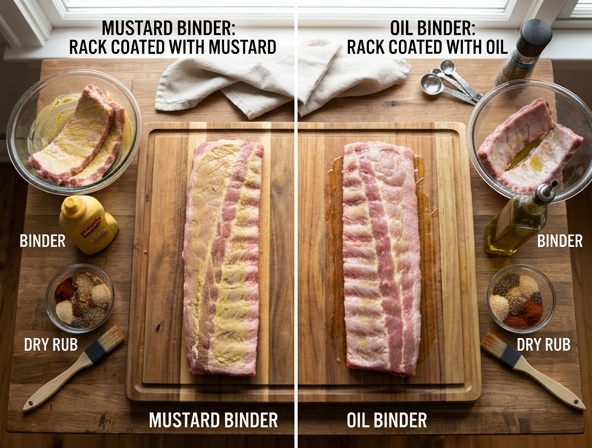
| Feature | Mustard Binder | Oil Binder |
|---|---|---|
| Flavor Impact | Adds a subtle, tangy profile. | Neutral; does not alter the rub's flavor. |
| Primary Function | Anchors spices and adds acidity. | Acts as a purely adhesive vehicle. |
| Resulting Bark | Excellent adhesion for crust development. | Consistent, reliable bonding for spices. |
| Best Used When | You want to complement the flavor profile. | You want to highlight the rub's original taste. |
Mustard Binder vs. Oil Binder for Barbecue Ribs: Ensuring Maximum Rub Adhesion
For any pitmaster, the process of preparing a rack of ribs is a ritual. From trimming the silverskin to meticulously hand-crafting a spice rub, every step is designed to culminate in that perfect "bite-through" tenderness and a savory, complex crust known as bark. Yet, between the trimming and the smoking, there lies a frequently debated tactical decision: the binder.
A binder is a liquid substance applied to the surface of the meat before the dry rub. Its primary purpose is simple yet vital: to act as an adhesive, ensuring your carefully balanced spices cling to the meat during the long smoking process rather than sloughing off onto your smoker grates. But with two dominant schools of thought-Mustard vs. Oil-which one truly reigns supreme?
The Role of the Binder: Beyond Simple Adhesion
Before diving into the specific options, it is important to understand what a binder is actually doing. When you apply a dry rub to raw, damp meat, the natural moisture of the pork begins to dissolve the salt and sugar in your spice blend. This creates a natural "slurry" on the surface. A binder augments this process by providing a more viscous, consistent base that holds the particles of rub in place until the heat of the smoker can melt the sugars and set the bark.
While some argue that a binder is unnecessary, those who compete on the professional BBQ circuit almost universally employ one. It is the secret to building a thick, flavorful, and uniform crust that defines competition-grade ribs.
The Case for the Mustard Binder
Mustard is perhaps the most iconic binder in the barbecue world. Typically, a thin layer of basic yellow mustard is brushed across the surface of the ribs. Contrary to what you might fear, your ribs will not taste like a hot dog when they come out of the smoker.
Why Mustard Works:
- Tackiness: Mustard has the perfect viscosity. It is thick enough to hold a heavy layer of spice but thin enough to spread easily without creating "clumps."
- Acidity: The vinegar content in mustard helps penetrate the surface of the meat slightly, which some pitmasters argue helps tenderize the outer layer.
- Flavor Neutrality: As the heat in the smoker builds, the vinegar evaporates and the sharp "mustard" flavor cooks out entirely, leaving behind a blank canvas that highlights your rub's ingredients.
- Color: The turmeric in yellow mustard can contribute to a deeper, richer mahogany color in the final bark, which is aesthetically pleasing.
The Case for the Oil Binder
In recent years, more pitmasters have turned to neutral-flavored oils-such as avocado oil, grapeseed oil, or high-quality vegetable oil-as their binder of choice. The logic here is centered on purity and heat conductivity.
Why Oil Works:
- Neutrality: If you have invested in a high-end, artisan rub with delicate notes of maple, citrus, or specific herbs, you may want zero interference from other ingredients. Oil is completely flavor-neutral.
- Heat Transfer: Oil is an excellent conductor of heat. By coating the ribs in a light layer of oil, you are essentially "frying" the surface of the spices as they hit the heat of the smoker, which can lead to a more pronounced, crispy bark.
- Moisture Sealing: Oil creates a hydrophobic barrier on the meat. While it doesn't "lock in" juices in the way urban myths suggest, it does prevent the dry air of the smoker from immediately desiccating the exterior of the meat.
Comparison: Which One Should You Choose?
Choosing between the two often comes down to your personal philosophy regarding bark development and your equipment setup.
If you are cooking on a traditional offset smoker, the mustard binder is often the better choice. The slightly acidic base helps create a "sticky" surface that grabs onto spices, which is useful when working with wood-fired smoke that can sometimes dry out the surface of the meat before the rub fully sets.
If you are working with a pellet grill or a gravity-fed charcoal smoker, which tend to have a slightly different airflow and humidity profile, you might find that a light layer of oil works better. Oil is also the preferred choice if you are using a very heavy, coarse-textured rub, as it allows the grains to distribute more evenly without clumping in the mustard.
The "Alternative" Binders
While mustard and oil are the titans of the BBQ world, they aren't the only options. Many pitmasters experiment with alternatives to serve specific goals:
- Honey or Agave: These are used when a pitmaster wants to boost the caramelization of the bark. However, be cautious: sugars burn quickly. Use these only if you are confident in your heat management.
- Hot Sauce: A common variation of the mustard binder, hot sauce adds a subtle depth of flavor without overpowering the meat.
- Water: Some purists prefer using a light mist of water. It ensures the rub adheres without adding any flavor or fat, but it lacks the "sticking power" of a fat or emulsion-based binder.
Final Verdict: Consistency is King
Ultimately, the difference between mustard and oil is subtle. Most judges and dinner guests would struggle to tell the difference in a blind taste test. The "best" binder is the one that gives you the most consistent results.
If you are just starting out, start with the yellow mustard. It is affordable, highly visible (so you can see where you have applied it), and provides a foolproof foundation for your rub. Once you have mastered your rub recipe and smoker control, experiment with a neutral oil to see if you prefer the texture of the bark it produces.
Remember: the binder is just the primer. The real magic happens in the quality of the meat, the balance of your spices, and the patience you exercise while waiting for the smoke to do its work. Keep your ribs well-coated, stay steady with your temperatures, and you will be well on your way to a rack of ribs that defines perfection.
Disclaimer:
The information provided on Eateryn is for general educational and informational purposes only and is not intended as medical, nutritional, or healthcare advice. It should not be used to diagnose, treat, cure, or prevent any disease or medical condition.
Always consult a qualified physician, registered dietitian, or other certified healthcare professional before making changes to your diet, exercise routine, or lifestyle, or regarding any medical questions or concerns you may have. Never disregard or delay seeking professional medical advice because of something you have read on this website.