
Mushrooms vs No Mushrooms for Philly Cheesesteak - Evaluating The Earthy Add-On
Deciding between a classic cheesesteak and the earthy variant with mushrooms polarizes many aficionados. While traditionalists favor the standard meat-and-cheese profile, iconic shops like Dalessandro's acknowledge the popularity of the fungi addition. Adding caramelized mushrooms provides deep, savory complexity, provided they are sauteed properly to prevent excess moisture. Understanding this balance is crucial for a superior sandwich. We will now evaluate the impact of this controversial ingredient on flavor, texture, and overall culinary authenticity.
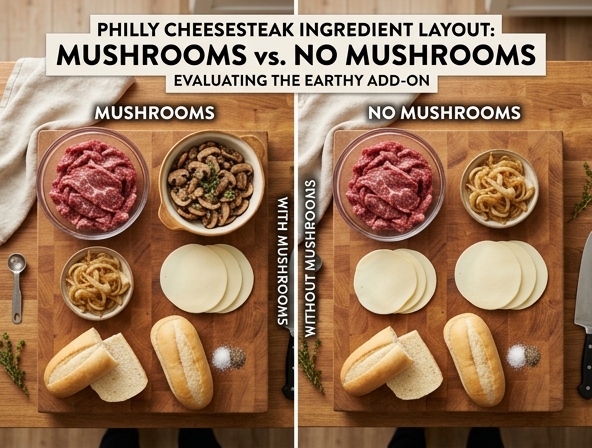
| Aspect | Traditional Cheesesteak | Mushroom Variant |
|---|---|---|
| Flavor Profile | Classic meat-and-cheese focus | Deep, savory, and earthy complexity |
| Texture Consideration | Standard sandwich texture | Requires proper sautéing to avoid excess moisture |
| Culinary Stance | Preferred by traditionalists | Popular add-on recognized by iconic shops |
| Key Requirement | None (Standard preparation) | Careful moisture control is essential for quality |
The Great Debate: To Mushroom or Not to Mushroom in a Philly Cheesesteak?
In the culinary world, few sandwiches command the cult-like devotion and regional fervor of the Philadelphia Cheesesteak. It is a masterpiece of efficiency: thinly sliced ribeye, melted cheese, and a crusty long roll. Yet, despite its simplicity, the cheesesteak is a lightning rod for debate. While arguments over the type of cheese-American, Provolone, or the controversial "Whiz"-are well-documented, a more nuanced battle is quietly fought on griddles across the city: the inclusion of mushrooms.
Is the addition of mushrooms a sophisticated elevation of the classic, or is it an affront to the integrity of the sandwich? To understand the earthy add-on, we must evaluate both the purist's perspective and the culinary potential of the mushroom.
The Purist's Creed: The Steak-Centric Philosophy
To the traditionalist, the Philly Cheesesteak is a sacred triad: beef, cheese, and roll. Many argue that the addition of mushrooms-and indeed, even peppers-distracts from the primary objective of the sandwich, which is to showcase the quality of the beef and the richness of the cheese. Purists argue that mushrooms introduce too much moisture, potentially turning the roll into a soggy mess before it even reaches the customer's hands.
There is also the matter of flavor masking. A high-quality ribeye has a distinct, beefy sweetness that is perfectly complemented by the tang of melted cheese and the sharpness of sautéed onions. The purist posits that adding mushrooms, which possess a heavy, earthy profile, muddies these flavors. When you bite into a cheesesteak, you should taste the char of the meat and the creaminess of the dairy, not the forest floor.
The Case for Umami: Why Mushrooms Work
However, from a culinary standpoint, the mushroom is a powerhouse of flavor. Mushrooms are packed with glutamates, the same compounds responsible for the savory "umami" sensation. In a sandwich composed of fat and protein, mushrooms act as a bridge, grounding the high-octane fattiness of the ribeye and the processed saltiness of the cheese.
Proponents of the "mushroom-steak" argue that the earthy, meaty texture of a well-sautéed mushroom mimics the texture of the beef itself. When cooked correctly-browned rather than steamed-mushrooms take on a robust, nutty quality that adds complexity. If the goal of the cheesesteak is to be a hearty, satisfying meal, then the addition of mushrooms is simply an extension of that goal. They don't hide the beef; they amplify the "meaty" experience.
The Technical Challenge: Moisture Management
The anti-mushroom sentiment is often rooted in experience. We have all encountered the "sad cheesesteak"-a sandwich where the mushrooms were tossed onto the griddle too late, resulting in watery, grey, rubbery bits that bleed liquid into the roll. This is not a failure of the mushroom as an ingredient; it is a failure of execution.
For mushrooms to earn their place on a proper cheesesteak, they must be treated with respect. This means:
- Proper Searing: Mushrooms should be cooked in a hot pan or a dedicated section of the griddle until they have shed their moisture and achieved a deep, golden-brown crust.
- Seasoning: Mushrooms need salt and a hint of fat (butter or oil) to bring out their natural savory notes.
- Timing: They should be folded into the meat toward the very end, just as the cheese is added, to ensure they remain integrated without losing their structural integrity.
The Evolution of the Cheesesteak
Philadelphia's food scene has never been static. While the history of the cheesesteak is rooted in working-class necessity, the modern Philly food landscape is influenced by a diverse array of global flavors. If we accept onions on our cheesesteaks-which are technically an addition to the original 1930s-era recipes-where do we draw the line?
For many, the cheesesteak is a canvas. Regional variations have already paved the way for "pizza steaks" (topped with tomato sauce) and "pepper steaks." In this light, the mushroom-add-on is simply another variation for the adventurous eater. It is less about "authentic versus fake" and more about "preference versus tradition."
The Verdict: A Matter of Personal Taste
So, does the mushroom belong? If you are a devotee of the 1950s-style street-corner classic, the answer is likely no. If you appreciate the synergy of flavors and are looking to add an extra layer of savory depth to your lunch, then yes-the mushroom is a welcome guest.
Ultimately, the beauty of the Philly Cheesesteak lies in its accessibility. Whether you load it with fried onions, hot cherry peppers, mushrooms, or keep it strictly to the "meat and cheese" baseline, the sandwich remains a culinary icon. The mushroom may be a polarizing add-on, but it has secured its place in the pantheon of cheesesteak extras. The next time you find yourself standing at a griddle, perhaps take the risk. You might just find that a little bit of earthiness is exactly what your ribeye was missing.
At the end of the day, the best cheesesteak is the one that tastes best to you. Whether that includes mushrooms or remains a strictly carnivorous affair is entirely your call-just make sure they're browned properly.
Disclaimer:
The information provided on Eateryn is for general educational and informational purposes only and is not intended as medical, nutritional, or healthcare advice. It should not be used to diagnose, treat, cure, or prevent any disease or medical condition.
Always consult a qualified physician, registered dietitian, or other certified healthcare professional before making changes to your diet, exercise routine, or lifestyle, or regarding any medical questions or concerns you may have. Never disregard or delay seeking professional medical advice because of something you have read on this website.