
Muffin Mix vs Scratch Made for Pancakes - Convenience Versus Quality
Balancing Morning Efficiency
Navigating the compromise between morning efficiency and culinary quality is a common hurdle. While pre-packaged mixes offer speed, many home cooks strive for the depth found in scratch-made recipes. Professional kitchens often prioritize ingredients like fresh buttermilk and high-quality flour to elevate texture, whereas commercial mixes prioritize shelf-stability. This analysis examines the technical trade-offs between convenience and flavor profiles. We will explore key considerations, from chemical leavening impacts to ingredient ratios, helping you refine your breakfast strategy.
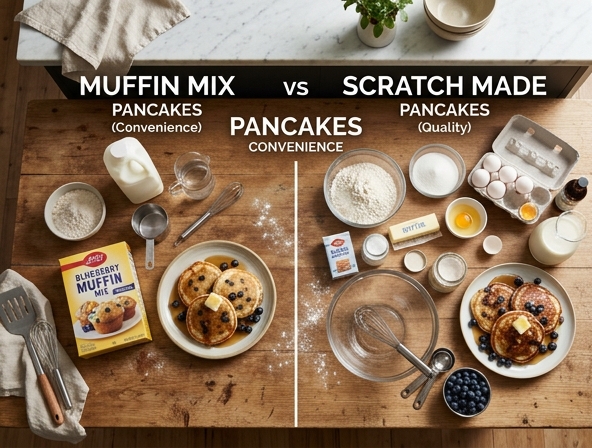
| Feature | Commercial Mixes | Scratch-Made |
|---|---|---|
| Efficiency | High: Prioritizes speed and convenience for mornings. | Low: Requires time, measuring, and preparation. |
| Ingredients | Shelf-stable focus; may include stabilizers and preservatives. | Fresh, high-quality ingredients like buttermilk and premium flour. |
| Flavor & Texture | Standardized, consistent results. | Superior depth of flavor and elevated texture. |
| Technical Control | Limited: Leavening and ratios are pre-determined. | High: Allows for precise manipulation of leavening and ingredient ratios. |
| Goal | Ease of preparation. | Culinary quality and excellence. |
The Great Breakfast Debate: Muffin Mix Hacks vs. The Scratch-Made Standard
Every weekend, thousands of households face the same familiar dilemma: how to create a perfect, golden-brown pancake breakfast without spending the entire morning tethered to the stove. The debate usually settles into two distinct camps: those who swear by the "shortcut" efficiency of a boxed muffin mix (a surprisingly popular culinary hack) and the traditionalists who argue that nothing beats the alchemy of flour, leavening, and love found in a scratch-made batter.
The Case for Convenience: The Muffin Mix Method
For the busy parent or the tired professional, the idea of hauling out flour, measuring baking powder, and searching for the salt shaker at 7:00 AM can feel like a bridge too far. This is where the "muffin mix pancake" hack gained its reputation. Using a pre-packaged muffin mix-typically blueberry, apple cinnamon, or corn-as a base for pancakes offers an immediate flavor profile that would otherwise require multiple steps to replicate.
Speed and Predictability: The primary advantage is, undeniably, speed. Most muffin mixes require only the addition of water or milk and perhaps an egg. The leavening agents are perfectly measured, meaning you are guaranteed a pancake that rises reliably every single time. There is no guesswork involved regarding the pH balance of your baking powder or the age of your flour.
Flavor Profiles Out of the Box: When you use a blueberry muffin mix for your pancakes, you aren't just making a flapjack; you're making a flavor-infused masterpiece. The sugar content in muffin mixes is typically higher than in standard pancake batter, which leads to a beautifully caramelized, crispy edge that many diners crave. It turns a standard breakfast into a dessert-like experience with minimal effort.
The Case for Quality: The Scratch-Made Mastery
On the other side of the kitchen island sits the scratch-made enthusiast. For them, the process isn't just about the end product-it is about control. When you build a pancake from scratch, you are the master of the chemistry. You decide whether the pancake should be thin and crepe-like or thick and souffle-like. You control the sweetness, the fat content, and, perhaps most importantly, the quality of the ingredients.
Ingredient Integrity: One of the strongest arguments for scratch-made is the avoidance of additives. Muffin mixes often contain preservatives, stabilizers, and artificial flavorings designed to give the mix a long shelf life. By contrast, a scratch-made recipe uses fresh flour, real butter or high-quality oil, farm-fresh eggs, and wholesome milk. You are not consuming ingredients you can't pronounce, and you have total control over the sodium and sugar levels, which is a major factor for those monitoring their health.
Texture and Lift: There is a specific "bouncy" quality to a fresh scratch-made pancake that pre-mixed flours struggle to replicate. Because you are mixing the batter right before cooking, the leavening agents-the baking powder and baking soda-are at peak activity. This creates air bubbles that expand instantly in the pan, resulting in a light, airy crumb that feels almost cloud-like. Muffin mixes, designed to rise slowly in a deep muffin tin, often struggle to achieve this same level of fluffy interior when flattened into a pancake.
The Showdown: Comparing the Metrics
To truly understand the divide, we have to look at the metrics that matter most to the home cook: time, texture, and taste.
1. Texture
The scratch-made pancake wins on versatility. By adjusting the ratio of buttermilk to flour, you can swing between a dense, hearty farmhouse pancake and a delicate, light-as-air version. Muffin mix pancakes, conversely, tend to be uniformly dense. Because they are designed to hold the weight of fruit or streusel toppings, the flour blend in a muffin mix is typically heavier. If you prefer a pancake that feels substantial and "chewy," the muffin mix might actually be your preferred choice.
2. Flavor
Muffin mix has a distinct advantage when it comes to "shortcut" flavors. Getting a consistent blueberry-to-batter ratio in a scratch-made recipe requires practice-often resulting in soggy berries or uneven distribution. Muffin mixes are chemically balanced to ensure that the inclusions (like berries or nuts) suspend perfectly throughout the batter. If you want a complex, spiced, or fruit-filled pancake with zero effort, the box mix is a formidable opponent.
3. The Health Quotient
If you are looking at nutritional density, scratch-made is the undisputed winner. You can substitute all-purpose flour for whole wheat or oat flour, use almond milk or Greek yogurt for protein, and reduce the sugar significantly. Muffin mixes are essentially "cake in disguise," often packing as much sugar as a donut. For a frequent breakfast habit, the scratch-made route is far more sustainable for your long-term health.
Finding the Middle Ground: The "DIY Dry Mix"
Perhaps the best solution for the modern home cook is to borrow from both worlds. You don't have to choose between the chaos of measuring ten ingredients and the questionable chemicals of a store-bought mix. Instead, create your own "homemade dry mix."
By batch-mixing your own flour, baking powder, salt, and sugar in a large mason jar, you essentially create your own "muffin mix" without the additives. When Saturday morning rolls around, you simply scoop two cups of your custom dry mix into a bowl, add your wet ingredients, and you're cooking in under three minutes. This approach provides the convenience of a store-bought mix while maintaining the absolute quality of scratch-made ingredients.
The Final Verdict
The choice between muffin mix and scratch-made pancakes ultimately depends on your goal for the morning. If you are feeding a group of hungry children who prioritize sweet, uniform flavors and you are short on time, the muffin mix is a culinary tool that shouldn't be shamed; it gets the job done and creates a memorable, indulgent breakfast.
However, if you view breakfast as a ritual-a moment to connect with ingredients and master a technique-then scratch-made is the only path forward. The satisfaction of folding fresh buttermilk into a perfectly sifted bowl of dry ingredients provides a sense of accomplishment that a box simply cannot match. Whether you reach for the store-bought mix or your own custom blend, the beauty of the pancake lies in its simplicity. It remains the quintessential comfort food, no matter how it gets to the plate.
Disclaimer:
The information provided on Eateryn is for general educational and informational purposes only and is not intended as medical, nutritional, or healthcare advice. It should not be used to diagnose, treat, cure, or prevent any disease or medical condition.
Always consult a qualified physician, registered dietitian, or other certified healthcare professional before making changes to your diet, exercise routine, or lifestyle, or regarding any medical questions or concerns you may have. Never disregard or delay seeking professional medical advice because of something you have read on this website.