
Milk vs Cream for Clam Chowder - Achieving The Ideal Texture Balance
Milk vs Cream for Clam Chowder
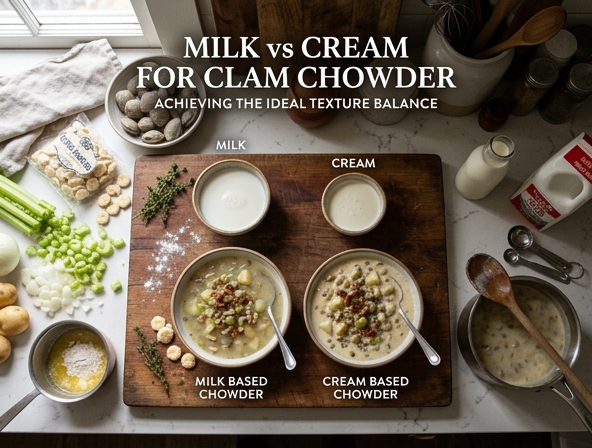
Achieving consistent chowder texture is a common culinary hurdle, as many cooks struggle with watery bases or unwanted curdling. While traditional recipes often rely on standard whole milk, the dairy's fat content dictates mouthfeel. Mastering this chemistry grants you full control over your soup's final viscosity. Note that higher fat percentages require careful temperature management to ensure stability. Whether choosing velvety heavy cream or lighter half-and-half, this analysis explores the ideal ratios needed to achieve a professional, balanced consistency.
| Factor | Key Considerations |
|---|---|
| Common Challenges | Struggling with watery bases or unwanted curdling of the dairy. |
| Role of Fat Content | Fat levels dictate the final mouthfeel and viscosity of the chowder. |
| Temperature Management | Higher fat percentages require careful heat control to prevent instability. |
| Dairy Options | Ranging from whole milk to half-and-half or heavy cream for varying textures. |
| Culinary Goal | Mastering ratios to achieve a professional, balanced consistency. |
The Great Chowder Debate: Balancing Milk and Cream for the Perfect Bowl
In the pantheon of coastal comfort foods, few dishes evoke as much culinary passion-and debate-as the authentic New England Clam Chowder. It is a dish defined by its simplicity: clams, potatoes, onions, salt pork or bacon, and the dairy that binds them together. Yet, within that short list of ingredients lies a fundamental question that has divided home cooks and professional chefs for generations: should you use milk, cream, or a combination of both?
Achieving the ideal texture in clam chowder is a balancing act of physics, fat content, and flavor profile. To understand which dairy medium best suits your bowl, we must look beyond personal preference and delve into the science of how these liquids interact with the other components of your soup.
The Case for Heavy Cream: The Velvet Standard
For many, heavy cream (typically 36% to 40% milkfat) is the non-negotiable gold standard. Its high fat content provides an immediate, luxurious mouthfeel that coats the palate, creating a sense of indulgence. When you use heavy cream, the texture is naturally viscous and stable. Because cream is rich in milk solids and fat, it is far less prone to curdling than milk when exposed to high heat or the slight acidity of clam nectar.
However, the danger of an all-cream chowder is heaviness. When a soup is too dense, it masks the delicate, briny sweetness of the clams. A chowder that is "too creamy" can feel like eating a bowl of warm, clam-flavored velvet, where the soul of the dish-the fresh, sea-kissed flavor of the bivalves-is relegated to the background.
The Argument for Whole Milk: A Cleaner Profile
Using whole milk (3.25% fat) is the traditional approach of the leaner, historical chowders. Milk provides a much lighter body, allowing the natural flavor of the clams and the starch from the potatoes to take center stage. When you use milk, the chowder feels "cleaner" on the palate; it is a soup you can finish in its entirety without feeling the immediate need for a nap.
The challenge with milk, however, is technical stability. Milk has a high water content and lower protein structure compared to cream, making it notoriously fragile. If the chowder is boiled, the milk can easily break, leading to a grainy, curdled appearance that is visually unappealing and texturally unpleasant. Furthermore, milk lacks the inherent body of cream, meaning you must rely more heavily on a roux (a cooked mixture of flour and fat) or the starch from the potatoes to achieve the desired consistency.
The Hybrid Approach: Finding the "Goldilocks" Texture
The most successful chowders often utilize a hybrid strategy: a blend of whole milk and heavy cream. This is the "Goldilocks" method-the sweet spot that offers the stability and richness of cream without sacrificing the lightness of milk.
By using a ratio of roughly 2:1 (milk to cream), you achieve a texture that is silky enough to satisfy, but bright enough to let the clams shine. The milk provides the base volume, while the cream acts as a stabilizing emulsifier. This blend is forgiving; it is less likely to curdle than straight milk, yet it doesn't weigh down the palate like a pure-cream base would.
The Science of Thickening: It's Not Just About Dairy
The "thickness" of your chowder shouldn't come solely from your choice of dairy. A common mistake is using cream to compensate for a thin, watery base. True chowder texture is built through a three-pronged approach:
- The Roux: A classic flour-and-butter roux provides the foundational viscosity that prevents the dairy from separating.
- Starchy Potatoes: Using a starchy variety like Russets allows the potatoes to partially break down during the simmering process, releasing natural thickeners into the broth.
- The Dairy Emulsion: Once the base is thickened by the roux and potatoes, the milk and cream are added at the very end to finish the texture and provide mouthfeel.
The Golden Rule: Never Boil the Dairy
Regardless of whether you choose milk, cream, or a hybrid, the most critical rule of chowder making is temperature control. Dairy is sensitive to high heat. When you add your milk and cream, the soup should be at a gentle simmer, never a rolling boil. Boiling causes the proteins in the milk to denature and coagulate, resulting in that dreaded "broken" look. The goal is to incorporate the dairy, bring the soup just to the brink of a simmer, and then remove it from the heat immediately. This preserves the sweetness of the dairy and maintains a uniform, smooth consistency.
Final Thoughts: Choosing Your Path
If you are looking for a decadent, restaurant-style chowder that feels like a warm hug on a cold day, lean toward a higher ratio of cream. If you prefer a traditional, lighter style where the briny essence of the Atlantic clams is the primary star, favor whole milk and ensure your roux is perfectly cooked.
Ultimately, the perfect texture balance isn't a fixed formula; it is a reflection of your own palate. Experiment with a 50/50 blend for your next batch, keep your heat low, and remember that the best chowder is one where the dairy supports the clams-never overshadows them. With the right technique, you can elevate your chowder from a simple soup to a coastal masterpiece.
Disclaimer:
The information provided on Eateryn is for general educational and informational purposes only and is not intended as medical, nutritional, or healthcare advice. It should not be used to diagnose, treat, cure, or prevent any disease or medical condition.
Always consult a qualified physician, registered dietitian, or other certified healthcare professional before making changes to your diet, exercise routine, or lifestyle, or regarding any medical questions or concerns you may have. Never disregard or delay seeking professional medical advice because of something you have read on this website.