
Milk Soak vs Egg Binder For Meatloaf - Improving Moisture And Consistency
Achieving a moist, tender meatloaf while preventing it from crumbling remains a common culinary challenge. While standard recipes rely on basic pantry staples, discerning cooks understand the nuanced relationship between structural integrity and texture. Mastering these variables guarantees a superior, restaurant-quality crumb. Note that success requires balancing fat content with moisture retention. For instance, a milk-soaked panade hydrates proteins, whereas egg binders ensure firm coagulation. This analysis explores how these binders transform your meatloaf's consistency.
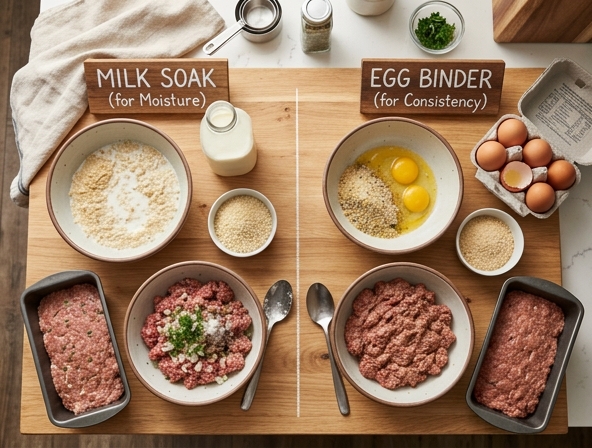
| Binder Component | Primary Function | Impact on Texture |
|---|---|---|
| Milk-Soaked Panade | Protein hydration | Enhances moisture and creates a tender, superior crumb. |
| Egg Binder | Protein coagulation | Provides structural integrity and prevents the loaf from crumbling. |
| Note: Achieving the ideal meatloaf requires balancing fat content with these moisture-retention agents. | ||
The Science of the Perfect Loaf: Milk Soak vs. Egg Binder
The meatloaf is a culinary paradox. It is simultaneously one of the most humble, approachable meals in the American canon and one of the most difficult to execute with true excellence. Everyone has a memory of the “bad” meatloaf-that dense, gray, crumbly block of overcooked beef that required a river of ketchup just to be palatable. At the heart of this struggle is a fundamental culinary challenge: how do you achieve structural integrity without sacrificing the succulent moisture that makes meatloaf a comfort food?
Two primary ingredients stand at the center of the debate: the panade (a milk-and-bread soak) and the egg binder. While many home cooks treat them as interchangeable or combine them haphazardly, understanding the specific chemical role each plays is the key to elevating your meatloaf from a kitchen chore to a gastronomic success.
The Panade: The Secret to Moisture
When professional chefs talk about moisture in ground meat mixtures, they almost always point to the panade. A panade is simply a mixture of starch-usually breadcrumbs, stale bread, or even crushed crackers-and a liquid, most commonly milk or cream.
The Science: The magic of the panade lies in the relationship between the starch and the protein. When you mix ground meat with salt and spices, the proteins begin to cross-link, which can lead to a tightly packed, rubbery texture. By incorporating a panade, you are essentially introducing a “buffer” between those protein strands. The starch granules in the bread absorb the milk and swell up. As the meatloaf cooks, this trapped moisture is released slowly into the meat, preventing the proteins from seizing up and drying out. Because the bread is hydrated before it enters the meat, it acts as a reservoir of moisture that keeps the loaf tender even as it hits high temperatures in the oven.
The Egg Binder: The Architect of Structure
If the panade is the moisture-retaining interior, the egg is the structural support beam. Eggs have been the default binder for meatloaf for generations, and for good reason: they are nature's most efficient glue.
The Science: Eggs are rich in proteins that denature and coagulate when heated. As the temperature of the meatloaf rises, these proteins uncoil and bond with each other, creating a semi-rigid matrix that holds the beef, pork, or veal together. Without a binder, a meatloaf would essentially turn into a pile of loose, crumbly ground meat upon slicing. However, the egg binder is a double-edged sword. If you add too much egg, you risk turning your meatloaf into a dense, rubbery meat-pudding. The goal is to use just enough egg to hold the shape, while relying on the panade to maintain the interior texture.
Comparative Analysis: Finding the Balance
To achieve the “Goldilocks” meatloaf-moist yet sliceable-one must understand how these two components interact:
- When to rely on the Panade: If your priority is a light, airy, melt-in-your-mouth texture, lean heavily into the panade. Using panko breadcrumbs soaked in whole milk creates a superior, light result. This is ideal for mixtures involving leaner meats, like turkey or venison, which lack the natural fat content to stay moist on their own.
- When to rely on the Egg Binder: If you are working with a very fatty meat blend (like a classic 70/30 beef-to-pork ratio), you may actually need less binder. The fat acts as a lubricant, and too much egg can make the loaf feel greasy rather than savory. Use the egg sparingly to ensure the loaf holds its sliceable shape without feeling “rubbery.”
The Hybrid Approach: The Pro Strategy
The best meatloaves rarely choose one over the other; they embrace the synergy of both. By using a panade to ensure internal hydration and a light touch of egg to provide a frame, you get the best of both worlds.
Pro-Tip: The order of operations is critical. First, create your panade by soaking your breadcrumbs in milk for at least 10 minutes until it forms a thick paste. Mix this paste into your meat before adding the eggs. This ensures the moisture is evenly distributed throughout the protein structure. Only add the beaten egg at the final stage, mixing gently. Over-mixing at this point is the enemy; it will undo all the work your panade has done by developing too much protein tension.
Beyond the Basics: Ingredients Matter
While the milk-soak-vs-egg debate is vital, it is important to acknowledge that the quality of your base ingredients dictates the performance of these binders. High-fat content ground beef is naturally more forgiving. If you choose lean ground beef, you must increase your panade ratio to compensate for the lack of intramuscular fat. Furthermore, the type of breadcrumb matters: standard dried white breadcrumbs are fine, but fresh breadcrumbs (torn from a soft loaf) possess a larger surface area and absorb more liquid, resulting in an even more tender crumb.
Conclusion: The Final Slice
Ultimately, the perfect meatloaf is a testament to balance. Don't fear the milk soak; it is the most effective tool in your arsenal against the “dry meatloaf syndrome.” Use it to hydrate, use the egg to bind, and above all, treat your meat mixture with a gentle hand. By viewing the panade and the egg binder not as substitutes for one another, but as distinct contributors to the final structure and mouthfeel of your dish, you can finally move past the gray, crumbly loaves of the past and create a meatloaf that is, quite frankly, a slice of heaven.
Disclaimer:
The information provided on Eateryn is for general educational and informational purposes only and is not intended as medical, nutritional, or healthcare advice. It should not be used to diagnose, treat, cure, or prevent any disease or medical condition.
Always consult a qualified physician, registered dietitian, or other certified healthcare professional before making changes to your diet, exercise routine, or lifestyle, or regarding any medical questions or concerns you may have. Never disregard or delay seeking professional medical advice because of something you have read on this website.