
Metal Pan vs Glass Pan For Meatloaf - Optimizing Heat Distribution Methods
Struggling with inconsistent meatloaf-soggy bottoms or unevenly cooked edges? While standard aluminum and borosilicate glassware are common kitchen staples, the material significantly dictates thermal conductivity.
Choosing the correct vessel optimizes heat distribution, ensuring a perfectly caramelized crust. Note that while metal conducts heat rapidly for superior browning, glass provides steady, lingering thermal retention. By examining the structural properties of these pans, we will guide you toward achieving professional, uniform results in your home kitchen.
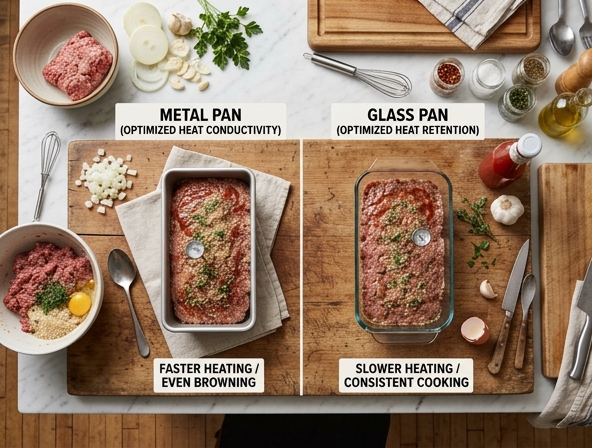
| Feature | Metal Pan | Glass Pan |
|---|---|---|
| Thermal Conductivity | High; transfers heat rapidly | Low; offers steady thermal retention |
| Primary Benefit | Superior browning and crust development | Consistent, lingering heat |
| Best Used For | Achieving a caramelized, crispy exterior | Gentle, even cooking throughout |
| Common Issues | Risk of uneven edges if heat is too high | Potential for soggy bottoms |
Metal Pan vs. Glass Pan for Meatloaf: Optimizing Heat Distribution Methods
For many home cooks, the meatloaf is a quintessential comfort food-an exercise in simplicity that often ends in frustration. You have likely experienced the inconsistency: one loaf emerges with a beautifully caramelized, savory crust, while another turns out mushy, pale, or unevenly cooked. While the recipe, fat content, and binder ratios play critical roles, the unsung hero-or villain-of your meatloaf success is the vessel you choose to bake it in: the pan.
Choosing between metal and glass is not merely an aesthetic preference; it is a fundamental decision in thermal dynamics. Because meatloaf is a dense, high-moisture protein block, it requires efficient heat transfer to reach food-safe temperatures without drying out the exterior. Let's dissect the science of pan materials to help you achieve the perfect loaf every time.
The Science of Thermal Conductivity
To understand the difference between metal and glass, we must look at their thermal conductivity-the rate at which heat moves through a material. Metal, particularly aluminum and aluminized steel, is an excellent conductor. When you slide a metal pan into a hot oven, the pan absorbs the heat energy rapidly and transfers it directly into the outer edges of the meatloaf.
Glass (specifically tempered borosilicate or soda-lime glass), on the other hand, is an insulator. It takes much longer to heat up than metal. Once hot, it holds that heat effectively, but the initial transfer of thermal energy into the food is significantly slower. This discrepancy creates two entirely different cooking environments for the same recipe.
The Case for Metal: Speed and Browning
For most chefs and culinary scientists, metal is the gold standard for meatloaf. Its high thermal conductivity allows for the Maillard reaction-the chemical reaction between amino acids and reducing sugars that gives browned food its distinctive flavor-to occur much more efficiently on the sides and bottom of the loaf.
- Rapid Heat Transfer: Metal pans reach the temperature of the oven quickly, ensuring that the cooking process begins the moment the pan hits the rack.
- Crispy Edges: Because the pan itself becomes hot quickly, it helps sear the outer edges of the meat, creating a desirable crust that provides texture and structural integrity.
- Durability: Metal is resistant to thermal shock, meaning you don't have to worry about the pan cracking if you move it from a slightly cooler prep area to a scorching oven.
However, metal is not without its drawbacks. If you use a thin, low-quality aluminum pan, you risk "hot spots" where the meatloaf might burn in certain areas while remaining undercooked in the center. Furthermore, acidic ingredients-often found in meatloaf glazes like ketchup or tomato paste-can react with certain reactive metals, imparting a slight metallic tang to the food.
The Case for Glass: Retention and Observation
Glass pans are often favored by home bakers for their transparency. Being able to see the color of the bottom of the meatloaf and the level of juices rendered out can be a helpful visual cue. Glass is also non-reactive, meaning it will never alter the taste of your tomato-based glazes.
The primary challenge with glass is its "insulating" nature. Because it takes longer to heat up, the center of the meatloaf may be trailing behind the exterior. This often leads to the dreaded "steaming effect," where the bottom of the loaf sits in its own rendered fat and juices because the pan hasn't reached a temperature high enough to evaporate the liquid effectively. The result? A meatloaf that feels wet or soggy on the bottom.
If you prefer using glass, you must compensate. It is generally recommended to lower your oven temperature by 25°F (about 15°C) and increase the baking time. This allows the glass to heat up gradually, preventing the exterior from overcooking before the center reaches the required 160°F (71°C).
Optimizing Your Method: The Hybrid Approach
If you want to master the meatloaf, you don't necessarily have to choose one over the other; you simply need to adapt your technique based on the material in your hand.
1. For the Metal Pan User
To prevent the metallic taste or potential sticking, line your metal pan with parchment paper. Leave an overhang on the sides so you can easily lift the finished loaf out to rest on a wire rack. This prevents the loaf from sitting in the juices as it cools, which is the secret to a firm slice that doesn't crumble.
2. For the Glass Pan User
If you love the convenience of glass, use a rack. Place a small wire cooling rack inside the bottom of the glass pan, or simply bake the meatloaf on a separate metal rack positioned over a baking sheet. By lifting the loaf out of the juices, you allow hot air to circulate around the entire perimeter, compensating for the glass pan's inability to sear the bottom efficiently.
Final Verdict: Which Should You Choose?
If your goal is a classic, firm meatloaf with a caramelized exterior and a clean, sliceable texture, a heavy-gauge metal loaf pan is your best investment. Its ability to conduct heat rapidly ensures that your meatloaf finishes cooking while the edges are still firm and flavorful.
If you are cooking a meatloaf that is particularly moist, high in vegetable content, or if you simply appreciate the aesthetic of glass, you can achieve success by being mindful of the oven temperature and ensuring the loaf is not "poaching" in its own juices at the bottom of the pan.
Ultimately, the perfect meatloaf is defined by its crust-to-interior ratio. Whether you are Team Metal or Team Glass, the key is to manage the heat. Use your thermometer, rest your meat, and don't be afraid to experiment with your rack positioning to ensure that every slice is as good as the first.
Disclaimer:
The information provided on Eateryn is for general educational and informational purposes only and is not intended as medical, nutritional, or healthcare advice. It should not be used to diagnose, treat, cure, or prevent any disease or medical condition.
Always consult a qualified physician, registered dietitian, or other certified healthcare professional before making changes to your diet, exercise routine, or lifestyle, or regarding any medical questions or concerns you may have. Never disregard or delay seeking professional medical advice because of something you have read on this website.