
Memphis Style vs Kansas City Style for Barbecue Ribs - Exploring Regional Flavor Profiles
Choosing between regional barbecue profiles often confuses even seasoned diners. While standard approaches typically favor either simple dry rubs or heavy sauce-based finishes, significant culinary distinctions exist. Mastering these nuances transforms a standard meal into an informed gastronomic experience. Stipulation: While regional styles follow specific methodologies, individual palate preference remains the final judge. Consider the hickory-smoked Memphis dry rib versus the molasses-glazed Kansas City favorite. This exploration clarifies the distinct techniques defining each tradition.
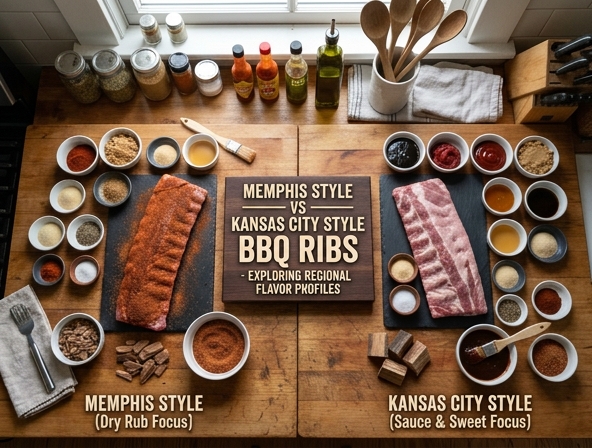
| Feature | Memphis Style | Kansas City Style |
|---|---|---|
| Flavor Profile | Savory, spice-forward | Sweet, rich, and tangy |
| Preparation | Dry rub application | Molasses-based glaze/sauce |
| Smoking Method | Hickory wood smoke | Varied, emphasis on glazed finish |
| Defining Quality | "Dry" rib emphasis | Sticky, sauce-heavy texture |
Memphis Style vs. Kansas City Style for Barbecue Ribs: Exploring Regional Flavor Profiles
In the vast, smoky landscape of American barbecue, two titans stand above the rest: Memphis and Kansas City. While Texas brisket often grabs the headlines and the Carolinas battle over the supremacy of the whole hog, the true heart of backyard debates and restaurant pilgrimages lies in the ribs. For the uninitiated, a rack of ribs is simply meat on a bone, slow-cooked until tender. But to a pitmaster, the style of the ribs is a cultural manifesto, a history lesson in geography, trade routes, and immigrant influences.
The Memphis Philosophy: Dry Rubbed and Soulful
Memphis barbecue is defined by its restraint and its unwavering focus on the quality of the pork. Historically, Memphis was a major port city on the Mississippi River, where the influx of laborers and the availability of pork led to the creation of a distinct style that favors the "dry" rib.
The Anatomy of the Memphis Rib:
- The Dry Rub: The hallmark of a Memphis rib is the heavy application of a complex dry spice rub. Composed of a balanced blend of paprika, garlic, onion, salt, pepper, and sometimes a whisper of brown sugar, the rub is massaged into the meat and allowed to penetrate the muscle fibers before hitting the smoke.
- The Smoke: Memphis pitmasters traditionally rely on hickory wood, which provides a bold, pungent smoke profile that complements the pork without masking it. The ribs are cooked "low and slow," typically over indirect heat for several hours until the meat is tender but still retains a definitive "bite"-unlike the "fall-off-the-bone" preference in other regions, which Memphis purists consider overcooked.
- The "Wet" Option: While the "dry" rub is the icon, many Memphis joints offer a "wet" option, where a thin, vinegary, tomato-based sauce is brushed on during the final moments of cooking. However, the sauce is treated as an accessory, not the star.
The Kansas City Melting Pot: Sauce-Heavy and Bold
If Memphis is about the meat, Kansas City is about the celebration. As a major rail hub in the early 20th century, Kansas City became a culinary melting pot, absorbing influences from various regions and cultures. The result is a style that is unapologetically bold, sweet, and saucy.
The Anatomy of the Kansas City Rib:
- The Sauce: In Kansas City, the sauce is king. It is typically a thick, dark, tomato-and-molasses-based concoction that is sweet, tangy, and slightly spicy. This sauce is applied generously toward the end of the cooking process, allowing the sugars to caramelize into a sticky, lacquered glaze that defines the KC aesthetic.
- The Rub: While KC ribs are also rubbed, the spice profile tends to be sweeter and heavier on chili powder and brown sugar to hold up against the intensity of the sauce.
- The Technique: KC ribs are usually cooked over a blend of woods, often mixing hickory with fruit woods like apple or cherry to create a milder, more aromatic smoke that pairs well with the sweet sauce. The focus here is on a tender, succulent texture where the meat pulls easily from the bone, encased in a rich, caramelized bark.
Comparative Analysis: Where Do You Align?
Choosing between Memphis and Kansas City is less about which is "better" and more about your personal palate. It is a choice between clarity and complexity.
1. The Flavor Profile
Memphis ribs appeal to those who value the natural, smoky essence of the pork. The dry rub enhances the meat's own fats and flavors rather than overwhelming them. It is a sophisticated experience, where the interplay between the heat of the spices and the savory smoke is subtle. Kansas City ribs are designed for those who crave a sensory explosion. The juxtaposition of the smoke, the sweetness of the molasses, and the tang of the vinegar creates a "craveability" factor that has made Kansas City-style sauce the dominant profile in supermarkets across the globe.
2. The Texture
If you prefer a rib that offers a clean bite-where the meat pulls away cleanly from the bone but remains firm-Memphis is your benchmark. If you prefer the comfort of "fall-off-the-bone" tenderness, where the meat is practically melting into the sauce, Kansas City is the gold standard.
3. The Cultural Context
Memphis BBQ is the backyard cookout elevated to high art. It is communal, casual, and focused on the craft of the pitmaster. Kansas City BBQ is a professionalized institution. Because it developed in urban centers with high demand, it emphasizes consistency, variety, and the "full" experience-often served alongside burnt ends, beans, and coleslaw that are just as famous as the ribs themselves.
The Final Verdict
The beauty of the American barbecue tradition is that it is not static. Today, you will find Memphis-style pits experimenting with glazes, and Kansas City pitmasters dialing back the sugar to let the smoke shine through. The regional boundaries are blurring, yet the core identities remain distinct.
If you find yourself in the humid air of West Tennessee, respect the dry rub. Embrace the simplicity of the spice-crusted meat and the subtle hint of vinegar. If you land in the bustling culinary hubs of Missouri, don't fear the sticky fingers. Lean into the molasses glaze, savor the complexity of the sauce, and appreciate the history of a city that brought together the best of all worlds.
Ultimately, both styles serve the same purpose: they bring people together around a shared love for fire, smoke, and the patience required to transform a simple cut of meat into a masterpiece. Whether you are a devotee of the dry rub or a worshipper of the sticky glaze, the best rib is always the one you are sharing with good friends.
Disclaimer:
The information provided on Eateryn is for general educational and informational purposes only and is not intended as medical, nutritional, or healthcare advice. It should not be used to diagnose, treat, cure, or prevent any disease or medical condition.
Always consult a qualified physician, registered dietitian, or other certified healthcare professional before making changes to your diet, exercise routine, or lifestyle, or regarding any medical questions or concerns you may have. Never disregard or delay seeking professional medical advice because of something you have read on this website.