
Maple Syrup vs Honey for Pancakes - Sweetening Your Breakfast
Maple Syrup vs. Honey for Pancakes
Choosing the perfect pancake topping often feels like a missed opportunity to elevate your morning. While refined syrups and standard honey are ubiquitous, understanding their unique flavor profiles transforms your breakfast into a curated experience. Note that both are caloric sweeteners, requiring moderate portion control. For example, Grade A Amber maple syrup offers a rich, woody depth, while delicate Manuka honey contributes complex floral notes. This comparison outlines their distinct characteristics to ensure your final choice perfectly complements your stack.
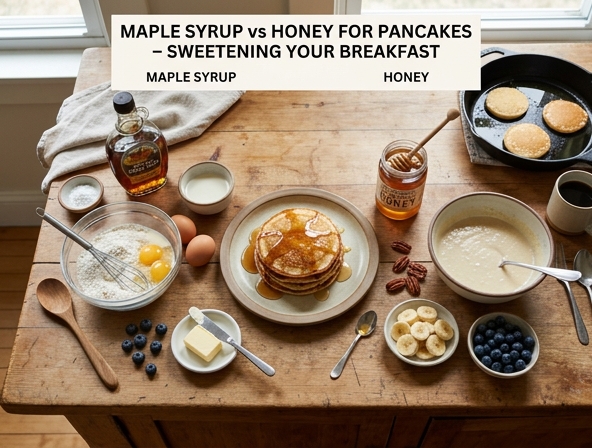
| Feature | Maple Syrup (Grade A Amber) | Honey (e.g., Manuka) |
|---|---|---|
| Flavor Profile | Rich, woody depth | Delicate, complex floral notes |
| Nutritional Note | Caloric sweetener; use in moderation | Caloric sweetener; use in moderation |
| Best Use | Elevating pancakes with earthy sweetness | Elevating pancakes with floral complexity |
Maple Syrup vs. Honey for Pancakes: Sweetening Your Breakfast
The Saturday morning pancake ritual is a sacred event in many households. The griddle is hot, the batter is perfectly mixed, and the air is thick with the promise of a comforting breakfast. But once those fluffy discs of golden-brown goodness hit the plate, the real decision begins: the topping. For decades, the two titans of the breakfast table, maple syrup and honey, have been locked in a gentle but persistent rivalry. Which one truly deserves the crown when it comes to elevating your pancakes?
The Case for Maple Syrup: Liquid Gold from the North
Maple syrup is arguably the undisputed king of the pancake world. Harvested primarily from the sap of sugar maple trees, this amber nectar is a marvel of natural alchemy. When you pour real, 100% pure maple syrup over a stack of pancakes, you aren't just adding sweetness; you are adding a complex, woody, and earthy flavor profile that cannot be replicated.
The beauty of maple syrup lies in its grading system. The modern classification-Golden, Amber, Dark, and Very Dark-allows the breakfast enthusiast to customize their experience. Golden and Amber grades offer a delicate, light sweetness that pairs beautifully with buttermilk pancakes. The darker grades offer a much more robust, molasses-like intensity that can stand up to hearty buckwheat or oat-based pancakes.
Beyond the taste, maple syrup has a unique viscosity. It is thin enough to seep into the pores of the pancake, effectively seasoning the entire stack rather than just coating the top. This penetration is what creates that quintessential pancake experience where every bite is infused with a consistent level of sweetness.
The Case for Honey: Nature's Floral Symphony
Honey, on the other hand, brings a completely different energy to the breakfast table. It is not merely a sweetener; it is a snapshot of a landscape. Because honey is made from the nectar of flowers, the flavor profile of a jar of clover honey is vastly different from that of an orange blossom or a buckwheat honey. This regional diversity means that honey enthusiasts can experiment with floral, spicy, or even slightly tart notes depending on the hive's origin.
Honey is significantly more viscous than maple syrup. It sits proudly on top of the pancakes like a thick, glowing crown. Because it doesn't soak in as quickly, you get a concentrated burst of intense sweetness with each bite. For those who prefer a "dipping" experience rather than a "soaking" one, honey is the superior choice. However, its high viscosity can sometimes make it difficult to spread evenly unless the pancakes are piping hot.
The Nutritional Perspective: Beyond the Sweetness
If you are looking at your breakfast from a health perspective, the two sweeteners offer different advantages. Both are forms of sugar, and neither should be consumed in excessive quantities, but they do have distinct profiles:
- Maple Syrup: Contains a variety of minerals, including manganese and zinc. It also boasts a lower glycemic index than white sugar, meaning it doesn't cause blood sugar to spike quite as dramatically. Furthermore, maple syrup contains a significant amount of antioxidants, which can help combat inflammation.
- Honey: Famous for its antimicrobial and antibacterial properties. Raw, unfiltered honey retains enzymes and trace amounts of pollen that can be beneficial for the immune system. It is generally perceived as sweeter than maple syrup, which means you might find yourself using less of it to achieve the same satisfaction level.
Texture and Interaction: The Culinary Experience
The way these two sweeteners interact with the pancake's surface is the deciding factor for many. If your pancakes are light and airy, maple syrup provides a delicate accompaniment that respects the texture of the batter. Because of its fluidity, it creates a "pancake syrup" effect that is classic and comforting.
Honey, due to its density, can sometimes feel heavy. If you have dense, protein-heavy, or whole-grain pancakes, honey provides a wonderful contrast. Its stickiness makes it an excellent "glue" for additional toppings. If you are adding walnuts, fresh berries, or a dollop of yogurt to your pancakes, honey acts as an anchor, holding those toppings in place and creating a more layered culinary experience.
The Verdict: Can You Have Both?
The rivalry between maple syrup and honey is ultimately a matter of preference. If you crave the nostalgic, earthy, and classic flavor of a traditional breakfast, real maple syrup is the gold standard. If you are looking for a more nuanced, floral, or adventurous experience that provides a thick, luxurious mouthfeel, honey is your best friend.
Perhaps the true secret to the perfect breakfast is not choosing one over the other, but learning how to utilize them both. Many chefs recommend a "honey-maple glaze." By heating a small amount of both together with a pinch of sea salt, you can achieve the best of both worlds: the deep, caramel notes of the maple and the floral, viscous richness of the honey. This mixture is the perfect middle ground, offering a complex sweetness that elevates even the most basic pancake mix.
Pro-Tips for the Best Experience
- Temperature matters: Never pour cold syrup or honey on hot pancakes. Briefly warming your sweetener-whether in a small saucepan or a warm water bath-makes it easier to pour and enhances the aromatic qualities.
- Quality control: Always aim for Grade A maple syrup and raw, local honey. Avoid "pancake syrups" that list high-fructose corn syrup as their primary ingredient; they lack the complexity and nutritional profile of the real thing.
- Complementary pairings: If using maple syrup, consider adding a pinch of cinnamon or nutmeg to the plate. If using honey, try a sprinkle of lemon zest or chopped pistachios to highlight the honey's floral notes.
Whether you find yourself reaching for the iconic maple leaf bottle or the classic honey bear, you are choosing a natural sweetener that connects your breakfast to the land. Whichever you choose, take a moment to appreciate the journey that those ingredients took to reach your kitchen-from the forest or the field, directly to your stack of pancakes. Happy eating!
Disclaimer:
The information provided on Eateryn is for general educational and informational purposes only and is not intended as medical, nutritional, or healthcare advice. It should not be used to diagnose, treat, cure, or prevent any disease or medical condition.
Always consult a qualified physician, registered dietitian, or other certified healthcare professional before making changes to your diet, exercise routine, or lifestyle, or regarding any medical questions or concerns you may have. Never disregard or delay seeking professional medical advice because of something you have read on this website.