
Low Heat vs High Heat for Grilled Cheese Sandwich - Mastering The Perfect Toast
Low Heat vs High Heat for Grilled Cheese Sandwich
We have all faced the dilemma: burnt bread with cold, unmelted cheese versus perfectly golden, crispy crusts. While culinary debates often center on using butter versus mayonnaise for browning, the real differentiator lies in thermal control. Mastering heat grants you total control over texture, provided you stipulate that patience is non-negotiable. Comparing a steady medium-low flame against a high-heat sear defines your result. This guide explores how specific temperature profiles impact your sandwich's structural integrity.
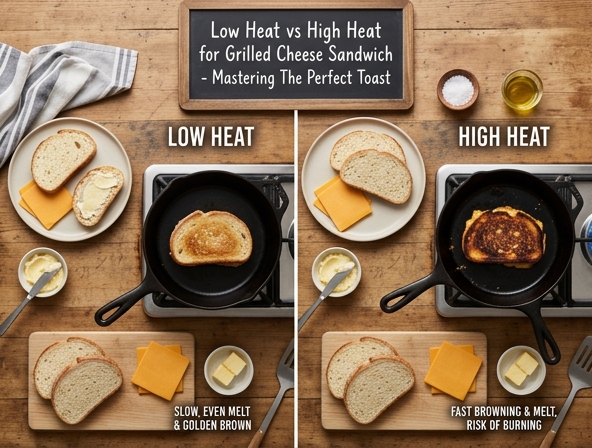
| Heat Setting | Texture & Result | Key Consideration |
|---|---|---|
| Medium-Low Heat | Perfectly golden, crispy crust with evenly melted cheese. | Requires patience; provides superior thermal control for best results. |
| High Heat | Burnt bread exterior with cold, unmelted cheese interior. | Often leads to compromised structural integrity and unbalanced cooking. |
Low Heat vs. High Heat for Grilled Cheese Sandwich: Mastering the Perfect Toast
The grilled cheese sandwich is a culinary paradox: it is perhaps the simplest meal to prepare, yet one of the most difficult to perfect. At its core, it is nothing more than bread, fat, and cheese, heated until harmonious. However, every home cook knows the frustration of a sandwich that arrives at the table with charcoal-black bread and a center of unmelted, stubborn cheese, or conversely, a pale, soggy crust that lacks the structural integrity required to hold the molten interior. The debate over heat control-low and slow versus high and fast-is the defining factor that separates a mediocre snack from a gourmet experience.
The Case for Low and Slow: The Path to Even Melting
When you choose to cook a grilled cheese on low heat, you are prioritizing internal chemistry over external browning. This method typically involves a heat setting between 250°F and 300°F. The logic here is sound: cheese, particularly hard or semi-hard varieties like aged cheddar or gruyère, requires time to reach its melting point without breaking its emulsion.
By keeping the heat low, you allow the ambient warmth to penetrate the center of the sandwich. As the butter (or mayonnaise) on the exterior of the bread gently fries, the heat slowly radiates inward. This creates a uniform melt, ensuring that by the time the bread reaches that coveted golden-brown hue, the cheese has reached a gooey, viscous consistency that stretches perfectly upon the first bite. This method is the "safe zone" for beginners and perfectionists alike, as it offers a much larger margin of error; you are unlikely to burn the bread before the cheese is ready.
The Case for High Heat: The Maillard Mastery
On the other end of the spectrum, the high-heat approach is for the cook who prioritizes the Maillard reaction-the chemical process that gives seared food its distinctively nutty, complex flavor and deep, crunchy texture. Cooking at higher temperatures (above 350°F) creates an aggressive crust that shatters audibly when bitten. This is the hallmark of a "professional" grilled cheese found in high-end gastropubs.
However, high heat is a high-stakes game. The danger is twofold: the bread may char before the cheese melts, or the fat (butter) may smoke and turn bitter. To succeed with high heat, one must employ specific techniques, such as slicing the bread thinner, using cheeses that melt rapidly (like American or young Fontina), or grating the cheese beforehand so it has more surface area to absorb heat quickly. It is a technique that demands your undivided attention; walking away for even thirty seconds can turn a masterpiece into a disaster.
The Science of the Perfect Crust
Whether you choose low or high heat, understanding what happens at the surface of the bread is vital. The "crust" is essentially a fried carbohydrate layer. Butter contains milk solids, which provide flavor but burn easily. This is why many chefs prefer mayonnaise; its high smoke point and stable emulsion of oil and egg provide a more consistent, golden-brown finish without the risk of burnt milk solids. Regardless of your choice of fat, the heat you select determines the texture. Low heat creates a "toasted" effect-a light, slightly crisp exterior. High heat creates a "fried" effect-a rigid, deeply caramelized crust.
Techniques for Mastering the Heat
If you want to achieve the best of both worlds, consider the "Variable Heat" strategy:
- Phase 1: The Melt. Start your pan on medium-low heat. Place the sandwich in the pan and cover it with a lid. The trapped steam and gentle heat will begin the melting process of the cheese without affecting the bread color too quickly.
- Phase 2: The Sear. Once the cheese is sufficiently softened, remove the lid. Increase the heat to medium-high. This final surge of heat allows you to achieve the Maillard-induced crunch on the exterior of the bread, giving you the best of both the "slow melt" and the "high heat crust."
Bread and Cheese: The Variables That Change Everything
Your heat strategy should also adapt to your ingredients. A thick-cut sourdough loaf requires more time and lower heat to ensure the heat reaches the center. A thin slice of brioche, conversely, is extremely prone to burning due to its high sugar content and should be approached with caution on lower heat settings. Similarly, the cheese selection dictates the pace: an aged, crystalline cheddar needs more time to mellow out, while a mild Monterey Jack or American cheese will melt in the blink of an eye. Adjust your flame accordingly.
Conclusion: Finding Your Personal Preference
Ultimately, the battle between low and high heat is a matter of personal culinary philosophy. The low-heat method produces a gentle, comforting sandwich where the focus is on the luxurious texture of the melted cheese. The high-heat method produces a bold, structural sandwich that celebrates the interplay of crunch and gooeyness.
The "perfect" grilled cheese is not found in a textbook temperature setting, but in the observation of the craft. Watch the color of the bread-it should reach a rich golden tan, not mahogany or carbon black. Watch the cheese-a slight "weeping" of oil from the sides is a sign that it is perfectly melted. By balancing the patience of low heat with the precision of high heat, you will master the perfect toast and elevate this humble sandwich into a true culinary achievement. Practice with your specific stove, pan material, and preferred bread, and you will soon find that the "perfect" heat is whatever setting allows you to serve the sandwich exactly the way you love it most.
Disclaimer:
The information provided on Eateryn is for general educational and informational purposes only and is not intended as medical, nutritional, or healthcare advice. It should not be used to diagnose, treat, cure, or prevent any disease or medical condition.
Always consult a qualified physician, registered dietitian, or other certified healthcare professional before making changes to your diet, exercise routine, or lifestyle, or regarding any medical questions or concerns you may have. Never disregard or delay seeking professional medical advice because of something you have read on this website.