
Loaf Pan vs Freeform For Meatloaf - Deciding On The Best Cooking Shape
Many home cooks struggle to achieve the perfect meatloaf consistency, often settling for dense, steamed textures or crumbles. While traditional recipes frequently default to standard metal loaf pans, artisanal approaches often favor freeform shaping. This choice fundamentally dictates crust development and moisture retention. Understand that while pan-baking provides convenience, freeform styles demand specific binder ratios to maintain structure. From rustic, glazed exteriors to uniform, sandwich-ready slices, we will examine which technique optimizes your final result.
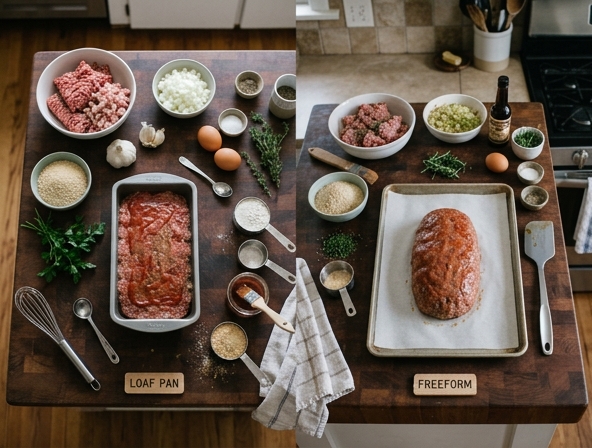
| Technique | Key Benefits | Considerations | Ideal Result |
|---|---|---|---|
| Loaf Pan | Convenience and uniform shape. | Risk of dense, steamed texture; requires standard equipment. | Uniform, sandwich-ready slices. |
| Freeform | Superior crust development and moisture retention. | Requires precise binder ratios for structural integrity. | Rustic, glazed exteriors with artisanal appeal. |
Loaf Pan vs. Freeform For Meatloaf: Deciding On The Best Cooking Shape
Meatloaf is the ultimate comfort food, a culinary chameleon that graces dinner tables from humble family kitchens to upscale bistros. Yet, despite its simplicity, there remains a persistent debate among home cooks and professional chefs alike: to use a loaf pan or to go freeform? While it may seem like a trivial decision of aesthetics, the shape of your meatloaf fundamentally alters its texture, its moisture content, and, perhaps most importantly, the development of that coveted caramelized crust.
The Case for the Loaf Pan: Consistency and Convenience
The traditional loaf pan is the vessel of choice for many, primarily due to its reliability. When you pack your meat mixture into a standard 9x5 inch pan, you are creating a predictable environment for the protein to cook in.
Pros of the Loaf Pan
- Moisture Retention: Because the loaf pan contains the mixture, it prevents the juices-rendered fat and moisture from vegetables-from leaking out into the oven. This creates a "steam-baking" effect that ensures the meat remains succulent and tender.
- Uniform Slicing: If you are looking for that classic, uniform rectangular slice that holds together perfectly for a sandwich or a plate presentation, the pan acts as a mold that guarantees structural integrity.
- Ease of Application: Glazes, such as ketchup-based or BBQ sauces, are easier to apply and keep contained within the pan, preventing them from dripping onto the bottom of the oven and smoking.
Cons of the Loaf Pan
The primary drawback of the loaf pan is the lack of surface area. Because the meat is packed tightly against the metal walls, the heat is often transferred unevenly. The center may remain slightly undercooked while the sides take on a gray, boiled appearance rather than a deep, roasted brown. You are effectively steaming your meat inside the pan, which can lead to a soft, dense "meat brick" texture that lacks the complexity of a browned exterior.
The Freeform Method: The Pursuit of the Maillard Reaction
For those who prioritize flavor and texture over uniform shape, the freeform method-baking the meatloaf directly on a parchment-lined baking sheet or roasting tray-is the superior choice. This method is all about maximizing exposure to dry heat.
Pros of Freeform Baking
- Superior Crust Development: By exposing the entire surface of the meatloaf to the oven's ambient heat, you encourage the Maillard reaction. This chemical process creates a rich, brown crust that adds depth, sweetness, and a pleasant textural contrast to the soft interior.
- Better Fat Rendering: In a loaf pan, the meatloaf sits in a pool of its own rendered fat. When cooked freeform, the fat has the opportunity to drip away, resulting in a lighter final product that isn't greasy.
- Visual Appeal: A rustic, hand-shaped meatloaf often looks more appetizing and artisanal. It invites a "home-cooked" aesthetic that a perfect, manufactured block of meat simply cannot match.
Cons of Freeform Baking
The freeform method is admittedly less forgiving. If your meat-to-binder ratio is off, or if you haven't chilled the mixture sufficiently before shaping, the meatloaf may spread or crack during the baking process. Additionally, you lose a significant amount of the moisture that would have otherwise been trapped in the pan, meaning you must be more precise with your internal temperature to avoid drying out the meat.
Bridging the Gap: Finding the Middle Ground
You don't necessarily have to choose one extreme over the other. Experienced cooks often use hybrid techniques to achieve the best of both worlds:
1. The "Pan-Searing" Start
You can shape your meatloaf as a loaf but sear the exterior in a cast-iron skillet before finishing it in the oven. This provides the Maillard reaction you desire while allowing you to maintain the loaf shape without the "steaming" effect of a deep-sided pan.
2. The Use of a Wire Rack
Placing your meatloaf (whether loaf-shaped or rustic) on a wire rack over a baking sheet allows for maximum airflow around the entire loaf. The air circulates beneath the meat, preventing the bottom from becoming soggy and ensuring even cooking without sacrificing the structural integrity of the loaf.
3. The Perforated Pan
Some specialty pans feature small holes on the bottom and sides. These pans allow fat to drain away while still providing the containment needed to ensure your meatloaf maintains a clean, uniform shape.
Essential Tips for Both Methods
Regardless of the shape you choose, the success of your meatloaf relies on fundamental preparation. First, never skip the "resting" phase. A meatloaf needs at least 10 to 15 minutes to rest after it leaves the oven. This allows the internal juices to redistribute throughout the meat rather than running out the moment you make the first cut.
Second, pay attention to your binders. Breadcrumbs, oats, or crackers, when properly hydrated with milk or stock (a "panade"), act as the mortar that holds your meatloaf together. If you are going freeform, lean slightly more toward a firm binder to ensure the loaf holds its shape against gravity.
Finally, always use a digital meat thermometer. Meatloaf is prone to the "is it done yet?" guessing game. For a standard blend of beef, pork, and veal, aim for an internal temperature of 160°F (71°C). Cooking beyond this point will inevitably dry out your hard work, regardless of whether it was cooked in a pan or on a tray.
The Verdict
If your priority is convenience, easy cleanup, and consistent, sandwich-ready slices, stick with the loaf pan. It is the steady hand of the kitchen. However, if you are chasing the ultimate meatloaf experience-characterized by a caramelized, savory crust and a perfectly rendered interior-embrace the freeform style. With a little practice, you will find that the rustic, slightly uneven edges are not signs of imperfection, but rather the marks of a truly delicious, well-cooked meal.
Disclaimer:
The information provided on Eateryn is for general educational and informational purposes only and is not intended as medical, nutritional, or healthcare advice. It should not be used to diagnose, treat, cure, or prevent any disease or medical condition.
Always consult a qualified physician, registered dietitian, or other certified healthcare professional before making changes to your diet, exercise routine, or lifestyle, or regarding any medical questions or concerns you may have. Never disregard or delay seeking professional medical advice because of something you have read on this website.