
Lime vs Lemon for Tacos - Traditional Acidity Standards Explained
Many chefs struggle to achieve the perfect flavor balance in street tacos, often debating which citrus provides the ideal brightness. While traditional Mexican cuisine relies heavily on lime, standard culinary conventions frequently test whether lemon serves as an acceptable substitute. This guide grants you the essential rationale behind these acidity standards. Please note that while profiles overlap, regional authenticity dictates specific pairings. For instance, al pastor demands lime, whereas fusion tacos may utilize lemon. Let's analyze these standards.
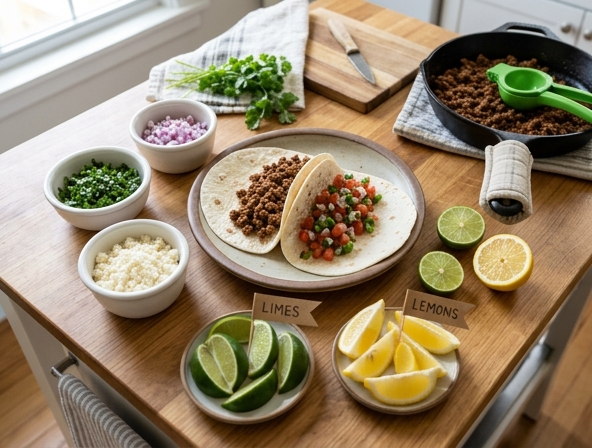
| Citrus Type | Traditional Status | Best Usage / Context |
|---|---|---|
| Lime | High (Authentic) | Standard for street tacos and traditional dishes like al pastor. |
| Lemon | Low (Substitute) | Commonly used for modern or fusion taco variations; less traditional. |
Lime vs. Lemon for Tacos: Traditional Acidity Standards Explained
To the uninitiated, the small wedge of citrus served alongside a taco may seem like a mere garnish-a colorful afterthought meant to brighten a plate. But to those steeped in the nuances of Mexican gastronomy, that wedge is a critical component of the dish's structural integrity. It is the final "seasoning" step, the acidity required to cut through the rendered fats of slow-cooked proteins and the heavy, earthy notes of blue corn masa. However, a silent debate persists in kitchens and street-side stalls alike: the battle between the lime and the lemon.
The Culinary Purpose of Acidity in Tacos
Before diving into the variety of citrus, one must understand the function of acid in a taco. Most traditional taco fillings-carnitas, al pastor, suadero, or barbacoa-are inherently rich. They are defined by collagen-rich meats cooked in their own lard, toasted spices, and complex, often heavy, salsa bases. Without acidity, the palate experiences "fatigue," where the flavor profile becomes monolithic and heavy.
Citrus juice acts as a palate cleanser. Its primary role is to lower the pH of the bite, which triggers salivation and brightens the flavor of the spices. It also serves a biochemical purpose: the citric acid helps break down the texture of the proteins, making them feel lighter and more tender on the tongue. But not all acids are created equal, and in the world of traditional tacos, the lime holds a position of near-sacred authority.
The Case for the Lime: The Standard-Bearer
In Mexico, the "lime" is not just a fruit; it is a category of essential pantry staples. Specifically, the limón mexicano (or Key lime, Citrus aurantifolia) is the industry standard. These small, thin-skinned, intensely aromatic fruits are vastly different from the large, dark-green Persian limes found in most American supermarkets.
Why is the limón mexicano superior for tacos?
- Acidity Profile: Key limes possess a higher concentration of citric acid compared to lemons or Persian limes, providing a sharp, piercing brightness that slices through grease instantly.
- Aromatic Profile: They are significantly more floral and "grassy." This matches the vegetal notes of raw onion, cilantro, and fresh salsas, creating a cohesive flavor bridge.
- Viscosity: The juice of a true Mexican lime is slightly thinner, allowing it to permeate the meat and masa more evenly rather than sitting on top like a heavy syrup.
The Lemon Intrusion: Why it Falters
When someone reaches for a lemon-typically the Eureka or Lisbon variety found in the US-they are introducing a different chemical profile. Lemons are generally sweeter and more mellow than limes. While they contain citric acid, they also have a higher concentration of sugars and a different volatile oil profile that leans toward "candy" or "sweet pastry" rather than the savory-sharp "green" scent associated with taco stalls.
In a traditional taco context, lemon can actually dampen the complexity of a salsa. The sweetness of a lemon competes with the roasted flavors of chiles (like ancho or guajillo). If you squeeze a lemon over a taco dressed in a spicy, roasted salsa, the sugar in the lemon juice can round out the heat in a way that feels "muddy" rather than "clean."
The "Persian Lime" Compromise
It is important to acknowledge that the common Persian lime (Citrus latifolia) used in most American grocers is a compromise. It lacks the intense floral punch of the Mexican lime and is more "neutral." However, it is still superior to a lemon because it retains that sharp, non-sweet acidity. If you cannot source authentic Mexican limes, the Persian lime is the only acceptable substitute in a traditional context. It respects the acidity standard without introducing the unwanted sugar and mellow profile of a lemon.
When Does Lemon Actually Work?
Culinary purism has its place, but innovation demands that we explore the outliers. Are there times when lemon is appropriate for a taco? Perhaps. If you are preparing a "fusion" taco-such as a white fish taco with a mayo-based slaw or a Mediterranean-inspired lamb taco with yogurt sauce-the mellower acidity of a lemon can actually harmonize better with the dairy or creamy components of the dish.
In these cases, the taco has moved away from the traditional "meat, onion, cilantro, salsa" template. Because the foundation has changed, the acid requirement has changed as well. Lemon pairs beautifully with fats that are high in dairy, like sour cream or crema, because it mimics the flavor of a finished sauce rather than acting as a sharp contrast.
The Final Verdict
The traditional standard is clear: for the authentic street-style taco, the lime is king. It is a tool of precision. When you squeeze that wedge, you are balancing the dish, elevating the herbs, and cutting the fat. The lime's sharp, floral, high-acidity nature is a structural necessity that the lemon, with its sugary sweetness, simply cannot replicate.
If you are standing at a taco stand, the presence of lime is a sign of respect for the ingredients. It is an acknowledgment that the cook understands the balance required to make a taco truly sing. If you find lemon, pause and consider the intention. If it is a traditional carnitas or al pastor taco, keep the lemon away. But if you find yourself at a creative food truck exploring new boundaries, keep an open mind-just know that in the world of tradition, the lime holds the crown, and the lemon remains a fascinating, if misguided, intruder.
In short: Respect the acidity, choose the lime, and let the taco speak for itself.
Disclaimer:
The information provided on Eateryn is for general educational and informational purposes only and is not intended as medical, nutritional, or healthcare advice. It should not be used to diagnose, treat, cure, or prevent any disease or medical condition.
Always consult a qualified physician, registered dietitian, or other certified healthcare professional before making changes to your diet, exercise routine, or lifestyle, or regarding any medical questions or concerns you may have. Never disregard or delay seeking professional medical advice because of something you have read on this website.