
Lettuce Wrap Vs. Classic Bun For Burger - Modern Low-Carb Trends
Lettuce Wrap vs. Classic Bun: A Nutritional Balance
Diners often struggle to reconcile their cravings for a hearty burger with strict carbohydrate management. While the traditional bun remains a culinary standard, modern wellness trends offer a compelling alternative. Opting for a lettuce wrap grants you the freedom to enjoy quality protein without the typical glycemic spike. Note, however, that structural integrity varies by preparation. Examples like In-N-Out's “Protein Style” prove flavor need not be compromised. This article explores the nutritional and sensory impacts of both choices.
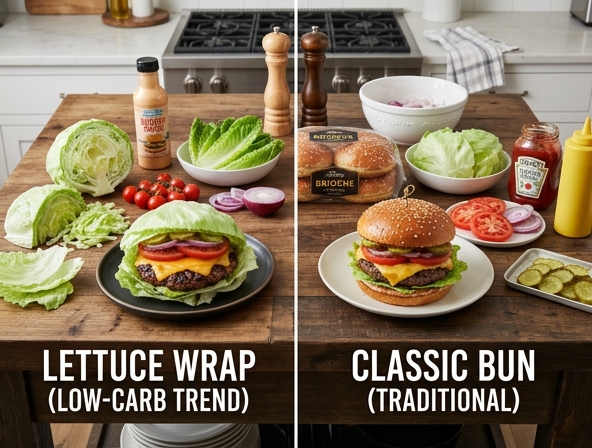
| Feature | Classic Bun | Lettuce Wrap |
|---|---|---|
| Nutritional Profile | High carbohydrate content; may cause glycemic spikes. | Low-carb; ideal for blood sugar management. |
| Culinary Role | The traditional standard for burgers. | Modern wellness-focused alternative. |
| Structural Integrity | Stable and reliable for holding ingredients. | Variable; requires careful preparation to maintain stability. |
| Flavor/Experience | Classic texture and flavor balance. | Focuses on the quality of protein; proven successful by brands like In-N-Out. |
The Great Burger Debate: Lettuce Wrap vs. The Classic Bun
For decades, the hamburger has reigned as the undisputed king of casual dining. It is a masterpiece of culinary architecture: a seasoned patty, a melody of toppings, a smear of sauce, and the critical structural element-the bun. However, as modern dietary trends like the ketogenic diet, low-carb lifestyle, and gluten-free awareness have surged in popularity, the humble burger has faced a radical reimagining. The question has become a defining fork in the road for diners: Do you stick with the classic, pillowy bun, or do you opt for the crisp, refreshing, low-carb "lettuce wrap"?
The Case for the Classic: Nostalgia and Structural Integrity
There is an undeniable, visceral satisfaction in biting into a traditional burger. The classic brioche, potato, or sesame seed bun serves several critical roles beyond merely holding the ingredients together. First, there is the texture-the "squish" factor. A toasted bun provides a gentle, pillowy resistance that contrasts beautifully with the crusty sear of a well-cooked patty.
Furthermore, bread acts as a sponge. In a high-quality burger, the juices from the meat, the tang of the mustard, and the creaminess of the mayo are absorbed into the bun, creating a flavor-saturated layer that is essential to the overall experience. When you remove the bun, you aren't just subtracting carbohydrates; you are losing the structural scaffolding that keeps the burger a handheld experience. Without the bun, a burger often loses its identity and degrades into something that must be eaten with a knife and fork-a far less "rebellious" way to enjoy the classic American staple.
The Rise of the Lettuce Wrap: A Modern Necessity
On the other side of the menu, the lettuce wrap has transcended its origins as a niche "diet hack" to become a mainstream offering. For those following low-carb protocols, the lettuce wrap is not merely about restriction; it's about a sensory pivot. Replacing the starch with a cold, crunchy leaf of iceberg or butter lettuce adds a crispness that bread simply cannot replicate.
The culinary argument for the lettuce wrap rests on "clean" flavor. Bread, even when toasted, carries a heavy, earthy sweetness. Lettuce, conversely, acts as a neutral palette cleanser. It provides a sharp, refreshing crunch that cuts through the richness of a fatty beef patty and the density of melted cheddar. For those who find standard buns too filling or who suffer from the dreaded "carb coma" post-lunch, the lettuce wrap offers a lighter, more vibrant alternative that leaves the diner feeling energized rather than lethargic.
The "Burger Surgeon": Mastering the Wrap
The primary criticism of the lettuce wrap is its failure as a containment vessel. A flimsy piece of romaine can turn a quick lunch into a messy, condiment-covered catastrophe. To master the wrap, one must look toward the "Burger Surgeon" technique:
- Choose the right leaf: Iceberg is the gold standard for structural integrity, while Bibb or Butter lettuce offers superior flavor but requires double-layering.
- The "Taco" technique: Don't just place the burger on a leaf. Lay out two leaves in a cross-pattern, stack the toppings in the center, and fold the edges inward tightly to create a seal.
- The foil factor: Professionals know that wrapping the bottom half of a lettuce-wrapped burger in foil or parchment paper is the secret to preventing a mid-meal disintegration.
Bridging the Gap: The New Wave of Alternatives
If you find yourself caught between the carb-heavy bun and the structural instability of lettuce, the market has responded with innovative middle grounds. Low-carb, keto-friendly buns made from almond flour, coconut flour, or psyllium husk have become increasingly common. These alternatives attempt to mimic the springiness of wheat bread without the glycemic impact.
Additionally, we are seeing the rise of the "chaffle" (a cheese-and-egg waffle) as a bun, and the use of portobello mushroom caps as a hearty, earthy alternative that stands up to juices better than lettuce but feels less "processed" than keto bread. These innovations signify that the industry recognizes a fundamental truth: diners want the burger experience, but they are increasingly unwilling to compromise on their health goals to get it.
The Verdict: Flavor vs. Function
Which is superior? The answer depends entirely on your intent. If the goal is the classic American burger experience-the way it was intended to be eaten, with all its messy, decadent glory-the bun remains king. It provides a platform for flavor integration that lettuce simply cannot touch.
However, if your goal is to enjoy the high-quality protein and toppings of a burger without the inflammatory effects of refined flour, the lettuce wrap is a culinary tool that should not be overlooked. It changes the burger from a heavy, indulgent meal into a crisp, satisfying, and modern snack. Ultimately, the modern burger enthusiast doesn't have to choose one over the other. The best approach is to listen to your body: treat yourself to the artisanal bun when you're celebrating, and reach for the crisp, cold crunch of lettuce when you're fueling for the day ahead.
Whether you are a bread-loyalist or a lettuce-wrap convert, the burger remains a versatile icon. It is a canvas that changes with our tastes, our science, and our culture-and that, perhaps, is why it will never go out of style.
Disclaimer:
The information provided on Eateryn is for general educational and informational purposes only and is not intended as medical, nutritional, or healthcare advice. It should not be used to diagnose, treat, cure, or prevent any disease or medical condition.
Always consult a qualified physician, registered dietitian, or other certified healthcare professional before making changes to your diet, exercise routine, or lifestyle, or regarding any medical questions or concerns you may have. Never disregard or delay seeking professional medical advice because of something you have read on this website.