
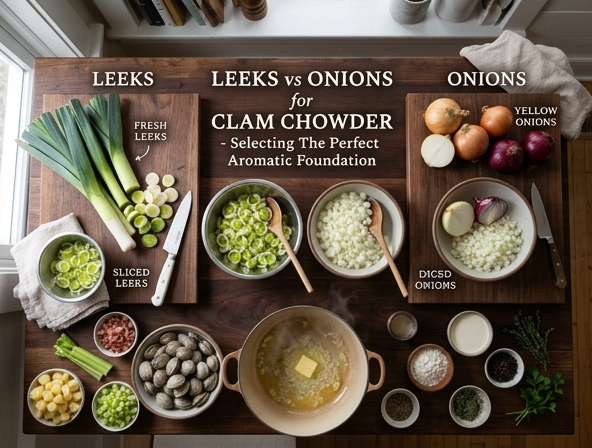
Leeks vs Onions for Clam Chowder - Selecting The Perfect Aromatic Foundation
Leeks vs. Onions for Clam Chowder
Achieving the perfect flavor balance in clam chowder is often hindered by the aggressive, sharp bite of standard yellow onions. While traditional recipes rely on this common foundation, discerning chefs now pivot toward more nuanced aromatics. Selecting the right base transforms the soup's salinity into a sophisticated, sweet complexity. Note that leeks require precise cleaning and gentle heat to ensure optimal texture. We will now evaluate these aromatics to elevate your signature chowder profile.
| Feature | Yellow Onions (Traditional) | Leeks (Alternative) |
|---|---|---|
| Flavor Profile | Sharp, aggressive, and pungent. | Nuanced, sweet, and complex. |
| Preparation | Standard culinary prep. | Requires precise cleaning to remove grit. |
| Cooking Technique | Standard heat application. | Requires gentle heat for optimal texture. |
| Resulting Impact | Standard chowder foundation. | Elevates salinity and provides a sophisticated finish. |
Leeks vs. Onions for Clam Chowder: Selecting The Perfect Aromatic Foundation
In the culinary world, few comfort foods command as much reverence as a bowl of authentic clam chowder. Whether it is the milky, potato-thickened New England style, the clear-brothed Rhode Island variation, or the tomato-forward Manhattan interpretation, the soul of the soup lies in its foundation. Before the clams, the cream, or the bacon even touch the pot, the aromatic base-the "mirepoix" of the sea-is established. For generations, chefs and home cooks have debated the merits of the two titans of this foundation: the humble onion and the sophisticated leek. Choosing between them is not merely a matter of preference; it is a fundamental decision that dictates the balance, texture, and character of your chowder.
The Case for the Onion: The Traditional Workhorse
The onion is the undisputed heavyweight champion of base aromatics. In almost every classic clam chowder recipe, yellow or white onions are the default. There is a scientific reason for this: onions are high in sulfur compounds and natural sugars, which undergo a dramatic transformation when sweated slowly in butter or pork fat (rendered salt pork or bacon fat is traditional).
When you dice an onion and cook it down, it provides a pungent, sharp bite that mellows into a savory sweetness. This sharpness is crucial in a New England-style clam chowder, where it cuts through the density of the heavy cream and the starchy potato. The onion provides a structural "backbone" to the soup, ensuring that the flavor profile is robust enough to stand up to the briny intensity of the clams. If your goal is a chowder that feels like a hearty, stick-to-your-ribs meal, the onion is your most reliable ally.
The Case for the Leek: The Elegant Refiner
If the onion is the workhorse, the leek is the virtuoso. Belonging to the allium family but possessing a significantly milder, sweeter, and more floral flavor profile, leeks offer a level of elegance that can elevate a chowder from "pub food" to "bistro fare."
Leeks are composed of layers of tightly packed leaves, which, when sliced thinly and sweated, dissolve into a silky, almost buttery consistency. Unlike the onion, which maintains a distinct crunch if not cooked thoroughly, the leek tends to melt into the soup. This creates a luxurious mouthfeel that complements the velvety texture of a well-made cream base. Because of their subtle flavor, leeks allow the delicate sweetness of the clams to take center stage, rather than competing with them. This makes them an exceptional choice for clear, broth-based chowders where you want the purity of the seafood to shine.
The Texture and Preparation Factor
When choosing your aromatic, consider the amount of prep time and the desired texture. Onions are straightforward; they are easily peeled, diced, and thrown into the pot. They provide a reliable consistency. Leeks, however, require a bit more finesse. Because they grow in sandy soil, they are notorious for hiding grit between their layers. Proper preparation requires slicing them lengthwise, fanning them out under running water, and ensuring every crevice is cleaned.
From a texture standpoint, onions offer a "pop" of contrast against the soft clams and potatoes. Leeks, by contrast, offer a cohesive, integrated texture. If you dislike the occasional crunch of an onion, the leek is unequivocally superior. Its ability to practically vanish into the soup base is a secret weapon for those who prefer a smooth, homogenous chowder.
Finding the Middle Ground: The Hybrid Approach
Why choose one when you can harness the best of both worlds? Many seasoned chefs advocate for a hybrid foundation. By utilizing a 70/30 split-mostly leeks with a smaller portion of sweet yellow onion-you achieve the best of both aromatic profiles. The onion provides that necessary "punch" and savory depth to anchor the soup, while the leeks introduce that buttery, refined sweetness and the silky texture that defines the best chowders.
This hybrid approach is particularly effective when you are using high-quality, fresh-shucked clams. You get the depth of the onion to balance the richness of the cream, and the elegance of the leek to highlight the natural salinity of the shellfish. It is a harmonious marriage that ensures no single ingredient dominates the palate.
Which Should You Choose?
The choice ultimately boils down to the *identity* of the chowder you are preparing:
- Choose Onions if: You are making a classic, heavy New England-style chowder served in a sourdough bread bowl. You need that sharp, assertive flavor to cut through the fat and starch.
- Choose Leeks if: You are preparing a delicate, lighter chowder or a seafood stew. If you are aiming for a refined, upscale experience, or if you prefer a silky, uniform texture, leeks are the superior choice.
- Choose the Hybrid if: You want a "signature" chowder that surprises your guests. This is the professional route-balanced, complex, and deeply satisfying.
Final Tips for the Perfect Base
Regardless of whether you choose onions, leeks, or both, the key to success is patience. Never rush the sweating process. Use high-quality butter or rendered pork fat, keep the heat low, and let the aromatics become translucent and soft-never brown. Browning adds a nutty, caramelized flavor that, while delicious in French onion soup, can muddy the clean, oceanic profile of a good clam chowder.
At the end of the day, the aromatic foundation is the bridge between the land and the sea. Treat it with the respect it deserves, prepare it with care, and you will find that your chowder gains a depth of character that transforms a simple soup into a memorable culinary event.
Disclaimer:
The information provided on Eateryn is for general educational and informational purposes only and is not intended as medical, nutritional, or healthcare advice. It should not be used to diagnose, treat, cure, or prevent any disease or medical condition.
Always consult a qualified physician, registered dietitian, or other certified healthcare professional before making changes to your diet, exercise routine, or lifestyle, or regarding any medical questions or concerns you may have. Never disregard or delay seeking professional medical advice because of something you have read on this website.