
Lean Beef vs 80/20 Chuck For Meatloaf - Mastering Fat Content Ratios
Lean Beef vs 80/20 Chuck for Meatloaf
Many home cooks struggle with meatloaf that results in a dry, crumbly texture. Navigating the choice between standard lean beef and 80/20 chuck is essential, as your fat-to-protein ratio dictates both flavor and cohesion. While 90/10 beef offers structural integrity, it often lacks necessary moisture; conversely, 80/20 chuck provides superior succulence, provided you manage the rendering process. This guide examines how to calibrate your protein selection to ensure a perfectly succulent, stable loaf every time.
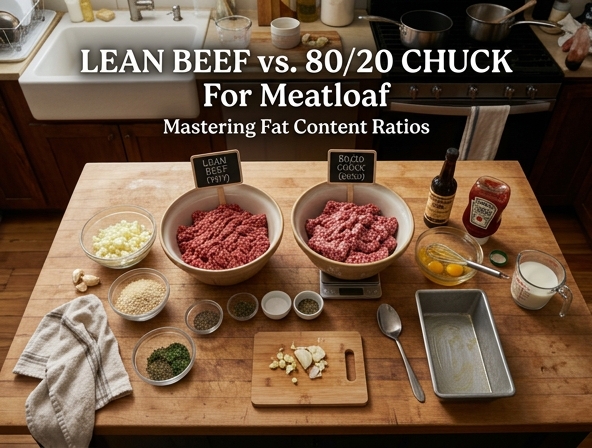
| Meat Type | Key Characteristics | Performance in Meatloaf |
|---|---|---|
| 90/10 Lean Beef | High protein-to-fat ratio. | Provides excellent structural integrity but often results in a dry, crumbly texture. |
| 80/20 Chuck | Higher fat content. | Provides superior moisture and flavor, though it requires careful management of rendering during cooking. |
| Summary: Success in meatloaf relies on balancing protein for structure and fat for succulence. Aim for a ratio that ensures a stable, moist final product. | ||
Lean Beef vs. 80/20 Chuck: Mastering the Fat Ratio for the Perfect Meatloaf
The meatloaf is perhaps the most misunderstood dish in the American culinary canon. Often relegated to the realm of "utilitarian comfort food," it is frequently treated as a receptacle for leftovers rather than a precise technical exercise. Yet, any professional chef will tell you that the soul of a truly great meatloaf lies in the fat-to-lean ratio. The debate between using lean ground beef and the traditional 80/20 chuck blend is not merely a matter of health versus indulgence-it is a fundamental decision that dictates the texture, moisture, and flavor profile of the final product.
The Case for the Golden Ratio: 80/20 Ground Chuck
In the world of ground beef, 80/20 chuck is widely considered the "gold standard" for a reason. Comprising 80% lean muscle and 20% fat, this specific ratio offers a self-basting mechanism that is difficult to replicate with leaner cuts. When you bake a meatloaf, the ambient heat of the oven causes the internal fat content to render. In an 80/20 mixture, that rendered fat works its way through the protein matrix, coating the fibers and preventing the meat from seizing up and becoming dense or crumbly.
Beyond texture, 80/20 chuck provides a depth of savory flavor that lean beef simply cannot match. Fat is the primary vehicle for flavor compounds; it carries aromatic notes and provides a luxurious mouthfeel that triggers the brain's perception of "richness." When you use chuck-which typically comes from the shoulder of the cow, a hardworking muscle with superior beefy flavor-you are choosing a meat that has both the structural integrity to hold a shape and the chemical profile to stay succulent throughout an hour-long bake.
The Lean Beef Challenge: Navigating the 90/10 and 95/5 Landscape
Choosing lean beef (90/10 or 95/5) is often driven by a desire for a lighter meal or reduced saturated fat intake. However, from a culinary standpoint, lean meat is a high-maintenance ingredient. Because lean beef lacks the internal marbling of chuck, it is inherently prone to dryness. Once the moisture evaporates during the long cooking time required for a loaf, you are left with a texture that is often chalky, fibrous, and "tight."
If your dietary requirements dictate the use of lean beef, you cannot simply swap it into a standard recipe and expect the same result. You must compensate for the lack of internal fat through the addition of external fats and moisture-retaining binders. This is where techniques like the panade become non-negotiable. A panade-a mixture of breadcrumbs soaked in milk or cream-adds a hydration reservoir to the meat, acting as a buffer against the heat. Without a robust panade, lean meatloaf will almost inevitably fail to achieve that "melt-in-your-mouth" quality.
The Science of Rendering and Mouthfeel
To understand why these ratios matter, one must look at the physics of the oven. Meatloaf is a large, dense mass; it takes significant time for the center to reach a safe internal temperature of 160°F (71°C). During that time, the meat is subjected to prolonged heat. In a lean meatloaf, the proteins coagulate quickly, expelling their natural juices and shrinking. By the time the center is cooked, the edges are often overcooked and dry.
The fat in an 80/20 blend acts as a heat-transfer agent and a textural lubricant. It slows the coagulation of the proteins, allowing the loaf to remain tender. Furthermore, the intramuscular fat in chuck creates pockets of moisture that keep the loaf succulent even if you accidentally cook it for a few minutes past the target temperature. It is a forgiving medium, whereas lean beef is unforgiving.
Strategies for Success: Elevating the Blend
If you find yourself torn between the flavor of 80/20 and the lightness of lean beef, the best approach is often a hybrid methodology:
- The Custom Blend: Many chefs prefer a mixture of 50% 80/20 chuck and 50% lean ground sirloin or even ground pork. The pork adds a sweetness and a different type of fat that renders more readily, ensuring the loaf stays moist while balancing the beefy intensity of the chuck.
- Fat Injection via Aromatics: If you must use lean beef, sauté your aromatics (onions, garlic, celery, and carrots) in a generous amount of butter or olive oil before adding them to the meat. This infuses the meat with flavor *and* adds the necessary fat content to compensate for the lean cut.
- The Bacon Wrap: One of the oldest tricks in the book, wrapping a lean meatloaf in thin strips of bacon serves two purposes: it creates a protective barrier that keeps moisture inside, and the bacon fat renders down into the top of the loaf, adding flavor where it's needed most.
- The Panade Rule: Regardless of the fat content, never skip the panade. Whether using 80/20 or 90/10, soaking your breadcrumbs in milk creates a protein-structure stabilizer that keeps the meatloaf airy rather than dense.
Conclusion: The Verdict
If your priority is the authentic, classic meatloaf experience-the kind that slices cleanly, stays juicy for days, and offers deep, savory satisfaction-80/20 chuck is the undisputed winner. It requires less effort, fewer "hacks," and consistently yields a superior result.
However, lean beef is not an impossible ingredient. It simply requires you to become a more proactive cook. By using a heavy panade, incorporating sautéed fats, and perhaps blending in a fattier protein like ground pork, you can achieve a "lighter" version of the classic that doesn't sacrifice quality. In the end, the ratio you choose is a tool; it is your understanding of how that fat interacts with your other ingredients that ultimately determines whether your meatloaf is a dry afterthought or the star of the dinner table.
Disclaimer:
The information provided on Eateryn is for general educational and informational purposes only and is not intended as medical, nutritional, or healthcare advice. It should not be used to diagnose, treat, cure, or prevent any disease or medical condition.
Always consult a qualified physician, registered dietitian, or other certified healthcare professional before making changes to your diet, exercise routine, or lifestyle, or regarding any medical questions or concerns you may have. Never disregard or delay seeking professional medical advice because of something you have read on this website.