
Lattice vs Full Top for Apple Pie - Aesthetic Appeal Meets Steam Ventilation
Lattice vs. Full Top for Apple Pie
Choosing between a polished full top and a rustic lattice is a common frustration for bakers balancing visual appeal with structural integrity. While traditional solid crusts offer a clean canvas, they often trap steam, leading to soggy bottoms. Conversely, lattice designs provide superior ventilation for a crisp finish, though they demand higher precision. From intricate weaves to minimalist cutouts, technique dictates success. This analysis explores how these architectural choices directly influence your pie's final texture and presentation.
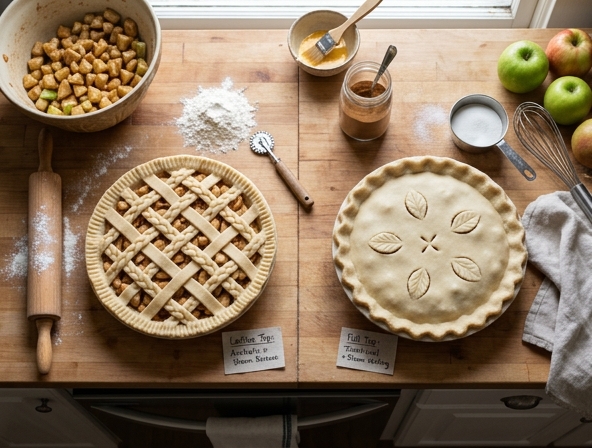
| Crust Type | Visual Appeal | Steam Ventilation | Texture Outcome | Difficulty/Effort |
|---|---|---|---|---|
| Full Top | Polished, clean, uniform canvas | Low (tends to trap steam) | Risk of soggy bottoms | Lower |
| Lattice | Rustic, intricate, decorative | High (allows steam escape) | Crisp and well-ventilated | Higher (requires precision) |
The Great Debate: Lattice vs. Full Top for the Perfect Apple Pie
In the culinary world, few topics inspire as much passionate discourse as the architecture of an apple pie. It is the quintessential comfort food, an icon of home-baking that hinges on one crucial structural decision: the crust. Do you weave an intricate, open-air lattice that showcases the amber hues of cinnamon-spiced fruit, or do you opt for a sleek, golden-brown full top that promises a hidden, steaming treasure waiting to be revealed by the knife?
While both methods yield a delicious dessert, they serve vastly different purposes regarding aesthetics, moisture control, and steam ventilation. Choosing between them isn't just about what looks better on an Instagram feed; it's about understanding the physics of your bake.
The Allure of the Lattice: A Symphony of Steam
The lattice top is often considered the "gold standard" for the classic, rustic apple pie. Visually, it is undeniable-the woven strips of pastry create a rhythmic, tactile geometry that signals craftsmanship. Beyond the aesthetic, the lattice is a high-performer when it comes to steam ventilation.
The Mechanics of the Weave: By design, a lattice crust exposes a large percentage of the apple filling to the oven's heat. This has two primary benefits:
- Enhanced Evaporation: Apple pie filling is notoriously juicy. A lattice allows moisture to escape freely throughout the baking process. This helps the juices thicken into a syrupy consistency rather than leaving you with a watery, soup-like interior.
- Pastry-to-Fruit Ratio: For those who love a crispy, buttery crust, the lattice provides more "edge" per square inch. Because each strip of dough is surrounded by hot oven air, every bite of pastry is guaranteed to be flaky and crisp rather than potentially softened by the juices underneath.
However, the lattice requires a degree of confidence. If your dough is too warm, the strips will sag. If your fruit is cut too thick, the lattice may bake unevenly. It is an art form that rewards patience and temperature control.
The Full Top: The Golden Shield of Flavor
The full-top pie, or "double crust" pie, is the stoic, protective cousin to the lattice. It is the vessel of mystery. When you place a solid sheet of pastry over your apples, you are creating a sealed environment. This approach is rooted in the tradition of "pot-pie" style fruit baking, where the crust acts as a pressure cooker of sorts.
The Benefits of the Enclosure:
- Flavor Infusion: Because the steam is trapped, the aromatic compounds of the apples and spices circulate throughout the pie, intensifying the flavor profile. The fruit softens evenly, resulting in a more uniform, jam-like texture.
- Structural Integrity: If you are baking a pie that needs to be transported, a full top offers better structural stability. It holds the pile of apples in place, preventing the shifting and collapsing that can sometimes occur with a lattice.
- The Canvas for Creativity: A full top is a blank canvas. It allows for elaborate venting designs-think maple leaves, braids, or initials-which can turn a simple dessert into a thematic centerpiece.
The primary challenge with a full top is the danger of a "soggy bottom" and an overly thin, runny filling. This is why venting is not just a suggestion; it is a culinary necessity. Without proper vents, the steam buildup can cause the crust to puff up unnaturally or, worse, blow out the sides of the pie.
The Science of Ventilation: Making Your Choice
Regardless of which style you choose, ventilation is the key to preventing a soggy crust. If you opt for a full top, you must ensure that steam can escape. A common mistake is relying on a few small fork pricks. Instead, consider aggressive vents: four deep slashes emanating from the center, or using a cookie cutter to create a central decorative chimney. The goal is to allow the steam to escape quickly so the bottom crust can crisp up alongside the top.
If you have an apple variety that is particularly high in moisture, such as a Granny Smith or a Braeburn, the lattice is often the safer bet. These apples produce a significant amount of liquid as they break down; giving that moisture an easy exit path ensures your crust remains crisp.
Conversely, if you are using firmer, less juicy apples or a blend that includes dry fruits like cranberries or dried cherries, a full top works beautifully. The structure of the full crust helps hold those drier ingredients together and prevents them from dehydrating too quickly in the oven.
Final Verdict: Which Should You Choose?
Ultimately, the choice comes down to the personality of your pie:
Choose the Lattice if: You prioritize a high ratio of flaky crust, you enjoy a rustic presentation, or you are using extremely juicy, high-pectin apples that need help thickening their own syrups.
Choose the Full Top if: You love the experience of cutting into a pristine, golden dome, you want to showcase intricate pastry art, or you prefer a pie with a more uniform, jam-like, and intensely flavorful apple filling.
Neither approach is objectively "better" than the other. Both are expressions of the baker's intent. The next time you find yourself standing over your chilled dough, rolling pin in hand, ask yourself what you want the pie to say. Do you want to showcase the fruit, or protect the secret of the spices within? Either way, as long as the butter is cold and the apples are tart, you have already won.
Disclaimer:
The information provided on Eateryn is for general educational and informational purposes only and is not intended as medical, nutritional, or healthcare advice. It should not be used to diagnose, treat, cure, or prevent any disease or medical condition.
Always consult a qualified physician, registered dietitian, or other certified healthcare professional before making changes to your diet, exercise routine, or lifestyle, or regarding any medical questions or concerns you may have. Never disregard or delay seeking professional medical advice because of something you have read on this website.