
Keto Vs. Traditional Bun For Burger - Diet-Friendly Options
Transitioning to a keto-friendly diet often makes enjoying a classic burger feel like an insurmountable culinary challenge. While traditional wheat buns remain the industry standard, their high glycemic impact often misaligns with metabolic health goals. By selecting nutrient-dense alternatives, you can enjoy your meal without compromising your progress. Note that caloric density remains a critical factor even with low-carb options like lettuce wraps or almond flour buns. This guide compares both to inform your choices.
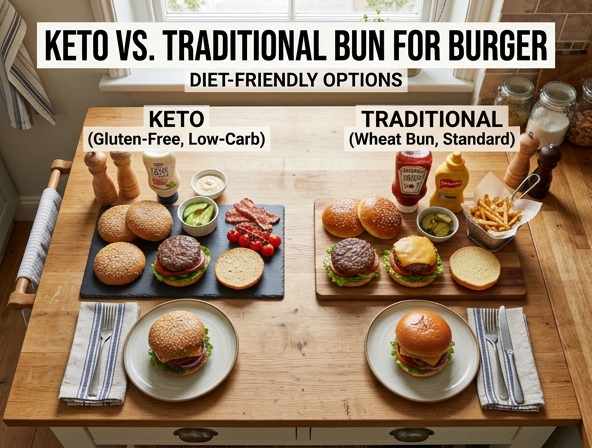
| Feature | Traditional Wheat Bun | Keto-Friendly Alternative |
|---|---|---|
| Glycemic Impact | High; may hinder metabolic health goals. | Low; aligns with metabolic health goals. |
| Common Ingredients | Standard wheat-based flour. | Lettuce wraps, almond flour, etc. |
| Main Consideration | High carbohydrate content. | Caloric density remains a factor despite being low-carb. |
The Great Burger Debate: Keto vs. Traditional Buns
There is perhaps no meal more iconic to the Western culinary experience than the classic cheeseburger. Whether it's backyard grilling on a Sunday afternoon or a quick stop at a local diner, the burger is a symbol of comfort. However, for those navigating health-conscious lifestyles, the traditional burger bun has become a point of contention. Is it a harmless delivery vehicle for meat and cheese, or is it a hidden obstacle to your health goals? As the popularity of ketogenic and low-carb diets continues to soar, the "Keto vs. Traditional Bun" debate has moved from niche forums to the center of the dinner plate.
The Traditional Bun: The Carb-Heavy Staple
Traditional burger buns are marvels of food engineering. They are designed for one purpose: to be light, airy, and capable of soaking up grease without falling apart. To achieve that signature fluffiness, manufacturers rely on refined wheat flour, sugar (or high-fructose corn syrup), and yeast. While this combination creates the perfect structural integrity for a juicy burger, it comes with a nutritional cost.
A standard brioche or white bun can easily contain 25 to 40 grams of carbohydrates. For someone on a ketogenic diet, where daily net carb limits are often capped at 20 to 50 grams, a single burger bun represents an entire day's worth of carbohydrates. This spike in glucose leads to an inevitable surge in insulin, which, in a metabolic state focused on burning fat, can trigger an immediate shift toward fat storage and halt the process of ketosis.
The Rise of the Keto Bun
Keto-friendly buns have emerged as the industry's answer to the carb-conscious demand. These are typically crafted from high-fiber, high-fat ingredients like almond flour, coconut flour, psyllium husk, and vital wheat gluten (in some versions). By removing the refined starches, these buns offer a much lower net-carb profile-often containing as few as 2 to 5 grams of net carbs per serving.
The Texture Trade-off: The biggest criticism leveled against keto buns has historically been their texture. Because they lack the gluten structure found in white bread, early keto breads were often described as "dense," "grainy," or "eggy." However, recent advancements in baking science have bridged this gap. Many modern keto breads now incorporate xanthan gum and specialized fiber blends that mimic the "chew" of a traditional bun, making the sensory experience significantly closer to the "real thing."
Nutritional Comparison: A Closer Look
When choosing between the two, it's helpful to look at the macro profile side-by-side:
- Traditional Bun: Primarily simple carbohydrates. Low protein, low fiber, higher glycemic index. It provides a quick burst of energy, which is usually followed by a "carb crash."
- Keto Bun: Primarily healthy fats and dietary fiber. Often significantly higher in protein than traditional bread. The fiber content helps maintain blood sugar stability and promotes satiety, meaning you are less likely to overeat.
If your goal is blood sugar management, weight loss, or metabolic flexibility, the keto bun is objectively superior. However, it is worth noting that some keto-labeled products rely on processed oils or artificial sweeteners. Always read the labels; a "keto" label is not always a synonym for "whole-food healthy."
Beyond the Bun: The Best Diet-Friendly Alternatives
If you aren't a fan of manufactured keto buns, or if you prefer to keep your diet closer to whole foods, there are several "bunless" strategies that actually enhance the flavor of the burger patty itself:
- The Lettuce Wrap: The gold standard for low-carb purists. Using a large leaf of iceberg or butter lettuce provides a refreshing, crisp contrast to the salty, savory meat. It's naturally calorie-free and allows the quality of the beef to shine.
- The Portobello Mushroom "Bun": For those who love umami, roasting two large Portobello mushroom caps makes for a sophisticated, juicy substitute. The mushrooms absorb the burger juices, creating a rich flavor profile that bread simply cannot replicate.
- Cloud Bread: If you enjoy baking, cloud bread (made from eggs, cream cheese, and cream of tartar) is an incredibly light, airy, and protein-packed alternative. It's delicate, but it feels like a genuine baked good.
- The "Naked" Burger: Sometimes, the best way to enjoy a burger is with a knife and fork. Serving your patty on a bed of greens or with a side of roasted vegetables turns your meal into a high-quality nutrient-dense feast without any unnecessary filler.
Tips for Success at Home and Out
If you are committed to the keto lifestyle, the biggest hurdle is usually convenience. When dining out, do not be afraid to ask for your burger "lettuce-wrapped" or "bunless in a bowl." Most restaurants are well-versed in these requests today. When cooking at home, the secret to a great keto bun is toasting. Because keto buns have a higher fat content, they toast beautifully in a skillet with a little bit of butter, which helps crisp up the exterior and improve the structural integrity of the sandwich.
Final Thoughts: It's About the Experience
The burger is a vessel for great ingredients-grass-fed beef, aged cheddar, crisp onions, and ripe tomatoes. The bun is simply the handle. While traditional buns offer a nostalgic texture, they often come at the expense of our energy levels and metabolic goals. By embracing keto-friendly alternatives or creative "bunless" options, you aren't just cutting carbs; you are prioritizing the actual components of the burger that make it delicious in the first place.
Ultimately, the best choice is the one that fits your specific dietary needs while keeping you satisfied. Whether you opt for a store-bought almond flour bun or a classic lettuce wrap, you can enjoy the satisfaction of a great burger without compromising your health journey.
Disclaimer:
The information provided on Eateryn is for general educational and informational purposes only and is not intended as medical, nutritional, or healthcare advice. It should not be used to diagnose, treat, cure, or prevent any disease or medical condition.
Always consult a qualified physician, registered dietitian, or other certified healthcare professional before making changes to your diet, exercise routine, or lifestyle, or regarding any medical questions or concerns you may have. Never disregard or delay seeking professional medical advice because of something you have read on this website.