
Ketchup vs Mustard for Hot Dog - The Great Condiment Debate
Choosing the ideal condiment for a hot dog often creates unnecessary culinary friction. While most diners default to familiar pantry staples without consideration, understanding the distinct chemistry of flavor profiles elevates the experience significantly. Note that while preference remains subjective, balance is the objective goal. For instance, yellow mustard provides essential acidity to cut through savory fats, whereas ketchup introduces complex sweetness. This analysis explores these classic condiments to help you master your next meal.
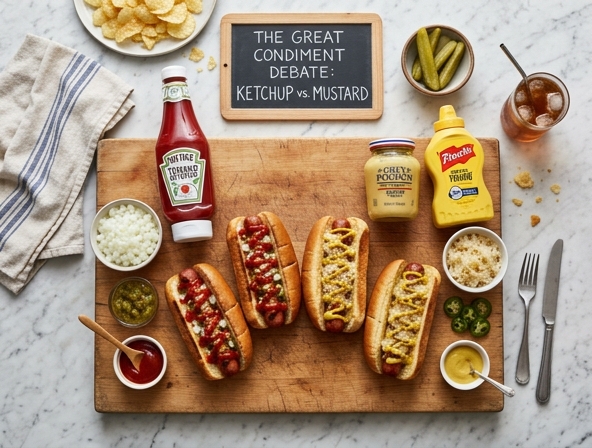
| Condiment | Flavor Profile | Culinary Purpose |
|---|---|---|
| Mustard | Acidic | Cuts through the savory fats of the hot dog to create balance. |
| Ketchup | Complex Sweetness | Introduces sweetness to complement the savory elements of the meal. |
The Great Condiment Divide: Ketchup vs. Mustard in the Hot Dog World
There are few culinary debates as culturally entrenched and fiercely defended as the question of what belongs on a hot dog. Across the backyards, ballparks, and street corners of America, a silent war is waged every time a grill is fired up. In one corner stands the yellow giant, the sharp and tangy staple of tradition: mustard. In the other stands the sweet, tomato-based king of the pantry: ketchup. While it might seem like a trivial preference, the choice between these two condiments is a window into regional identity, culinary philosophy, and the deeply ingrained rules of gastronomic etiquette.
The Case for Mustard: The Purist's Choice
To understand the dominance of mustard in the world of hot dogs, one must look at the science of flavor. Hot dogs are inherently fatty, savory, and salty. The meat-whether it is beef, pork, or a blend-requires a flavor profile that cuts through that richness. Mustard, particularly the classic American yellow mustard, is built on vinegar and turmeric. This sharp acidity acts as a palate cleanser, slicing through the heavy oils of the sausage and bringing a necessary brightness to every bite.
Beyond yellow mustard, the culinary landscape expands into spicy brown, stone-ground, and Dijon varieties. Fans of mustard argue that these options allow for a sophisticated interaction with the meat. A grainy, spicy brown mustard adds texture and a lingering heat that elevates the hot dog from a simple snack to a deliberate culinary experience. In this worldview, the hot dog is a canvas for flavor profiles that are earthy, sharp, and biting.
The Case for Ketchup: The Sweetness of Nostalgia
Ketchup, conversely, is the darling of the masses and the quintessential taste of childhood. Its appeal is rooted in the "bliss point"-a combination of salt, sugar, and acid that is scientifically engineered to be universally pleasing. While mustard provides a sharp, aggressive contrast, ketchup offers a round, comforting sweetness that balances the saltiness of the processed meat.
For many, the hot dog is not a high-brow culinary project; it is a comfort food. Ketchup provides a familiar, rounded flavor that has been a staple of American family life for generations. Those who defend ketchup often argue that the "anti-ketchup" movement is nothing more than pretentious gatekeeping. They see the hot dog as an egalitarian food-something meant to be enjoyed however the eater likes best. To these people, the idea that a tomato-based condiment is "wrong" is an absurdity that ignores the simple joy of eating what you love.
The Chicago Stigma: Why the Rule Exists
We cannot discuss this debate without addressing the elephant in the room: the Chicago-style hot dog. In the Windy City, putting ketchup on a hot dog is not just a preference; it is a cultural taboo. The traditional Chicago dog-an all-beef frankfurter on a poppy-seed bun, topped with yellow mustard, neon green relish, chopped onions, tomato wedges, a pickle spear, sport peppers, and celery salt-is a masterclass in texture and balance. The purists argue that adding ketchup introduces a cloying sweetness that drowns out the nuances of the other seven ingredients.
This "no-ketchup" mandate has become a point of regional pride. It is a way for a city to define its identity through its food. By rejecting ketchup, the Chicago hot dog culture asserts that their way is the "correct" way. This has led to the common phenomenon of hot dog stands charging extra for ketchup or simply refusing to stock it altogether, reinforcing the idea that the hot dog is a protected, sacred entity.
The Middle Ground: Fusion and Evolution
While the rivalry between ketchup and mustard dominates the conversation, the modern culinary landscape is becoming increasingly fluid. We are living in the era of the "gourmet hot dog," where the binary of ketchup vs. mustard is being disrupted by a wave of new toppings. Sriracha, aioli, caramelized onions, kimchi, and even crushed potato chips are finding their way onto the bun.
As palates become more adventurous, the historical rigidity of the hot dog is softening. Many modern chefs argue that the "right" condiment is whichever one complements the specific quality of the sausage. If you are eating a high-end, smoked artisan sausage, a delicate stone-ground mustard might be the better choice. If you are eating a backyard-variety frank at a children's birthday party, ketchup provides that necessary, uncomplicated hit of sugar and acid that makes the experience nostalgic and satisfying.
Conclusion: A Matter of Taste
At the end of the day, the Great Condiment Debate is a testament to how seriously Americans take their comfort food. Whether you are a mustard loyalist who believes that acidity is the only way to respect the meat, or a ketchup advocate who values the sweetness and familiarity of the classic blend, your choice says something about what you value in a meal.
Perhaps the true answer to the hot dog dilemma is not to pick a side, but to embrace the variety. Culinary traditions exist to guide us, but personal taste exists to liberate us. Whether it's a stripe of yellow mustard, a dollop of ketchup, or a chaotic mix of both, the goal of the hot dog remains the same: to provide a moment of simple, handheld joy. So, the next time you hold a hot dog in your hand, don't worry about the rules of the city or the judgment of the purists. Dress it the way you want, take a big bite, and enjoy the debate while it lasts.
Disclaimer:
The information provided on Eateryn is for general educational and informational purposes only and is not intended as medical, nutritional, or healthcare advice. It should not be used to diagnose, treat, cure, or prevent any disease or medical condition.
Always consult a qualified physician, registered dietitian, or other certified healthcare professional before making changes to your diet, exercise routine, or lifestyle, or regarding any medical questions or concerns you may have. Never disregard or delay seeking professional medical advice because of something you have read on this website.