
Honey vs Malt for Bagel - Balancing the authentic boiling syrup
Achieving the quintessential, chewy bagel crust often leads bakers to debate between honey and barley malt syrup. While common recipes rely on honey for simple sweetness, malt provides that deep, authentic amber finish sought by connoisseurs. Note that honey's higher sugar content risks premature burning during long bakes. By selecting malt, you ensure a superior, traditional aesthetic. This guide evaluates how to strategically balance your boiling bath to optimize texture and flavor for your next professional batch.
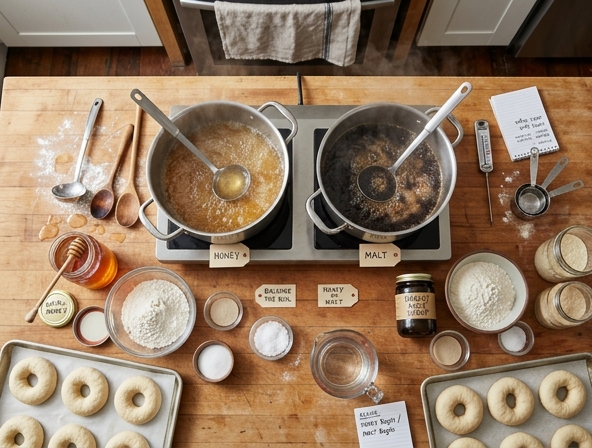
| Feature | Honey | Barley Malt Syrup |
|---|---|---|
| Flavor Profile | Simple, clean sweetness | Deep, complex, and authentic |
| Visual Finish | Standard browning | Deep, professional amber hue |
| Baking Risk | Higher sugar content leads to burning | More stable for longer bakes |
| Best For | Home bakers/General use | Authentic, traditional results |
The Alchemy of the Boil: Honey vs. Malt in Bagel Craft
For the home baker venturing into the world of authentic bagels, the boil is often seen as the final hurdle-a mysterious, steamy process that separates a dense, sad bread roll from a legitimate New York-style bagel. But once the water is bubbling, a new question arises: What should I put in the pot? The debate between honey and malt syrup is as old as the bagel-making tradition itself, and the choice you make doesn't just affect the sweetness-it alters the chemical reaction that creates the iconic, blistered, chewy crust.
Why Do We Boil? The Science Behind the Surface
Before choosing a sweetener, it is vital to understand why we boil bagels at all. The boil serves two primary purposes: it gelatinizes the surface starches, creating that distinctive “chew,” and it sets the crust before the bagel hits the intense heat of the oven. This gelatinization is the reason bagels have a glossy, tight, and resistant exterior. The addition of a sweetener to the water-whether honey, molasses, or malt-is the catalyst for the Maillard reaction. It provides the sugars necessary to achieve that deep, mahogany browning that defines a high-quality bagel.
The Case for Honey: The Home Baker's Sweet Staple
Honey is arguably the most common additive in home bagel recipes. Its accessibility and floral, delicate flavor profile make it a favorite for bakers who want a hint of warmth in their crumb.
- Flavor Profile: Honey imparts a subtle, rounded sweetness that is unmistakable. It is less "earthy" than malt, making it a great choice for bakers who might be experimenting with unique bagel toppings like poppy seeds, sesame, or even sweet variations like cinnamon raisin.
- Availability: Almost every pantry contains honey, and it dissolves effortlessly in boiling water.
- The Downside: While honey creates a lovely sheen, it often lacks the complex, savory-sweet depth that connoisseurs identify as the "classic" bagel shop taste. Because honey is essentially a simple sugar, it can lead to a more uniform browning that lacks the distinct, slightly bitter, and toasted character of malt.
The Case for Malt: The Soul of the New York Bagel
When you visit a legendary bagel institution in New York or Montreal, you aren't smelling honey. You are smelling barley. Barley Malt Syrup (BMS) is the heartbeat of the authentic bagel. It is a thick, dark, viscous substance extracted from sprouted barley, and it provides a profile that is vastly different from honey.
It is important to clarify a common point of confusion here: Barley Malt Syrup (for the boil/dough) vs. Diastatic Malt Powder (for the dough). Diastatic malt powder is used as an enzyme to help yeast feed and improve dough elasticity. Barley Malt Syrup, however, is a flavor powerhouse. It is deep, nutty, and slightly bitter, resembling molasses but with a more sophisticated, cereal-like complexity.
Using malt in the boil water doesn't just sweeten the crust; it provides the specific chemical environment that encourages the deep, dark color associated with traditional boiled bagels. It adds a savory undertone that perfectly balances the salt in the dough, creating that "umami" quality that makes a plain bagel taste like more than the sum of its parts.
The Balancing Act: Chemistry and Color
If you are aiming for a darker, "old-school" crust, malt is the undisputed winner. The proteins and sugars in barley malt syrup interact with the starches during the boil and subsequent bake to create a more resilient, slightly thicker crust. Honey, by contrast, is more hygroscopic-meaning it attracts moisture-which can sometimes lead to a softer crust if the bagel isn't baked long enough or at a high enough temperature.
However, there is a balance to be struck. Too much malt can result in a crust that is almost too dark, tasting slightly burnt or overly bitter. A good rule of thumb for the home baker is to use approximately 1 to 2 tablespoons of Barley Malt Syrup per 4 liters (about 1 gallon) of water. If using honey, you can be slightly more generous with the amount, as its flavor is less pungent, but keep in mind that honey will not give you that "authentic" hue.
Practical Application: Tips for Success
Whether you choose honey or malt, the technique remains the same. Here are a few tips to master your boiling liquid:
- Dissolve thoroughly: Ensure your sweetener is fully integrated into the water before dropping in the dough. A clump of malt at the bottom of the pot can create localized burning or uneven color.
- Add the Sweetener Late: Bring your water to a boil, then add the honey or malt. Don't let the mixture boil for an extended time with the sweetener; it can caramelize too quickly and lose its efficacy.
- Keep the Water Rolling: The boil must be a vigorous simmer, not a lazy bubble. You want the water to move the bagels slightly, ensuring an even coating on all sides.
- Don't crowd the pot: Boiling too many bagels at once lowers the water temperature and dilutes the effectiveness of the sweetener, leading to a limp crust.
The Verdict: Which Should You Choose?
Ultimately, the choice comes down to the bagel experience you want to create. If you are a home baker looking for a crowd-pleasing bagel with a bright, clean flavor profile that pairs well with everything from cream cheese to jam, honey is a fantastic and reliable tool.
If you are chasing the ghost of the classic, chewy, deep-brown New York bagel-the one that requires no accompaniment other than a swipe of butter because the dough itself is so flavorful-Barley Malt Syrup is the gold standard. It adds a depth of character that defines the craft, acting as the bridge between simple bread and a true, artisanal bagel.
Experimentation is the baker's true craft. Try a batch with honey, and then a batch with malt. You might find that for your specific oven and flour, a 50/50 blend provides the exact balance of sweetness and savory complexity you've been searching for. The goal, after all, is not just to recreate a classic, but to master the chemistry that makes the bagel one of the most beloved breads in the world.
Disclaimer:
The information provided on Eateryn is for general educational and informational purposes only and is not intended as medical, nutritional, or healthcare advice. It should not be used to diagnose, treat, cure, or prevent any disease or medical condition.
Always consult a qualified physician, registered dietitian, or other certified healthcare professional before making changes to your diet, exercise routine, or lifestyle, or regarding any medical questions or concerns you may have. Never disregard or delay seeking professional medical advice because of something you have read on this website.