
Honey Vs Brown Sugar For Buffalo Wings - Achieving The Perfect Sweet And Spicy Balance
Perfecting Buffalo Wing Glazes
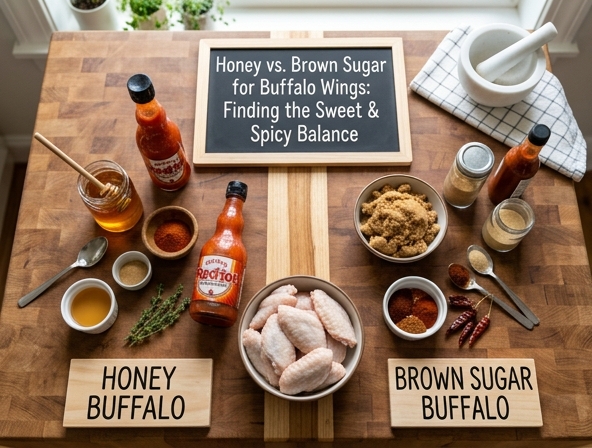
Achieving the ideal sweet-spicy ratio often frustrates home cooks, as many rely on generic bottled sauces that lack nuance. Understanding the distinct properties of honey versus brown sugar is essential; honey offers floral brightness, while brown sugar provides deep, molasses-rich structure. For instance, honey excels in high-gloss glazes, whereas brown sugar supports superior caramelization during baking. This analysis details how to leverage these sweeteners to refine your next batch of wings with professional-grade balance.
| Sweetener | Key Characteristics | Ideal Application | Culinary Impact |
|---|---|---|---|
| Honey | Floral and bright | High-gloss finishing glazes | Provides a polished, vibrant sweetness |
| Brown Sugar | Deep, molasses-rich | Baking and roasting | Promotes superior caramelization and depth |
Honey Vs. Brown Sugar For Buffalo Wings: Achieving The Perfect Sweet And Spicy Balance
The quest for the quintessential buffalo wing is a journey defined by the delicate friction between fire and flavor. While the classic Buffalo sauce-a simple, aggressive emulsification of cayenne pepper sauce and butter-remains the gold standard for traditionalists, many home cooks and professional chefs alike find themselves chasing a more nuanced profile. That “sweet and spicy” craving is a universal culinary siren song, and the path to achieving it usually leads to a crossroads: Honey or Brown Sugar?
Choosing between these two sweeteners is not merely a matter of what you have in your pantry. It is a decision that affects the viscosity, the char, the mouthfeel, and the overall "stickiness" of the final product. To master the art of the wing, one must understand how these two sugars behave under the high heat of a broiler or the residual warmth of a hot skillet.
The Case for Honey: Nature's High-Gloss Glaze
Honey is often the go-to sweetener for those who prize texture above all else. Because honey is essentially a super-saturated solution of natural sugars (fructose and glucose), it possesses a unique ability to coat food with a thin, glossy, and highly adhesive layer.
- The Texture Factor: Honey creates the coveted “sticky wing” effect. When tossed in a honey-based sauce, wings catch the light, looking professional and intensely appetizing.
- The Flavor Profile: Honey offers a floral, clean sweetness. It doesn't fight the vinegar-forward punch of cayenne sauce; rather, it highlights it, acting as a backdrop that lets the capsaicin heat take center stage.
- Heat Sensitivity: This is where honey requires caution. Because it is high in fructose, honey burns quickly. If you are finishing your wings under a broiler to get that crispy, caramelized edge, honey-glazed wings can transition from “perfectly charred” to “acrid black” in a matter of seconds. It is best used as a finishing glaze tossed *after* the initial fry or bake.
The Case for Brown Sugar: The Molasses Powerhouse
If honey is the high-gloss finisher, brown sugar is the depth-builder. Brown sugar-refined white sugar with molasses added back in-brings an earthy, complex, and almost savory sweetness to the table.
- Depth of Flavor: The presence of molasses is the secret weapon here. It creates a smoky, rich background note that pairs exceptionally well with the acidity of hot sauce. It feels "heavier" on the palate than honey, providing a more robust base for spice-heavy glazes.
- The Caramelization Advantage: Brown sugar is more stable than honey. When exposed to heat, it melts into the fat of the butter and the vinegar of the sauce, creating a thicker, more syrupy consistency that clings to the skin of the chicken without thinning out as dramatically as honey might.
- The Grit Potential: One challenge with brown sugar is dissolution. If you do not simmer your sauce sufficiently before tossing, you may end up with a slightly gritty mouthfeel. It requires a bit of “kitchen patience” to ensure the sugar is fully incorporated into the liquid emulsion.
The Chemistry of the Balance: Which One Wins?
The battle between honey and brown sugar is ultimately a contest between surface tension and flavor depth.
If your Buffalo wing recipe relies heavily on a high-heat char or a long stay in the oven, brown sugar is the superior choice. It provides a more stable caramelization that creates a sticky, jammy coating rather than a thin, watery one.
However, if you are looking for that classic takeout-style, finger-licking “lacquer” that drips off the wing and onto your plate, honey is unbeatable. Its viscosity is naturally higher at room temperature, making it the king of the “toss-and-serve” method.
The Professional Secret: The Hybrid Approach
Why choose one when you can harness the strengths of both? The most successful wing sauces often utilize a 70/30 split. By using brown sugar as the foundation for the sauce while it simmers, you build the necessary depth and body. By finishing the sauce with a drizzle of honey right before tossing the wings, you capture that brilliant, light-catching sheen and the floral aroma that honey provides.
Quick Tips for Implementation:
- Bloom your Spices: Regardless of your sweetener, whisk it into your butter and hot sauce while over medium-low heat. Let the bubbles subside-this allows the flavors to harmonize.
- Watch the Smoke Point: If you add your sweetener too early, you risk burning the sauce. For oven-baked wings, toss in the sauce *after* the wings have reached your desired level of crispness, then give them another 2-3 minutes in the oven to set the glaze.
- Acid Balance: If you find the honey makes the wings too cloying, add a splash of apple cider vinegar or a squeeze of lime juice. The acid cuts through the sugar, re-establishing that essential spicy-sweet tension.
Final Verdict
There is no right or wrong answer, only a matter of the experience you want to provide. Use brown sugar when you want a rich, smoky wing that stands up to a cold beer and demands a napkin. Use honey when you want a vibrant, sticky, and visually stunning appetizer that highlights the sharp, acidic bite of the hot sauce. Or, take the hybrid path-the middle ground where most legendary wing recipes are born, balancing the earthy depth of molasses with the gleaming, floral finish of nature's gold.
Disclaimer:
The information provided on Eateryn is for general educational and informational purposes only and is not intended as medical, nutritional, or healthcare advice. It should not be used to diagnose, treat, cure, or prevent any disease or medical condition.
Always consult a qualified physician, registered dietitian, or other certified healthcare professional before making changes to your diet, exercise routine, or lifestyle, or regarding any medical questions or concerns you may have. Never disregard or delay seeking professional medical advice because of something you have read on this website.