
Homemade vs Store-Bought Tortillas for Tacos - Assessing Freshness Impacts
The Art of the Tortilla
Achieving the perfect taco often hinges on the tortilla, yet many cooks struggle with brittle, uninspired store-bought options that compromise flavor. While commercial brands provide convenience, they frequently lack the structural integrity required for complex fillings. Transitioning to homemade masa-whether utilizing nixtamalized corn or high-hydration flour-introduces a textural depth that immediately elevates the dining experience. While this process demands significant preparation, the resulting quality is unmatched. This guide evaluates how freshness dictates taco excellence.
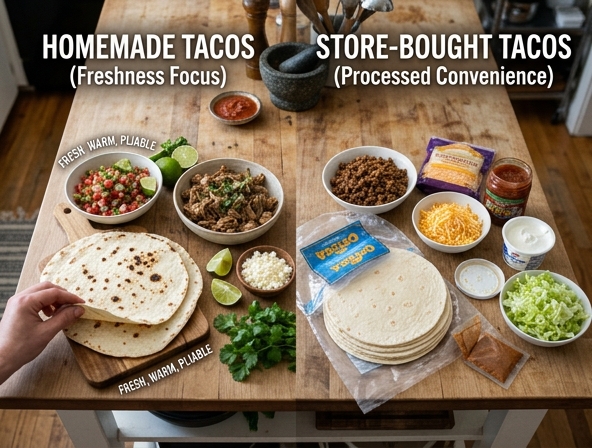
| Comparison Aspect | Store-Bought Tortillas | Homemade Tortillas |
|---|---|---|
| Convenience | High; ready-to-use. | Low; requires significant preparation. |
| Flavor & Texture | Often uninspired and lack depth. | Superior; offers textural depth and fresh taste. |
| Structural Integrity | Weak; prone to brittleness. | High; reliable for complex fillings. |
| Overall Verdict | Functional for quick, simple meals. | The key to elevating the taco experience. |
The Foundation of Flavor: Assessing the Impact of Freshness on Homemade vs. Store-Bought Tortillas
In the hierarchy of taco construction, the tortilla is often treated as a secondary vessel-a mere vehicle for the al pastor, carnitas, or grilled vegetables nestled within. However, to the discerning taco enthusiast, the tortilla is the foundation upon which the entire experience rests. A subpar tortilla can undermine the most seasoned protein, while a fresh, pliable, and properly toasted tortilla can elevate a simple taco into a culinary masterpiece. The perennial debate between homemade and store-bought tortillas is not merely one of effort versus convenience; it is a fundamental inquiry into the science of freshness and its impact on the taco-eating experience.
The Anatomy of Freshness: Why It Matters
To understand why freshness is the primary differentiator in the tortilla world, one must first look at the structural integrity of the product. A tortilla is, at its essence, a delicate balance of hydration and starch gelatinization. When a tortilla is pulled hot from the press or comal, it possesses high moisture content and a structural elasticity that allows it to fold, bend, and hold heavy ingredients without fracturing. As time passes, two processes occur: moisture loss (evaporation) and starch retrogradation (the hardening of starch molecules). Both factors contribute to the dreaded "dry-crack" phenomenon that plagues mass-produced, shelf-stable tortillas.
The Store-Bought Reality: Preservation vs. Performance
Mass-market tortillas found in the center aisles of grocery stores are designed for one primary goal: longevity. To achieve a shelf life that spans weeks or even months, manufacturers utilize additives such as calcium propionate, cellulose gum, and various enzymes. While these ingredients are safe and effective at preventing mold, they fundamentally alter the textural DNA of the tortilla.
When you purchase a store-bought tortilla, you are often buying a product that has already undergone significant cooling and retrogradation. The resulting texture is often described as "rubbery" or "papery." Even when heated, these tortillas struggle to regain the soft, pillowy bloom of a fresh product. The flavor profile is similarly muted; the subtle, earthy notes of heirloom nixtamalized corn or the rich, toasted quality of lard-infused flour are often masked by the chemical aftertaste of preservatives.
The Homemade Advantage: The Bloom of Authenticity
Making tortillas at home-whether corn-based using masa harina or flour-based using high-quality fats-replaces the "science of preservation" with the "science of bloom." When you press a fresh tortilla and place it on a scorching hot comal, the rapid evaporation of surface water creates steam within the structure of the dough. This process, often resulting in a gentle "puff," signifies that the starch has been perfectly gelatinized.
The result is a contrast in textures: a slightly charred, crispy exterior coupled with an interior that is remarkably soft and tender. The flavor profile of a homemade tortilla is complex. With corn, you get the distinct, floral, and nutty notes of nixtamalized grain; with flour, you get the richness of the fat-whether it be lard, tallow, or high-quality oil-that permeates the dough. Freshness ensures that these subtle aromatic compounds remain volatile and present, hitting the palate immediately upon the first bite.
Assessing the "Drip Test" and Structural Integrity
The true test of a tortilla's freshness is the "drip test." A fresh, homemade tortilla is highly absorbent yet structurally resilient. It can absorb the flavorful juices, salsas, and fats of the taco filling without disintegrating. Because it maintains its integrity, it doesn't require the "double-tortilla" technique often employed at taco trucks to prevent leakage. Conversely, a stale, store-bought tortilla often acts as a barrier rather than an absorber. It remains rigid and unyielding, causing liquids to pool at the bottom or run down the sides, inevitably leading to a messy, fragmented taco experience.
Bridging the Gap: When Convenience Must Prevail
While the superiority of homemade tortillas is scientifically and sensorially clear, the reality of modern life often necessitates the convenience of store-bought options. However, understanding the impact of freshness allows us to "hack" the store-bought experience. To minimize the negative impacts of long-term storage:
- Avoid the Center Aisle: Always opt for the refrigerated section of the grocery store. These products contain fewer preservatives and rely on cold-chain distribution to maintain quality.
- The Steam Technique: If you must use shelf-stable tortillas, do not simply microwave them. Wrap them in a damp paper towel and steam them briefly to reintroduce moisture.
- The Maillard Reactivation: Regardless of the source, always toast your tortilla on a dry cast-iron comal. This triggers the Maillard reaction, developing deep, toasted flavors that help mask the flat, industrial taste of preserved tortillas.
Conclusion: The Verdict
The impact of freshness on a taco cannot be overstated. A homemade tortilla acts as an active ingredient-a component that contributes flavor, aroma, and necessary structural support to the dish. While store-bought tortillas provide a functional utility, they lack the vibrancy and resilience of fresh masa or dough.
For the home cook, the transition from store-bought to homemade is perhaps the single highest-leverage move one can make to improve their taco game. The effort involved in pressing and cooking a tortilla-a process that takes mere minutes-pays dividends in the form of texture and flavor that no factory-sealed bag can replicate. Ultimately, a taco is only as good as its foundation. By choosing freshness, we honor the ingredients, the process, and the final experience of the meal.
Disclaimer:
The information provided on Eateryn is for general educational and informational purposes only and is not intended as medical, nutritional, or healthcare advice. It should not be used to diagnose, treat, cure, or prevent any disease or medical condition.
Always consult a qualified physician, registered dietitian, or other certified healthcare professional before making changes to your diet, exercise routine, or lifestyle, or regarding any medical questions or concerns you may have. Never disregard or delay seeking professional medical advice because of something you have read on this website.