
Homemade vs Frozen for Philly Cheesesteak - Assessing Convenience Versus Quality
Homemade vs. Frozen: The Philly Cheesesteak Dilemma
Balancing authentic quality with time constraints remains a challenge for enthusiasts. While most rely on frozen retail options or erratic takeout, the results often fall short of expectations. Conversely, homemade preparation grants you complete control over ingredient integrity and flavor profiles. Note that success hinges on precise ribeye slicing and heat management, much like the methods used by premier Philadelphia institutions. This analysis evaluates these preparation methods to determine the optimal balance of quality and convenience.
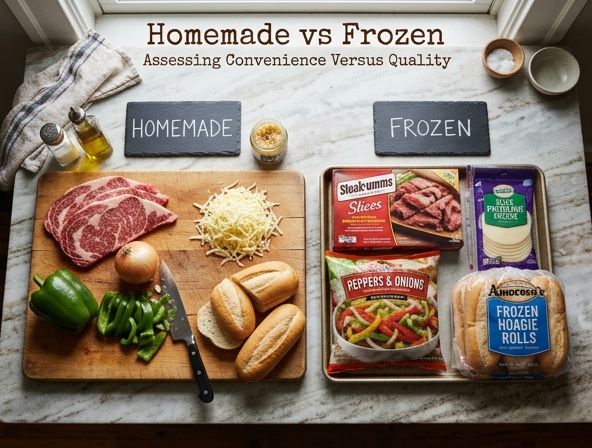
| Comparison Factor | Homemade Philly Cheesesteak | Frozen/Takeout Options |
|---|---|---|
| Quality | High: Complete control over ingredients and flavor. | Variable: Often falls short of authentic standards. |
| Convenience | Low: Requires significant preparation and effort. | High: Quick and easy solution for time constraints. |
| Technical Needs | Demands precise ribeye slicing and expert heat management. | None: Ready to eat or heat with minimal effort. |
| Overall Verdict | Best for those prioritizing taste and authenticity. | Best for those prioritizing speed and accessibility. |
The Battle of the Hoagie: Assessing Convenience Versus Quality in the Philly Cheesesteak
In the culinary pantheon of American comfort food, few items command as much reverence-or spark as much debate-as the Philadelphia Cheesesteak. It is a sandwich that transcends mere sustenance; it is a cultural institution. At its peak, a Philly cheesesteak is a symphony of thinly sliced, seared ribeye, melted cheese, and caramelized onions, all nestled within a roll that manages to be soft enough to yield yet firm enough to hold the savory contents without disintegrating. But for the home cook, a dilemma arises: do you recreate the magic from scratch in your own kitchen, or do you reach for the convenience of the frozen supermarket aisle? This assessment explores the trade-offs between the two paths.
The Anatomy of the Ideal Cheesesteak
Before weighing the two methods, one must define the standard. A true Philly cheesesteak relies on three foundational pillars: the protein, the cheese, and the bread. The meat should be high-quality ribeye, sliced paper-thin so it caramelizes rapidly when it hits a high-heat griddle. The cheese-whether the traditional processed Cheese Whiz or the sophisticated sharpness of melted provolone-must be emulsified into the meat. Finally, the roll is non-negotiable; it should ideally be a hearth-baked long roll, reminiscent of the iconic Amoroso rolls found in Philadelphia, which possess a specific structural integrity.
The Frozen Path: The Allure of Efficiency
For the average weeknight cook, the appeal of the frozen cheesesteak kit is undeniable. Manufacturers have spent decades perfecting the art of "quick-service" beef. These kits typically consist of pre-sliced, flash-frozen meat portions and sometimes a seasoning packet or pre-prepared cheese sauce.
The Pros of Frozen:
- Speed: From freezer to plate in less than ten minutes. There is no need for precise knife work or complex prep.
- Consistency: The meat is portioned and sliced to a thickness that ensures it cooks evenly every time.
- Low Barrier to Entry: You don't need a butcher or a heavy-duty meat slicer to achieve the "shaved" texture.
However, the trade-off is often a compromise in texture and flavor. Frozen steaks are often made from lower-grade cuts that have been mechanically tenderized. While this makes the meat soft, it often lacks the robust beefy depth of a fresh, high-quality ribeye. Furthermore, the "cheese" components in these kits often lean heavily toward highly processed additives, which can leave a metallic or artificial aftertaste that purists find jarring.
The Homemade Path: A Labor of Culinary Love
Cooking a cheesesteak from scratch is an exercise in craftsmanship. It requires intention, from sourcing the right cut of beef to mastering the temperature of the skillet. The process begins with the meat; most chefs recommend buying a whole ribeye steak, wrapping it in plastic, and chilling it in the freezer for about 45 minutes to an hour. This allows for the precise, razor-thin slicing required to mimic the authentic street-vendor style.
The Advantages of Homemade:
- Quality Control: You select the fat content and the grade of the beef, ensuring a superior flavor profile.
- The Sear: Fresh meat sears better than frozen, developing a deeper Maillard reaction that creates those dark, caramelized edges essential to a great sandwich.
- Customization: You have total control over the seasoning-whether it's simple salt and pepper, or a more complex blend-and you can source high-end aged provolone or authentic imported cheeses.
- The Bread Factor: When making it at home, you aren't restricted to what's in the freezer box. You can toast the bread with garlic butter, creating a toasted crunch that elevates the entire experience.
Assessing the Trade-offs
When choosing between these two, you are essentially deciding what you value most in that specific meal. If your goal is to feed a family quickly after a long day of work, the frozen route is a functional tool. It satisfies the craving without requiring the clean-up of a kitchen full of greasy pans and cutting boards.
However, the homemade route transforms the cheesesteak from a "snack" into a "meal." There is an undeniable sensory satisfaction in the smell of onions hitting a hot pan, the sound of the metal spatula chopping the meat against the griddle, and the visual of the cheese melting into the crevices of the steak. The homemade version allows for the incorporation of aromatics-fresh bell peppers, sautéed mushrooms, or even hot cherry peppers-that frozen kits rarely execute well.
The Final Verdict
Ultimately, the "better" cheesesteak depends on the occasion. The frozen variety is a triumph of industrial efficiency, perfect for a late-night fix or a casual lunch. It is a reliable, if not spectacular, approximation of the dish.
But for those who view cooking as a hobby and eating as an experience, there is no contest. The homemade cheesesteak offers a level of depth, freshness, and structural integrity that pre-packaged alternatives simply cannot match. By taking the extra time to hand-slice the beef and select premium ingredients, you aren't just making a sandwich; you are mastering a process. In the world of the Philly cheesesteak, convenience may provide the ease, but it is the hands of the cook-and the quality of the beef-that provide the soul.
Whether you choose the quick-thaw path or the butcher's counter, the Philly cheesesteak remains a testament to the idea that great food doesn't always have to be complicated-but it does have to be made with respect for the ingredients. So, preheat your skillet, sharpen your knife, and decide which version of the legend you want to build tonight.
Disclaimer:
The information provided on Eateryn is for general educational and informational purposes only and is not intended as medical, nutritional, or healthcare advice. It should not be used to diagnose, treat, cure, or prevent any disease or medical condition.
Always consult a qualified physician, registered dietitian, or other certified healthcare professional before making changes to your diet, exercise routine, or lifestyle, or regarding any medical questions or concerns you may have. Never disregard or delay seeking professional medical advice because of something you have read on this website.