
Home Oven vs Pizza Stone for Pizza - Achieving Professional Results at Home
Home Oven vs. Pizza Stone: Achieving Professional Results
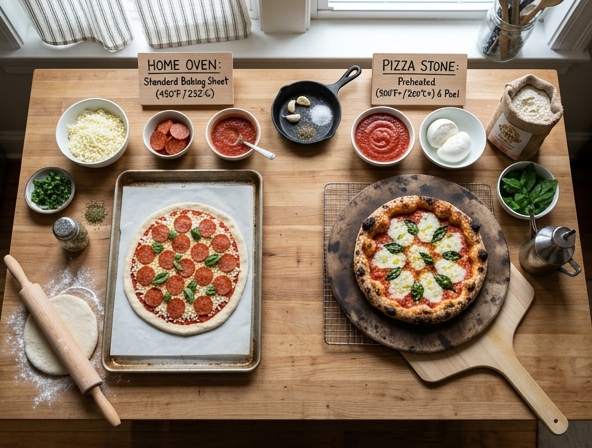
Many home cooks struggle to replicate the blistered, crispy crust of a pizzeria oven using standard kitchen equipment. While baking sheets often lack sufficient thermal conductivity, the shift to specialized gear is essential. A ceramic pizza stone provides the necessary heat intensity, provided you allow for adequate preheating. By managing these variables, you can achieve professional-grade results. This article examines the physics of heat transfer and provides actionable strategies for mastering your home pizza baking experience.
| Aspect | Summary Details |
|---|---|
| The Challenge | Standard baking sheets often fail to provide the high thermal conductivity required for a professional-grade, blistered, and crispy pizza crust. |
| The Solution | Transitioning to a ceramic pizza stone allows for significantly better heat intensity, mimicking the performance of a professional pizzeria oven. |
| Key Strategy | Success relies heavily on proper preheating; the stone must reach the necessary temperature to effectively cook the dough. |
| Objective | By understanding the physics of heat transfer and managing equipment variables, home cooks can achieve high-quality, professional results. |
Home Oven vs. Pizza Stone: Achieving Professional Results at Home
For many home cooks, the pursuit of the perfect pizza-characterized by a crisp, blistered crust, a chewy interior, and perfectly melted cheese-is the ultimate culinary challenge. We have all experienced the disappointment of a homemade pizza that emerges from the oven pale, limp, and soggy, a far cry from the wood-fired masterpieces served in authentic pizzerias. The culprit is rarely the dough recipe itself; rather, it is a fundamental mismatch between the physics of a commercial pizza oven and the environment of a standard residential oven.
The Science of the Crust: Why Your Oven Struggles
To understand why the pizza stone is such a game-changer, we must first look at how a commercial pizza oven works. Professional ovens reach temperatures upward of 800°F to 900°F. At these temperatures, the moisture in the dough evaporates almost instantly, creating the iconic "oven spring" and charred, leopard-spotted crust in under two minutes. Meanwhile, the interior of the pizza remains moist and airy.
A standard home oven, however, usually tops out at 500°F to 550°F. When you place a pizza on a metal baking sheet in this environment, the metal fails to provide a rapid transfer of heat. The dough cooks slowly, losing its moisture gradually, which often results in a bread-like, dense crust rather than the light, crispy finish we crave. This is where the pizza stone enters the equation: it acts as a thermal battery, bridging the gap between your home range and a professional hearth.
The Role of the Pizza Stone
A pizza stone, typically made of ceramic or cordierite, works on two primary physical principles: thermal mass and moisture absorption.
- Thermal Mass: By preheating the stone in your oven for at least 45 to 60 minutes, you effectively charge it with intense heat. When you slide the raw dough onto the stone, that stored energy is released instantly, giving the base of the pizza a "thermal shock." This shock is exactly what creates the upward expansion and the crisp bottom layer.
- Moisture Absorption: Unlike a metal tray, a pizza stone is porous. As the dough begins to set, the stone wicks away excess moisture from the bottom of the crust. This prevents the "soggy bottom" syndrome that occurs when steam gets trapped between the dough and a non-porous surface.
The Evolution: Pizza Stone vs. Pizza Steel
While the ceramic stone has long been the gold standard, a modern contender has emerged: the baking steel. If you are serious about home pizza, it is worth understanding the difference.
Pizza stones are excellent at wicking moisture, but they are poor conductors of heat. They take a long time to heat up and can be prone to cracking if handled roughly or exposed to thermal shock. Pizza steels, on the other hand, are highly conductive. Because steel is a metal, it transfers heat into the dough much faster than ceramic. If you want the absolute fastest, crispest crust possible in a 500°F oven, steel is arguably superior. However, for those who prefer a more traditional, hearth-baked texture, the stone remains a beloved, cost-effective tool.
Pro-Tips for Using Your Stone Effectively
Achieving a professional result isn't just about owning a stone; it is about how you use it. Here are the secrets to success:
- The Preheating Ritual: Never place your pizza in the oven until the stone has been preheating for at least an hour. The temperature gauge on your oven may say it is at 500°F, but the stone takes much longer to reach that equilibrium.
- Rack Placement: To mimic the intense top-down heat of a wood-fired oven, place your stone on the second-highest rack. This allows the stone to heat the bottom while the ambient air and the broiler work on the toppings and the crust edges.
- The Broiler Trick: About five minutes before you slide your pizza in, turn your oven to "Broil." This superheats the stone and the air inside the oven. Once the pizza is in, you can switch back to "Bake," or keep the broiler on low to get that signature char on the crust edges.
- The Parchment Paper Method: Many beginners struggle with transferring the pizza from the peel to the stone. There is no shame in using a piece of parchment paper for the first three minutes of baking. Once the crust is set, you can slide the paper out, leaving the pizza directly on the stone to finish crisping.
Conclusion: The Path to Perfection
The journey from "home-cooked pizza" to "artisanal-style pizza" is less about expensive equipment and more about mastering the tools you have. While you may never perfectly replicate the smoky, high-heat environment of a dedicated wood-fired oven, a pizza stone brings you remarkably close. By managing thermal mass, respecting preheating times, and utilizing the top-down heat of your broiler, you can transform your kitchen into a pizzeria.
The most important ingredient, however, is patience. Experiment with your hydration levels, try different flour types, and learn how your specific oven handles the heat. With a reliable stone and a few practice runs, you will soon find that the best pizza in town is the one coming out of your own oven.
Disclaimer:
The information provided on Eateryn is for general educational and informational purposes only and is not intended as medical, nutritional, or healthcare advice. It should not be used to diagnose, treat, cure, or prevent any disease or medical condition.
Always consult a qualified physician, registered dietitian, or other certified healthcare professional before making changes to your diet, exercise routine, or lifestyle, or regarding any medical questions or concerns you may have. Never disregard or delay seeking professional medical advice because of something you have read on this website.