
Hoagie Roll vs Kaiser Roll for Philly Cheesesteak - Selecting The Ideal Bread Foundation
Selecting the optimal foundation for a Philly cheesesteak is a frequent point of frustration for enthusiasts, as improper bread often results in structural failure. While purists typically gravitate toward traditional hoagie rolls or hearty Kaiser rolls, the decision significantly dictates your meat-to-bread ratio. One must stipulate that while personal texture preference varies, structural durability is essential. By examining the absorbency of hoagie rolls versus the crusty resilience of a Kaiser, this guide ensures a superior sandwich.
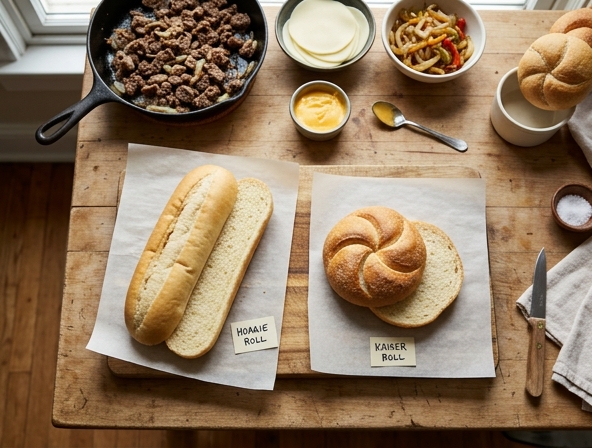
| Feature | Hoagie Roll | Kaiser Roll |
|---|---|---|
| Key Characteristic | High absorbency | Crusty and resilient |
| Structural Role | Soaks up juices for flavor integration | Provides a firm, stable foundation |
| Sandwich Outcome | Traditional texture and meat-to-bread ratio | Prevents structural failure/collapsing |
| Selection Criteria | Best for those prioritizing traditional soft texture | Best for those prioritizing durability |
Hoagie Roll vs. Kaiser Roll for Philly Cheesesteak: Selecting The Ideal Bread Foundation
To the uninitiated, the Philadelphia cheesesteak is a simple equation: thinly sliced ribeye, melted cheese, and optional fried onions, all shoved into a bread roll. But to anyone who has spent a Saturday afternoon in the neighborhoods of South Philly, the bread is not merely a container-it is the very architecture of the experience. It must support the weight of the meat, withstand the aggressive moisture of the cheese whiz or provolone, and provide the perfect crunch-to-chew ratio. This brings us to the Great Debate: the long, slender Hoagie Roll versus the compact, crusty Kaiser Roll.
The Case for the Hoagie Roll: The Industry Standard
When you walk into an authentic cheesesteak institution in Philadelphia, you will almost exclusively encounter the long, soft, seeded or unseeded roll. These rolls-often associated with legacy bakeries like Amoroso's or Liscio's-are the industry standard for a reason. They were designed specifically for the mechanics of the cheesesteak.
1. Structural Integrity and the "Hinge"
The beauty of a high-quality hoagie roll lies in its "hinge." By slicing the roll only three-quarters of the way through, the baker provides a natural cradle for the meat. When filled, the long shape allows the eater to get a balanced bite of bread, meat, and cheese from the first mouthful to the last. The density of the hoagie roll is engineered to be "pillowy" on the inside, which allows it to absorb just enough of the savory juices without disintegrating into a soggy mess.
2. The Texture Dynamic
A true hoagie roll has a thin, slightly golden crust. When toasted on a flat-top grill, this crust hardens, creating a protective barrier. This "toasted exterior" combined with a "soft interior" is the hallmark of a world-class sandwich. It provides a tactile contrast that a denser roll simply cannot replicate.
The Case for the Kaiser Roll: The "Hard Roll" Contender
While the hoagie roll is the reigning champion, the Kaiser roll-often referred to as a "hard roll" in the Northeast-is a frequent contender in home kitchens and certain regional variations. A Kaiser roll is round, typically featuring a five-pointed star pattern on top, and often sprinkled with poppy or sesame seeds.
1. The Ratio Problem
The primary critique of the Kaiser roll is the meat-to-bread ratio. Because the roll is wider and more circular, it often requires a massive volume of meat to make the sandwich feel substantial. If you have too much roll, the experience becomes "bready," masking the complex flavor of the caramelized onions and the savory notes of the ribeye. However, for those who prefer a "burger-style" eating experience, the Kaiser roll offers a structural sturdiness that feels more like a traditional handheld meal.
2. The Crumb Density
Kaiser rolls tend to be much denser than Italian hoagie rolls. While this prevents the bread from tearing, it can lead to jaw fatigue. A cheesesteak is supposed to be a seamless, flowing experience; the "chew" required for a dense Kaiser roll can sometimes distract from the tenderness of the steak. However, for those who find the hoagie roll too flimsy, the Kaiser roll provides a reliable, hearty foundation that holds up exceptionally well to "the drip"-the inevitable mixture of fat and cheese that defines the cheesesteak experience.
Comparative Analysis: The "Drip" Factor
If we evaluate these breads based on their ability to handle the "drip," the hoagie roll wins by a hair due to its absorbency. The interior of an authentic hoagie roll acts like a sponge, soaking up the rendered beef fat and cheese. This turns the bottom of the roll into a flavor-bomb in its own right. The Kaiser roll, being more bread-dense, tends to act more like a barrier. The juices either run off the sides or remain pooled at the bottom of the roll, which can make the experience messier rather than more cohesive.
The Verdict: Authenticity vs. Preference
If your goal is an authentic Philadelphia-style cheesesteak, the choice is clear: choose the Hoagie Roll. It is the vessel that history, culture, and science have settled on. It optimizes the distribution of ingredients and respects the delicate balance of textures that makes a cheesesteak famous.
However, that is not to say the Kaiser roll has no place in the world of chopped-beef sandwiches. If you are serving a "chopped cheese" style sandwich, or if you prefer a sandwich that feels more like a hearty lunch roll than a street-food delicacy, the Kaiser roll is a functional and delicious alternative. It provides a firmer bite and a different aesthetic that can be quite satisfying, especially if you are using a slightly higher-fat cheese that needs a thicker crumb to stay contained.
Summary of Comparison
- Hoagie Roll: Best for absorption, authentic texture, and consistent meat-to-bread ratios.
- Kaiser Roll: Best for structural durability, ease of handling, and a more "burger-like" consistency.
Ultimately, the "ideal" foundation depends on how you intend to eat your cheesesteak. If you are eating it over a paper plate on a sidewalk, go for the hoagie roll. If you are sitting down with a knife and fork, or if you prefer a sturdier, rounder sandwich, the Kaiser roll is a respectable choice. Just remember: no matter which bread you choose, the quality of the roll will dictate the success of the sandwich. Don't settle for grocery store white bread rolls; seek out a fresh, hearth-baked option, and your cheesesteak will thank you.
Disclaimer:
The information provided on Eateryn is for general educational and informational purposes only and is not intended as medical, nutritional, or healthcare advice. It should not be used to diagnose, treat, cure, or prevent any disease or medical condition.
Always consult a qualified physician, registered dietitian, or other certified healthcare professional before making changes to your diet, exercise routine, or lifestyle, or regarding any medical questions or concerns you may have. Never disregard or delay seeking professional medical advice because of something you have read on this website.