
Heavy Cream vs Half And Half for Clam Chowder - Debating Caloric Density
Balancing indulgence with nutritional mindfulness in clam chowder is a common culinary challenge. Traditional recipes typically rely on either heavy cream or half-and-half to define the base. Understanding this choice grants you precise control over your dish's mouthfeel and caloric profile. Note that higher fat content improves structural stability, preventing curdling. While heavy cream yields a luxurious velvet texture, half-and-half provides a lighter finish. The following analysis evaluates these dairy options to optimize your chowder's final execution.
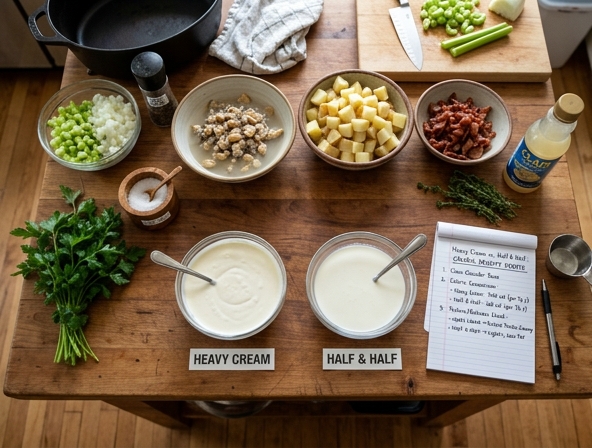
| Dairy Option | Mouthfeel & Texture | Caloric Profile | Structural Stability |
|---|---|---|---|
| Heavy Cream | Luxurious, velvet texture | Higher density | Excellent (resists curdling) |
| Half-and-Half | Lighter finish | Lower density | Moderate |
Heavy Cream vs. Half-and-Half: Navigating the Creamy Depths of Clam Chowder
There are few dishes as iconic, comforting, and fiercely debated as New England Clam Chowder. At its heart, the dish relies on a delicate balance: the briny sweetness of fresh clams, the starchy comfort of potatoes, the smokiness of salt pork or bacon, and-most importantly-the luxurious, velvety base that ties everything together. While the aromatics and the quality of the clams are paramount, the choice of dairy base remains the most significant variable in the chowder equation. Specifically, the contest between heavy cream and half-and-half is more than just a matter of fridge inventory; it is a fundamental decision that dictates the texture, mouthfeel, and caloric density of your finished bowl.
The Chemistry of the Base: Why Fat Matters
To understand the debate, we must first look at the composition of our dairy options. Heavy cream, also known as heavy whipping cream, boasts a milk fat content of at least 36%. Half-and-half, as the name suggests, is a mixture of equal parts whole milk and cream, typically landing between 10% and 12% milk fat.
In the world of culinary science, fat is the primary vehicle for flavor and the secret to a superior mouthfeel. When you use heavy cream, the high fat content creates a stable emulsion that coats the palate, providing a sense of weight and richness that is hard to replicate. Because of its structural stability, heavy cream is less likely to curdle when exposed to the residual acidity of clam juices or the high heat of a simmering pot. Conversely, half-and-half has a much higher water content. While it provides a lighter, more "drinkable" soup, it lacks the velvety opulence that defines a high-end restaurant-style chowder.
The Caloric Density Dilemma
For the home cook, the caloric implications of these choices are significant. A single cup of heavy cream contains approximately 800 calories, the vast majority of which come from saturated fat. A cup of half-and-half, meanwhile, sits significantly lower, at roughly 315 calories. When preparing a standard batch of chowder that calls for two cups of dairy, the difference between the two choices can shift the entire profile of the meal by nearly 1,000 calories.
However, simply swapping heavy cream for half-and-half to "save calories" often leads to a disappointing result. Because half-and-half is thinner, cooks frequently find themselves reaching for more flour or cornstarch to thicken the soup, which adds empty carbohydrates and can lead to a "pasty" or "floury" texture that masks the subtle sweetness of the clams. If you are debating the caloric density, it is better to reduce the overall volume of the base while maintaining its quality, rather than sacrificing the fat content entirely.
Texture and Stability: The "Broken" Chowder Problem
One of the greatest fears of any chowder-maker is the broken sauce-a pot where the dairy has separated, leaving an oily, curdled mess. This usually happens when the protein in the milk overheats or reacts with acidic ingredients.
Heavy cream is the safer bet for long-simmering dishes. It is resilient. It can handle the heat of the stove and the acidity of the clams with a certain grace. Half-and-half is much more temperamental. If you are using half-and-half, you must be far more diligent about temperature control, ensuring the soup never hits a rolling boil after the dairy is added. Many professional chefs prefer a "tempering" method when using lighter dairy, slowly introducing the hot chowder base to the cold cream before combining the two to prevent shock.
The Culinary Middle Ground
Is there a way to achieve the decadence of heavy cream without the heavy caloric footprint? Many chefs argue that the key lies in the foundational technique rather than the dairy itself. The classic "New England" style is often thickened with a traditional roux (a mixture of fat and flour). If you start with a strong, flavor-dense potato and clam-stock base, you may find that you don't need a full cup of heavy cream to get that "chowder" feel.
A common professional hybrid strategy involves using a 50/50 mix of heavy cream and whole milk. This allows the fat content to be high enough to provide stability and flavor, while the milk adds a lightness that prevents the dish from feeling overly heavy or cloying. Another popular technique is to use heavy cream as a finishing element rather than a cooking medium. By adding a small amount of high-fat cream right before serving, you achieve the visual and sensory impact of a rich chowder without having to boil the fat for twenty minutes.
The Verdict: Choosing Your Chowder Style
Ultimately, the choice between heavy cream and half-and-half depends on what you value more in your bowl.
- Choose Heavy Cream if: You are seeking an indulgent, restaurant-quality experience. You want a chowder that coats the back of a spoon, feels luxurious, and is virtually foolproof regarding curdling. It is the gold standard for special occasions and true comfort food.
- Choose Half-and-Half if: You are serving the chowder as a lighter starter, or if you prefer a soupier consistency that highlights the individual components rather than the richness of the base. It is a more budget-friendly and calorie-conscious choice, provided you are prepared to manage your heat levels carefully.
The "debate" over caloric density is valid, but it shouldn't overshadow the goal of the dish. Clam chowder is intended to be a treat-a celebration of the sea and the soil. Whether you choose the opulent path of heavy cream or the moderate route of half-and-half, remember that the best chowder is one where the dairy supports the clams, rather than drowning them. Taste as you go, adjust your thickeners based on the dairy you've selected, and keep your heat low. In the end, the perfect chowder isn't measured in calories, but in the satisfaction of the final spoonful.
Disclaimer:
The information provided on Eateryn is for general educational and informational purposes only and is not intended as medical, nutritional, or healthcare advice. It should not be used to diagnose, treat, cure, or prevent any disease or medical condition.
Always consult a qualified physician, registered dietitian, or other certified healthcare professional before making changes to your diet, exercise routine, or lifestyle, or regarding any medical questions or concerns you may have. Never disregard or delay seeking professional medical advice because of something you have read on this website.