
Hard Shell vs Soft Shell for Tacos - Defining the Perfect Crunch Experience
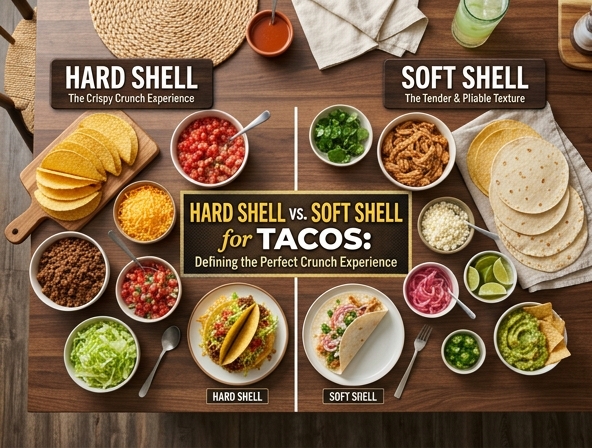
| Comparison Factor | Hard Shell | Soft Shell |
|---|---|---|
| Core Characteristic | Crispy/Crunchy | Flexible/Pliable |
| Ideal Moisture Level | Low moisture | High moisture |
| Structural Goal | Provides rigid integrity | Offers balanced texture |
| Recommended Filling | Ground Beef | Al Pastor (succulent/saucy) |
Hard Shell vs. Soft Shell for Tacos: Defining the Perfect Crunch Experience
There is perhaps no greater civil war in the culinary world than the one fought on the tortilla battlefield: the debate between the rigid, shattering pleasure of the hard-shell taco and the comforting, pliable embrace of the soft shell. To the uninitiated, it may seem like a trivial choice of vessel, but to the taco aficionado, it is a fundamental decision that dictates the entire sensory architecture of the meal. Choosing between hard and soft is not merely about preference; it is about how you want to experience the harmony of spice, fat, acid, and texture.
The Hard Shell: The Archeology of the Crunch
The hard-shell taco is a feat of engineering. Often maligned by purists as a "Tex-Mex" invention, the U-shaped, corn-based shell has become an iconic delivery system for the American taco experience. Its appeal is rooted in the "crunch factor"-a primal, satisfying auditory and tactile response that triggers a high degree of enjoyment in the brain.
When you bite into a properly fried corn shell, you are met with a complex structural collapse. The shatter of the shell creates a contrast against the tender, seasoned ground beef or shredded chicken traditionally found inside. It provides a dry, toasted foundation that balances the moisture of shredded lettuce, the sharpness of diced onions, and the creamy richness of shredded cheddar.
However, the hard shell is a high-stakes endeavor. It is prone to catastrophic structural failure. One misplaced bite can turn a delicious taco into a pile of corn shards on the plate-a phenomenon often referred to as "Taco Trauma." For this reason, the hard shell requires a specific set of ingredients: finely ground proteins and toppings that don't introduce too much liquid, ensuring the shell remains crisp until the very last bite.
The Soft Shell: The Canvas of Tradition
If the hard shell is a sculpture, the soft shell is a canvas. Rooted deeply in traditional Mexican street food culture, the soft taco-typically made from fresh corn masa or flour-offers an entirely different experience. A fresh, warm corn tortilla provides a distinct, earthy flavor-a result of the nixtamalization process-that acts as a nutty, aromatic complement to the filling.
The soft shell is the preferred choice for those who value the marriage of flavors over the impact of texture. Because it is pliable, the soft shell hugs the filling, allowing the juices from slow-cooked carnitas, al pastor, or barbacoa to permeate the tortilla. This creates a cohesive bite where the tortilla isn't just a holder, but an essential ingredient that carries the savory notes of the meat and the brightness of the salsa.
Flour tortillas, while less traditional in the realm of authentic Mexican tacos, offer a pillowy, neutral vehicle that is particularly popular in Northern Mexico and the Southwestern United States. They are excellent for holding heavier, sauce-laden fillings that might cause a corn tortilla to tear, making them the workhorse of the taco world.
The Matchmaking: Pairing Ingredients to Shells
The secret to taco mastery lies in understanding the synergy between the vessel and the cargo. The "perfect" taco is one where neither the shell nor the filling dominates.
- The Hard Shell Strategy: Best reserved for simple, bold ingredients. Think seasoned ground beef, shredded iceberg lettuce (for the cold-crunch contrast), sharp cheddar, and a mild tomato-based salsa. The simplicity prevents the shell from becoming soggy, keeping the structural integrity intact.
- The Soft Corn Strategy: The gold standard for authentic street tacos. Pair these with high-moisture proteins like carne asada, tongue, or adobo-marinated pork. The acidity of lime and the bite of raw white onion and cilantro are essential here, as the corn tortilla acts as a neutral bridge for these sharp flavors.
- The Soft Flour Strategy: Ideal for breakfast tacos or "gringo-style" tacos with heavier fats like chorizo, eggs, or even fried fish with crema. The flour tortilla is sturdy and indulgent, providing a soft backdrop that doesn't compete with the complexity of the filling.
The Evolution: Innovations and Hybrids
The culinary world has long recognized the frustration of choosing between the two, leading to the rise of the "dual-layer" taco. Popularized by fast-food giants but perfected by creative chefs, this method involves wrapping a soft flour tortilla around a hard corn shell, often with a layer of melted cheese or refried beans acting as the "glue" in between. This solution provides the best of both worlds: the immediate, satisfying shatter of the hard shell, followed by the soft, secure structure of the flour wrap.
Furthermore, many modern taquerias are now frying their corn tortillas to order. This "medium-soft" approach-where the tortilla is just lightly crisped on the grill rather than deep-fried into a rigid shell-offers a unique middle ground. It retains the flexibility to be folded without breaking but adds a toasted, nutty depth that is far superior to a cold or room-temperature tortilla.
Defining Your Preference
Ultimately, the "perfect" crunch experience is subjective. Are you seeking the aggressive, immediate joy of a crispy shell that demands to be eaten quickly? Or are you looking for the sophisticated, layered integration of a soft, warm tortilla that highlights the quality of the meat and the complexity of the spice blend?
The next time you approach a taco bar, consider the composition of your meal before you grab your shell. If you are piling on the cilantro, lime, and slow-cooked protein, stick with the soft corn tortilla-it is the honorable, traditional choice. If you are reaching for the shredded cheddar and want that classic, nostalgic "snap," the hard shell is your ally. The taco is a versatile art form; the shell is simply your chosen medium. Don't let the debate stop you-the beauty of the taco is that, regardless of the shell, the result is almost always delicious.
Disclaimer:
The information provided on Eateryn is for general educational and informational purposes only and is not intended as medical, nutritional, or healthcare advice. It should not be used to diagnose, treat, cure, or prevent any disease or medical condition.
Always consult a qualified physician, registered dietitian, or other certified healthcare professional before making changes to your diet, exercise routine, or lifestyle, or regarding any medical questions or concerns you may have. Never disregard or delay seeking professional medical advice because of something you have read on this website.