
Guacamole vs Avocado Slices for Tacos - Texture Preference in Modern Bites
Selecting the ideal avocado preparation often challenges culinary professionals aiming for consistent texture. While standard menus typically default to mashed guacamole or raw slices, discerning chefs recognize that this choice dictates the final mouthfeel. It is stipulated that ingredient ripeness remains critical for success. For instance, robust carnitas pair perfectly with lime-zest guacamole, whereas delicate seafood tacos favor the structural integrity of thin slices. This analysis explores optimizing these textures for elevated taco menu design.
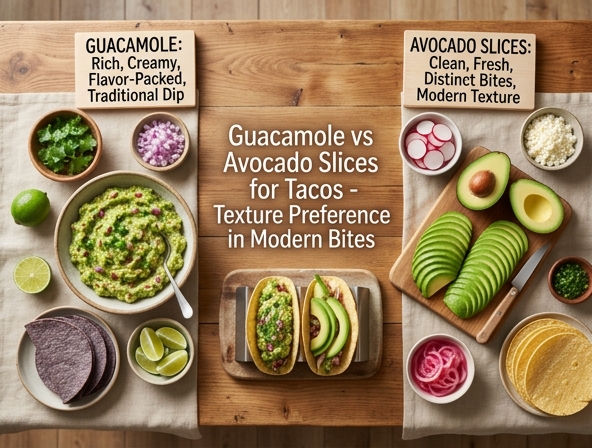
| Preparation Method | Ideal Taco Pairing | Texture Benefit |
|---|---|---|
| Guacamole | Robust fillings (e.g., Carnitas) | Creamy and spreadable; enhanced by lime zest. |
| Avocado Slices | Delicate fillings (e.g., Seafood) | Maintains structural integrity for a distinct mouthfeel. |
| Note: Regardless of the method chosen, consistent ingredient ripeness is critical for successful menu execution. | ||
The Green Dilemma: Guacamole vs. Avocado Slices for the Perfect Taco
In the expansive and often passionate world of taco engineering, few debates are as persistent as the choice between guacamole and sliced avocado. While both bring the same essential ingredient to the party, they offer fundamentally different experiences in terms of mouthfeel, flavor delivery, and structural integrity. As taco culture has evolved from late-night street food to a sophisticated culinary staple, the “green garnish” has become more than an afterthought-it is a critical design choice.
The Case for Guacamole: The Emulsified Experience
Guacamole is not merely "mashed avocado." When prepared correctly, it is a complex condiment. The alchemy of lime juice, salt, onion, cilantro, and sometimes serrano peppers transforms the fruit into an emulsified sauce that coats every bite of a taco.
1. The "Glue" Factor
One of the primary benefits of guacamole is its function as a binding agent. A taco is often a structurally precarious vessel. When you have a protein, a salsa, and perhaps some cabbage slaw, those elements want to slide out the back of the tortilla. A well-constructed guacamole acts as a creamy anchor, keeping the ingredients cohesive throughout the consumption process.
2. Flavor Distribution
Because guacamole contains aromatics and acidity, it delivers a punch of flavor that goes beyond the mild, buttery profile of plain avocado. When you take a bite of a carne asada taco with a generous dollop of guac, you aren't just getting fat; you are getting a concentrated burst of seasoning that integrates with the char of the meat.
The Case for Slices: The Integrity of Texture
On the other side of the aisle, purists argue that the beauty of an avocado is found in its pure, unadulterated state. Slices offer a textural contrast that guacamole simply cannot replicate.
1. Structural Contrast
Modern gastronomy prizes the interplay of textures. A slice of perfectly ripe avocado provides a distinct, velvety "snap" against the tenderness of slow-cooked barbacoa or the crisp edge of a fried fish taco. When you use slices, you are biting into a distinct entity, allowing the natural richness of the avocado to bloom independently before it mingles with the other ingredients in your mouth.
2. Aesthetic and Freshness
Visual presentation matters in the modern taco. Freshly fanned avocado slices are the mark of a kitchen that is committed to freshness. Guacamole, if it sits for even a short period, can oxidize and lose its vibrant hue. Slices, while they also brown, can be prepared à la minute, maintaining an elegance that elevates the taco from "street food" to "bistro plate."
The Science of Mouthfeel
Texture preference is largely dictated by how fats coat the palate. Guacamole is essentially a fat-rich emulsion. When you consume it, the fats are already liberated, coating the tongue immediately. This results in a "richer" sensation that can sometimes mask the more subtle notes of a high-quality protein.
Slices, conversely, require the mechanical action of chewing to release their fat. This creates a "sequenced" eating experience. First, you get the spice of the salsa and the chew of the meat; then, as you continue to chew, the avocado breaks down, acting as a cooling counterpoint to the heat. This rhythmic release of flavor is often preferred by those who enjoy a more dynamic eating experience.
Matching the Taco to the Topping
The choice between guac and slices shouldn't necessarily be a permanent personal rule; it should be dictated by the taco itself. Consider these pairings:
- Al Pastor: The sweetness of the pineapple and the spice of the pork demand the "glue" of a rustic guacamole to tie the disparate flavor profiles together.
- Fish or Shrimp Tacos: Here, slices reign supreme. The delicate texture of the seafood is easily overwhelmed by a heavy mash. A few thin, fanned slices complement the light, flaky nature of the fish without turning the taco into a mushy experience.
- Carne Asada: This is the ultimate "guac territory." The density of the beef pairs perfectly with the acidity and salt of a chunky, lime-forward guacamole.
- Vegetarian/Black Bean Tacos: Because beans and grains can be dry, a creamy guacamole is essential to add the necessary lubricity to the bite.
The Middle Ground: The Diced Compromise
For those who find themselves torn, the "diced" approach serves as a functional middle ground. By cutting the avocado into small cubes, you retain the structural integrity of the fruit (you are still chewing distinct pieces) while allowing the avocado to be distributed more evenly across the taco surface. This eliminates the "one big bite" problem of a long slice, where you end up with too much avocado in one mouthful and none in the next.
Final Verdict: Context is King
Ultimately, the preference for guacamole or slices is a reflection of how one views the taco experience. If you prioritize a cohesive, saucy, and flavor-integrated bite, the guacamole wins every time. If you prefer a curated experience where each component remains distinct and the purity of the ingredients takes center stage, slices are the superior choice.
As taco culture continues to evolve, we are likely to see more experimentation-perhaps even both. Why choose? The most progressive taquerias are now incorporating "smashed" textures with added raw elements, blurring the line entirely. In the end, as long as the avocado is ripe and the tortilla is warm, the debate remains a delicious problem to have.
Disclaimer:
The information provided on Eateryn is for general educational and informational purposes only and is not intended as medical, nutritional, or healthcare advice. It should not be used to diagnose, treat, cure, or prevent any disease or medical condition.
Always consult a qualified physician, registered dietitian, or other certified healthcare professional before making changes to your diet, exercise routine, or lifestyle, or regarding any medical questions or concerns you may have. Never disregard or delay seeking professional medical advice because of something you have read on this website.