
Grill Vs Air Fryer For Buffalo Wings - Preparing Health-Conscious Flavorful Bites
Grill Vs. Air Fryer For Buffalo Wings
Achieving crispy buffalo wings without excess grease is a common struggle for the health-conscious cook. While traditional deep-frying remains standard, modern kitchen alternatives promise better nutritional outcomes. Both grilling and air frying offer unique methods to retain flavor while reducing caloric density. Understand that texture outcomes will vary-convection air mimics frying, while flame grilling imparts char. From the smoky intensity of a charcoal grill to the rapid crisping of an air fryer, we analyze both.
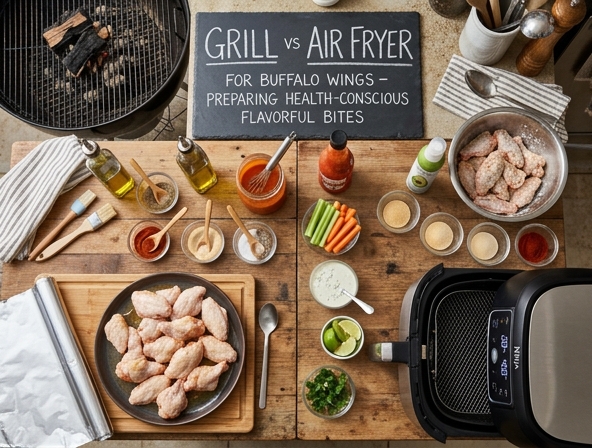
| Cooking Method | Mechanism | Texture/Result | Key Benefit |
|---|---|---|---|
| Air Fryer | Rapid convection heat | Mimics traditional deep-fried crispiness | Rapid cooking and reduced grease |
| Grill | Direct flame exposure | Smoky intensity with a charred exterior | Authentic, deep flavor profile |
Grill Vs. Air Fryer For Buffalo Wings: Preparing Health-Conscious Flavorful Bites
There is a specific kind of magic inherent in a Buffalo wing. The combination of crispy, seasoned skin, tender meat, and that signature vinegary heat is a culinary staple that defines game days, casual get-togethers, and late-night cravings. However, the traditional method-deep-frying-often carries a heavy caloric and nutritional price tag that leaves many health-conscious foodies feeling conflicted. Fortunately, you don't have to sacrifice flavor to keep your fitness goals on track. By turning to the grill or the air fryer, you can achieve that addictive crunch and bold profile with significantly less guilt.
The Air Fryer Experience: Convection Magic
The air fryer has revolutionized home cooking, particularly for those looking to replicate the texture of deep-fried foods without the vat of boiling oil. Essentially a miniature, high-powered convection oven, the air fryer circulates hot air rapidly around the wings. This process accomplishes two vital things: it renders the fat out from under the skin and crisps the surface into a golden, satisfying crunch.
Why it wins for convenience: The air fryer is arguably the most efficient way to cook wings. There is minimal preheating time, and the cleanup is usually limited to a non-stick basket. For a weeknight meal, it is unparalleled in speed.
The Health Factor: Because you aren't submerging the wings in oil, you save hundreds of calories per serving. Many air fryer recipes require little to no added oil, as the wings are self-basting in their own rendered fat. To keep it even healthier, you can skip the breading entirely and rely on high-quality dry rubs like garlic powder, smoked paprika, and cayenne pepper to provide flavor without the empty carbohydrates of flour or breadcrumbs.
The Grilling Experience: The Art of the Char
While the air fryer excels in efficiency, the grill offers something that no countertop appliance can match: the flavor of fire. Grilling wings transforms them from a simple snack into a rustic, elevated dish. The interaction between the drippings hitting the heat source-be it charcoal or gas-creates a distinct, savory smoke that permeates the meat.
The Technique: To get the best results, utilize a two-zone cooking method. Start by searing the wings over direct heat to get the skin crisp, then move them to an indirect zone to finish cooking through without charring the outside to a crisp. This ensures the meat remains juicy while the skin develops that deep, complex smoky char.
The Health Factor: Grilling is naturally one of the healthiest ways to prepare poultry. As the fat renders out, it drips away from the meat and into the fire, rather than being reabsorbed by the skin. Furthermore, you avoid all the refined oils and breading additives common in traditional preparations. The smoky intensity also means you can often get away with using less sauce, lowering the sodium content of your meal significantly.
Nutritional Showdown: Analyzing the Macros
When comparing the two, both methods are winners compared to the deep fryer, but they serve different nutritional needs.
- Fat Content: Air frying is superior for those specifically avoiding added fats, as it requires virtually none. However, grilling is excellent for allowing natural fats to drain away completely.
- Processed Additives: Both methods encourage the use of dry rubs over heavy, pre-packaged sauces. By making your own sauce from Frank's RedHot, a touch of grass-fed butter (or ghee), and fresh garlic, you avoid the high-fructose corn syrup and preservatives found in store-bought options.
- Preparation Time vs. Nutrient Preservation: Some studies suggest that high-heat, rapid cooking like air frying can create advanced glycation end-products (AGEs), though this is true of all high-heat cooking methods. The key to both is moderation and balancing the meal with fiber-rich sides.
Tips for the Health-Conscious Wing Lover
Regardless of whether you choose the grill or the air fryer, the secret to a healthy Buffalo wing lies in the periphery:
1. Rethink the Sauce
Most commercial Buffalo sauces are packed with hidden sodium. Instead, blend your own. A base of cayenne pepper sauce mixed with a small amount of melted butter or avocado oil keeps the classic flavor profile without the inflammatory seed oils.
2. Elevate the Side Dish
Instead of the traditional ranch or blue cheese dressing-which are often heavy in saturated fats and dairy-try a Greek yogurt-based blue cheese dip. It provides a creamy, tangy texture while boosting your protein intake and offering probiotics. Serve with raw carrot sticks, celery, and even sliced cucumbers to add volume and hydration to your meal.
3. Skip the Breading
You do not need flour or cornstarch to get a crispy skin. By patting the wings extremely dry with paper towels before seasoning, you allow the skin to crisp effectively on its own. If you want extra crunch, a light dusting of baking powder (not baking soda!) can draw out moisture and create a faux-fried texture without the carbs.
The Final Verdict
Choosing between the grill and the air fryer really comes down to your lifestyle and what you prioritize in the moment.
Choose the Air Fryer if you are in a time crunch, want an ultra-consistent crunch, and prefer an easy cleanup. It is the ultimate tool for a quick, health-conscious dinner that satisfies the craving for "fried" food without the post-meal sluggishness.
Choose the Grill if you are looking for an experience. It is the perfect choice for the weekend, when you have time to tend to the coals and want that sophisticated, deep-smoke flavor that elevates the wing from a snack to a centerpiece. The health benefits of rendered fat and the lack of processing remain consistent, making the grill a fantastic option for those who enjoy the ritual of outdoor cooking.
Ultimately, by opting for these two methods, you are reclaiming a classic. You are choosing flavor over grease, and nutrition over empty calories. Whether you hear the satisfying "crackle" of the air fryer basket or smell the hickory smoke wafting from the backyard, your Buffalo wings are guaranteed to be a hit-for your taste buds and your health.
Disclaimer:
The information provided on Eateryn is for general educational and informational purposes only and is not intended as medical, nutritional, or healthcare advice. It should not be used to diagnose, treat, cure, or prevent any disease or medical condition.
Always consult a qualified physician, registered dietitian, or other certified healthcare professional before making changes to your diet, exercise routine, or lifestyle, or regarding any medical questions or concerns you may have. Never disregard or delay seeking professional medical advice because of something you have read on this website.