
Green Peppers vs No Green Peppers for Philly Cheesesteak - Exploring Regional Variations
The Great Cheesesteak Debate: Regional Authenticity
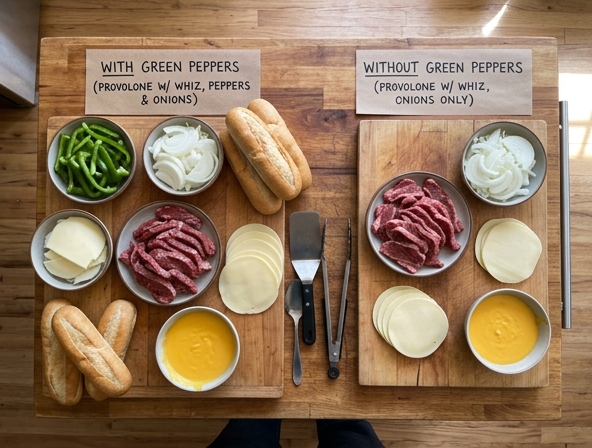
Navigating the authentic composition of a Philly cheesesteak remains a contentious culinary struggle. While historical accounts from Pat's King of Steaks establish the baseline, modern preferences have fragmented that standard. Mastering this nuance grants you essential cultural authority. We stipulate that regionality remains the primary driver of taste; for example, South Philly purists famously reject green peppers, while suburban variants often include them. The following sections evaluate these regional variations to clarify the debate.
| Perspective | Stance on Green Peppers | Context/Origin |
|---|---|---|
| South Philly (Purists) | Excluded | Adheres to the original historical standards established by Pat's King of Steaks. |
| Suburban/Modern | Included | Reflects evolving preferences and regional adaptations outside the city center. |
The Green Pepper Debate: Navigating the Cultural Fault Lines of the Philly Cheesesteak
In the culinary world, few subjects incite as much immediate, visceral passion as the composition of a "true" Philadelphia Cheesesteak. It is a dish that seems deceptively simple: thin-sliced ribeye, molten cheese, and a crusty roll. Yet, within these three pillars lies a battlefield of tradition, regional pride, and culinary innovation. At the center of this storm sits a single, unassuming ingredient: the green bell pepper.
To the uninitiated, adding a handful of sautéed peppers to a cheesesteak might seem like a logical vegetable inclusion. To a Philadelphia purist, however, it is nothing short of culinary heresy. This article explores the origins of the controversy, the logic behind the "no-pepper" mandate, and how regional variations have forced us to reconsider what defines an authentic cheesesteak.
The Philly Purist Manifesto: Why Tradition Dictates "No Peppers"
To understand why the green pepper is so fiercely rejected in Philadelphia, one must first understand the anatomy of the original sandwich. The cheesesteak was born from the griddles of South Philly in the early 20th century. Its history is tied intrinsically to the neighborhood shops-the legendary names like Pat's and Geno's-which standardized the experience.
For the purist, the cheesesteak is a study in texture and fat. The beef must be shaved paper-thin ribeye, cooked rapidly on a high-heat griddle so it renders its fat and creates a delicate, lace-like char. The cheese-traditionally Cheez Whiz, though Provolone and American are acceptable-acts as a binding agent that emulsifies with the meat drippings. The roll, usually an Amoroso's, must have a sturdy exterior to contain the juice but a pillowy interior to soak up the flavor.
In this framework, vegetables are largely viewed as "distractions." Onions are the only universally accepted inclusion-a concession made because they caramelize alongside the meat, adding a necessary savory sweetness. Green peppers, however, bring a high water content and a distinct, sharp bitterness that purists argue overpowers the delicate beef. For the traditionalist, the cheesesteak is about the synergy of protein and dairy; anything else is an intrusion.
The Argument for the Pepper: Texture, Brightness, and Sweetness
As the cheesesteak traveled beyond the city limits of Philadelphia, the "rules" began to soften. When the sandwich hit national chains and suburban diners, the American palate-often accustomed to the inclusion of peppers in other sandwiches like the Italian beef or the sausage and pepper hero-began demanding them on their cheesesteaks.
There is a legitimate culinary argument for the green pepper. When sautéed until soft, the green pepper loses its raw, grassy bite and transforms into a sweet, earthy element that cuts through the intense richness of the beef fat and processed cheese. For those who find the traditional Philly preparation "too heavy" or "one-note," the pepper adds a much-needed crunch and a bright, vegetal note that cleanses the palate between bites.
Furthermore, in many regional iterations-particularly in the Northeast and the Midwest-the cheesesteak is often served as a "loaded" sandwich. In these contexts, the sandwich isn't intended to be a minimalist expression of meat and cheese; it is a hearty, all-inclusive meal. Adding green peppers, along with sautéed mushrooms and perhaps even hot cherry peppers, turns the cheesesteak into a complex, multi-textured experience.
Regional Variations: How Geography Defines the Sandwich
The "green pepper debate" is effectively a geographic marker. If you walk into a shop in South Philly, "with or without" refers only to onions. If you attempt to order a cheesesteak "with everything" in a place that respects Philadelphia tradition, you will likely be corrected by the counter staff. They aren't just being difficult; they are protecting a cultural identity.
However, once you cross the Delaware River or venture deep into the suburbs of other states, the cheesesteak undergoes a metamorphosis. In the Mid-Atlantic region, the "Cheesesteak Hoagie" is a recognized variation. This version explicitly includes lettuce, tomato, raw onions, and often green peppers, served cold-and-hot style. Here, the green pepper isn't an intruder; it's a standard component of the "hoagie" structure.
In Southern states, you'll often see cheesesteaks served with bell peppers *and* jalapeños, reflecting a regional love for spice. On the West Coast, the cheesesteak is often treated as a blank canvas, with some shops offering everything from avocado to barbecue sauce. These regional drifts prove that while Philadelphia owns the *origin* of the dish, the *evolution* of the sandwich is a national project.
The Authenticity Trap: Finding Middle Ground
Perhaps the most important takeaway from the green pepper controversy is that "authenticity" is a moving target. If we demand that every cheesesteak be exactly what was served in 1930s Philadelphia, we lose the ability to appreciate how the dish has adapted to different climates, ingredients, and taste buds. At the same time, it is vital to respect the cultural weight of the original version.
When you visit a shop that claims to serve "authentic" Philly cheesesteaks, it is usually wise to order it the traditional way. It allows you to taste what the architects of the sandwich intended: the perfect marriage of steak, fat, and cheese. But when you are at your local diner, or throwing a cheesesteak night at home, there is no shame in adding the peppers.
Cooking is ultimately a personal endeavor. If the addition of green peppers makes the sandwich more enjoyable for your palate, then it is a successful modification. The history of the cheesesteak is a history of ingenuity-taking affordable cuts of meat and turning them into something iconic. Adding a few peppers to that narrative isn't necessarily destroying history; it's simply continuing the conversation.
In conclusion, the debate over green peppers will never truly be settled. It serves as a permanent reminder of the divide between "traditionalist" and "evolutionary" dining. Whether you belong to the camp of the purists or the camp of the vegetable-lovers, one thing remains certain: the cheesesteak continues to be one of the most beloved and debated sandwiches in the American canon, and its versatility is exactly what keeps it on menus from coast to coast.
Disclaimer:
The information provided on Eateryn is for general educational and informational purposes only and is not intended as medical, nutritional, or healthcare advice. It should not be used to diagnose, treat, cure, or prevent any disease or medical condition.
Always consult a qualified physician, registered dietitian, or other certified healthcare professional before making changes to your diet, exercise routine, or lifestyle, or regarding any medical questions or concerns you may have. Never disregard or delay seeking professional medical advice because of something you have read on this website.