
Greek Yogurt vs Sour Cream for Pancakes - Tangy Flavor Profiles
Greek Yogurt vs. Sour Cream for Pancakes: Evaluating Tangy Profiles
Achieving the perfect tang in pancakes often leaves home bakers guessing between dairy bases. While traditional recipes rely on standard buttermilk or vinegar mixtures, culinary professionals seek richer stabilizers. Greek yogurt and sour cream offer distinct, high-quality tangy profiles that elevate simple batters. Note, however, that acidity and fat levels require specific leavening adjustments. From the velvet consistency of professional-grade cakes to enhanced structural stability, these components transform results. We now analyze their precise impacts on moisture and flavor development.
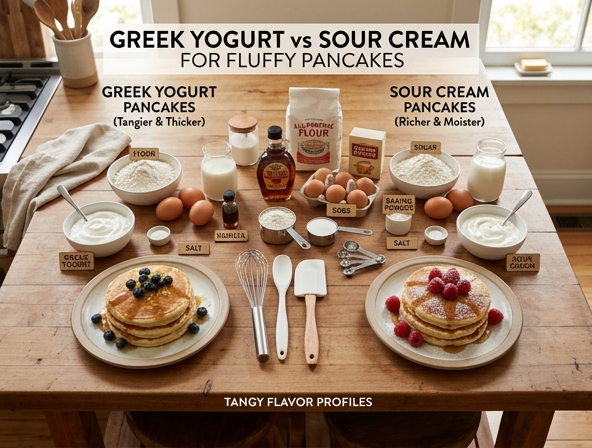
| Feature | Impact on Pancakes |
|---|---|
| Primary Purpose | Used as a premium, tangy alternative to buttermilk or vinegar-based batters. |
| Flavor Profile | Provides a rich, sophisticated tang that elevates the depth of pancake batter. |
| Texture & Moisture | Contributes to a velvet-like consistency and enhanced structural stability. |
| Leavening Requirements | Requires precise adjustments to leavening agents due to varying acidity and fat levels. |
| Culinary Use | Preferred by professionals for stabilizing batter and ensuring superior moisture retention. |
The Tangy Pancake Showdown: Greek Yogurt vs. Sour Cream
The quest for the perfect pancake is a culinary rite of passage. While the debate often centers on leavening agents-baking powder versus baking soda-the true secret to a high-quality pancake often lies in the "secret sauce" of the batter: the acidic component. Among home cooks and professional bakers alike, two heavyweights consistently emerge as the go-to choices for adding moisture, lift, and that signature tangy flavor: Greek yogurt and sour cream. While they may look similar in the carton, their impact on the final pancake is distinct, science-backed, and utterly transformative.
The Science of Tang: Why We Use Acidic Dairy
Before diving into the specific characteristics of each, it is vital to understand why we use these ingredients at all. In pancake chemistry, baking soda is a base that requires an acid to react. When you mix a cultured dairy product like Greek yogurt or sour cream into your batter, you are providing that essential acidity.
The chemical reaction between the lactic acid in the dairy and the baking soda creates carbon dioxide bubbles. These bubbles are the "engine" of your pancake, pushing the batter upward and creating that light, airy texture we crave. Furthermore, the protein and fat content in these ingredients tenderize the gluten, ensuring that your pancakes remain soft and moist rather than chewy or rubbery.
Greek Yogurt: The Modern, Airy Contender
Greek yogurt has risen to prominence largely due to its "health halo," but its benefits in the kitchen go far beyond nutrition. Because Greek yogurt is strained to remove much of the whey, it is incredibly thick and protein-dense.
Flavor Profile
The tang of Greek yogurt is often described as "clean" and "bright." It possesses a sharp, almost citrus-like acidity that cuts through the sweetness of maple syrup or fruit toppings. It doesn't weigh the pancake down with heavy fat, making it an excellent choice for those who prefer a breakfast that feels slightly lighter on the palate.
Texture and Crumb
Because Greek yogurt has a higher protein-to-fat ratio than sour cream, it produces a pancake with a more delicate, structured crumb. It allows the pancakes to rise quite high, resulting in a stack that feels lofty and cloud-like. However, because it lacks the high fat content of sour cream, the pancakes can lean toward the drier side if overcooked. They are best served warm, fresh off the griddle.
Sour Cream: The Classic, Decadent Choice
Sour cream is the traditionalist's weapon of choice. It has been a staple in pancake recipes-particularly in Eastern European cooking-for generations, and for good reason: fat is flavor, and fat is tenderness.
Flavor Profile
The tang found in sour cream is mellow, deep, and inherently rich. It is a more "fermented" flavor compared to the sharp acidity of Greek yogurt. Because sour cream has a higher fat content, it imparts a buttery, velvety mouthfeel that coats the tongue. It harmonizes exceptionally well with earthy add-ins, such as blueberries, walnuts, or even a hint of nutmeg.
Texture and Crumb
The fat in sour cream works to shorten the gluten strands in the flour. This prevents the batter from becoming elastic or tough, resulting in a pancake that is remarkably tender and "melt-in-your-mouth." A sour cream pancake will typically be denser and more moist than a yogurt-based one, staying soft even after it has cooled down slightly.
Comparison: Which Should You Choose?
| Feature | Greek Yogurt | Sour Cream |
|---|---|---|
| Tang Profile | Sharp, bright, clean | Mellow, rich, fermented |
| Texture | Lofty, airy, light | Tender, dense, velvety |
| Primary Benefit | High protein, structural lift | High fat, moisture retention |
Pro-Tips for Substituting and Success
If you find yourself midway through a recipe only to realize you are missing one of these two ingredients, the good news is that they are generally interchangeable at a 1:1 ratio. However, keep these nuances in mind to ensure success:
- Watch the Hydration: If you are swapping sour cream for Greek yogurt, you might find the batter slightly thicker. Do not be tempted to add more milk immediately; Greek yogurt can be deceptively thick. Mix it well, let the batter rest for 10 minutes, and adjust only if necessary.
- Mind the Browning: Because sour cream has a higher fat content, it tends to encourage faster browning. If you are using sour cream, keep your griddle temperature slightly lower than you would for yogurt-based pancakes to avoid charred exteriors before the middle is fully cooked.
- Full-Fat Matters: Regardless of which you choose, opt for the full-fat versions. Low-fat or non-fat varieties often contain thickeners and stabilizers that can result in a gummy, rather than fluffy, pancake. In baking, fat is your friend-it provides the tenderness that makes a pancake feel like a treat rather than a chore.
Conclusion: The Final Verdict
So, which one wins the breakfast battle? The answer depends entirely on your desired pancake personality. If you are aiming for a sky-high, airy stack that feels fresh and bright, go with Greek yogurt. It is the perfect canvas for fresh fruit, lemon zest, or a light drizzle of honey.
If you are craving a comforting, indulgent, and deeply moist pancake that feels like it belongs in a cozy mountain cabin, choose sour cream. It provides a richness that makes the pancake feel like a substantial meal, pairing beautifully with classic butter and maple syrup.
Ultimately, both ingredients turn a simple flour-and-egg batter into something special. By harnessing the science of acidity, you are not just making pancakes-you are crafting a balanced, professional-grade breakfast right in your own kitchen. Why choose one when you can try both and decide for yourself which flavor profile speaks to your morning mood?
Disclaimer:
The information provided on Eateryn is for general educational and informational purposes only and is not intended as medical, nutritional, or healthcare advice. It should not be used to diagnose, treat, cure, or prevent any disease or medical condition.
Always consult a qualified physician, registered dietitian, or other certified healthcare professional before making changes to your diet, exercise routine, or lifestyle, or regarding any medical questions or concerns you may have. Never disregard or delay seeking professional medical advice because of something you have read on this website.