
Grass-Fed Vs. Grain-Fed For Burger - Sustainable Meat Sourcing
Grass-Fed vs. Grain-Fed: Sourcing for Quality
Sourcing premium beef that balances flavor with sustainability is a persistent challenge for discerning operators. While standard commodity supply chains offer convenience, they often overlook essential quality markers. True ethical sourcing grants your menu an immediate, tangible competitive edge.
However, one must distinguish between marketing labels and regenerative outcomes. Examples like White Oak Pastures prove that grass-fed integrity elevates the burger experience. Below, we compare these sourcing models to align your inventory with superior standards.
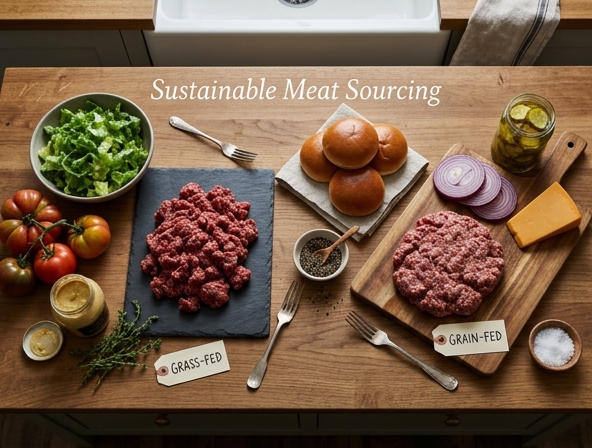
| Feature | Commodity (Grain-Fed) | Regenerative (Grass-Fed) |
|---|---|---|
| Core Philosophy | Convenience and standardized supply. | Ethical, sustainable, and regenerative outcomes. |
| Quality Markers | Often overlooked in favor of volume. | Prioritized to elevate the dining experience. |
| Competitive Edge | Minimal market differentiation. | High-value differentiation through sourcing integrity. |
| Industry Example | Generic supply chains. | White Oak Pastures (proven integrity). |
Grass-Fed Vs. Grain-Fed: The Sustainable Sourcing Guide for the Perfect Burger
The quest for the "perfect" burger has moved far beyond the bun, the cheese, or the secret sauce. Today, the most important component of the modern burger is the source of the protein itself. For the conscious consumer, the choice between grass-fed and grain-fed beef is not merely a matter of taste; it is an exploration of ethics, environmental impact, and nutritional density. As sustainability becomes a pillar of culinary excellence, understanding the nuances of how your beef was raised is essential for any home chef or restaurant patron.
Understanding the Beef Lifecycle
To differentiate between the two, we must first look at the life of the animal. Almost all cattle spend the majority of their lives on pasture. However, the "finish"-the final months of the animal's life-defines the final product.
Grass-Fed: The Pasture-Raised Philosophy
Grass-fed (and grass-finished) beef comes from cattle that subsist entirely on a diet of pasture grasses, forage, and hay for their entire lives. This method mimics the natural evolutionary trajectory of the bovine species. From a sustainability perspective, grass-fed systems are often lauded for their ability to contribute to regenerative agriculture. When managed through rotational grazing, these cattle can actually help sequester carbon in the soil, prevent erosion, and promote biodiversity.
Nutritionally, grass-fed beef is a powerhouse. It is significantly higher in Omega-3 fatty acids, Conjugated Linoleic Acid (CLA), and antioxidants like Vitamin E compared to its grain-finished counterpart. Because these animals are constantly moving and grazing, the meat is naturally leaner, which alters the composition of the fat profile significantly.
Grain-Fed: The Industry Standard
Grain-fed, or "grain-finished" beef, spends the last 4 to 6 months of its life in a feedlot, where the diet shifts to include corn, soy, and other grains. This practice was developed for two primary reasons: to increase the animal's weight rapidly and to create "marbling." Marbling, or the intramuscular fat found within the muscle tissue, is what gives traditional beef its characteristic buttery richness and tenderness.
While grain-finished beef has faced criticism regarding its environmental footprint-largely due to the resources required to grow grain-it remains the gold standard for many chefs due to its consistent flavor and superior fat content. The fat in grain-finished beef is higher in saturated and monounsaturated fats, which melt at a lower temperature, creating that iconic "juicy" sensation in a burger.
The Culinary Challenge: Fat is Flavor
When it comes to burgers, fat is not just a calorie; it is a delivery mechanism for flavor. This is where the debate becomes interesting. Because grass-fed beef is leaner, it is notoriously unforgiving on the grill. If cooked to a standard "medium-well," a grass-fed patty can quickly become dry and crumbly, losing the texture that defines a great burger.
To successfully use grass-fed beef for a burger, the butcher must ensure the grind includes enough fat-usually aiming for an 80/20 or 75/25 lean-to-fat ratio. Conversely, grain-fed beef is more forgiving. The higher fat content acts as a buffer against high heat, making it easier to achieve a beautiful sear on the outside while maintaining a succulent, pink center.
Sustainability: Moving Beyond the Labels
The "grass vs. grain" binary is often an oversimplification. Sustainability is not just about what the cow eats; it is about the health of the entire ecosystem.
- Rotational Grazing: Look for beef from farms that practice regenerative grazing. This prevents overgrazing and restores topsoil health, making the carbon footprint of the beef net-neutral or even net-positive.
- Animal Welfare: Grass-fed certification (like the American Grassfed Association) ensures that animals are not just grass-fed, but also treated with higher standards of care, with no confinement in feedlots.
- Local Sourcing: Transportation is a massive component of a food item's carbon footprint. A grain-finished cow raised five miles from your home is, in many ways, more sustainable than a grass-fed cow shipped across the country.
Making the Informed Choice
How do you choose for your next burger night? Start by defining your priorities:
Choose Grass-Fed if: You are prioritizing human health, supporting regenerative agriculture, and are willing to pay a premium for a product that supports animal welfare. Just remember to treat it with respect: cook it over slightly lower heat, aim for a medium-rare finish, and consider adding a little high-quality fat (like a compound butter or avocado) to ensure the burger stays moist.
Choose Grain-Fed if: You are looking for the classic, indulgent "steakhouse" burger experience. If you opt for grain-fed, look for labels like "Humanely Raised" or "No Antibiotics/Hormones." This allows you to enjoy the consistency of the meat while supporting farming practices that are at least more ethical than standard industrial feedlots.
Conclusion: The Future of the Burger
The burger is more than just a quick meal; it is a reflection of our relationship with the land. As we continue to move toward a more sustainable future, the most "sustainable" burger is one that is sourced with intention. Whether you prefer the clean, mineral-forward taste of a grass-fed patty or the rich, buttery indulgence of a grain-finished one, the true mark of a conscious consumer is knowing the story behind the meat.
Next time you visit your butcher, don't just ask for ground beef. Ask where it came from, how it was raised, and how it was finished. By closing the gap between the producer and the plate, we ensure that every burger we eat contributes to a more thoughtful and sustainable food system.
Disclaimer:
The information provided on Eateryn is for general educational and informational purposes only and is not intended as medical, nutritional, or healthcare advice. It should not be used to diagnose, treat, cure, or prevent any disease or medical condition.
Always consult a qualified physician, registered dietitian, or other certified healthcare professional before making changes to your diet, exercise routine, or lifestyle, or regarding any medical questions or concerns you may have. Never disregard or delay seeking professional medical advice because of something you have read on this website.