
Gluten-Free vs Traditional for Apple Pie - Adapting Texture Without Compromising Taste
Achieving the elusive, flaky crust in gluten-free apple pie is a common challenge for many bakers. While traditional recipes rely on gluten strands for structural integrity, gluten-free baking requires a more precise approach. Mastering these alternatives grants you a professional-grade result. However, success depends on specific binder ratios, such as xanthan gum or psyllium husk. Proven successes include almond-based pastry shells and oat-blend crusts. This article evaluates essential techniques to replicate traditional textures without compromising flavor.
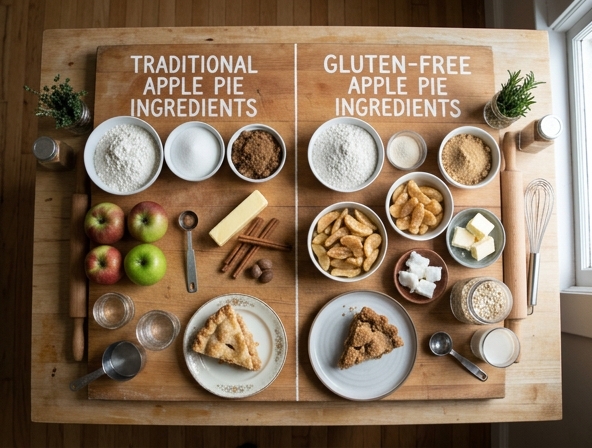
| Category | Key Details |
|---|---|
| Core Challenge | Replicating the structural integrity and flakiness of traditional gluten-based crusts. |
| Success Factors | Requires precise measurements and specific ratios of alternative ingredients. |
| Essential Binders | Xanthan gum or psyllium husk are necessary to provide needed structure. |
| Recommended Methods | Utilizing almond-based pastry shells or oat-blend crusts for best results. |
| Primary Goal | Achieving professional-grade texture while maintaining the original flavor profile. |
The Great Crust Debate: Gluten-Free vs. Traditional Apple Pie
There is perhaps no dessert more synonymous with American comfort than a classic apple pie. The interplay between the tart, spiced apples and the buttery, flaky crust is a culinary masterpiece that has defined holidays for generations. However, for those living with Celiac disease or gluten sensitivity, the traditional recipe-built on the structural integrity of wheat flour-presents a significant barrier. Adapting this icon for a gluten-free diet is not merely a matter of substitution; it is a fundamental restructuring of the chemistry that makes a crust "work."
The Science of Structure: Why Wheat is King
To understand the challenge of the gluten-free pie, we must first look at why wheat is the standard-bearer for pastry. When flour meets water, two proteins-gliadin and glutenin-combine to form gluten. This elastic network acts like a mesh, trapping steam during the baking process and providing the structural strength needed to roll out a thin, cohesive sheet of dough. It is this elasticity that allows a baker to crimp edges, create elaborate lattices, and achieve that coveted "shatter" when a fork hits the crust.
When you remove wheat, you remove that structural scaffold. Without gluten, doughs become brittle, crumbly, and notoriously difficult to handle. If you simply replace wheat flour with an alternative, the resulting crust often lacks the resilience to stay intact during transport or the distinct "snap" expected from a well-baked pie.
The "Glue": Essential Components for Gluten-Free Success
To replicate the performance of traditional flour, the gluten-free baker must rely on a combination of specific ingredients to act as binding agents. The most common of these is Xanthan gum. Acting as a synthetic replacement for gluten, xanthan gum provides the "stretch" that allows dough to be rolled without falling apart.
However, binders alone are not enough. A high-quality gluten-free flour blend-typically a mixture of rice flour (for structure), potato starch (for lightness), and tapioca starch (for chewiness)-is essential. Tapioca starch, in particular, is the secret weapon for creating the slight "stretch" that mimics the elasticity of wheat, while almond flour can be added in small quantities to introduce a richness and fat content that keeps the dough from tasting overly grainy.
Mastering the Technique: Beyond the Ingredients
Even with the perfect blend of flours, the technique for a gluten-free crust differs significantly from traditional methods. The golden rule of pastry-"keep it cold"-is doubled in importance here. Because gluten-free fats lack the support of a gluten network, they are more prone to melting into the flour before the pie hits the oven. Using ice-cold butter, or even a mixture of butter and high-quality lard, is non-negotiable. Furthermore, working in a cool kitchen and chilling the dough for at least an hour before rolling is mandatory for structural integrity.
Rolling out gluten-free dough requires a shift in approach. Where a traditional baker might dust a floured counter, a gluten-free baker should use the "parchment method." By rolling the dough between two sheets of parchment paper, you eliminate the need for extra flour, which would only serve to dry out the crust further. This also makes the transfer to the pie plate much easier, as the dough remains fragile even when chilled.
Managing the Filling: The Soggy Bottom Struggle
A common critique of gluten-free apple pie is the dreaded "soggy bottom." Because many gluten-free flours are less absorbent than wheat, and because the crust itself is more delicate, excess liquid from the apples can quickly turn the base into a mushy disaster. To counteract this, consider these three strategies:
- Pre-Macerate and Drain: Toss your apple slices with sugar and spices, let them sit for 30 minutes, and then drain the excess liquid before adding it to the pie. You can reduce this liquid on the stovetop into a syrup and pour it back over the apples to concentrate the flavor without the excess moisture.
- Starch Thickening: Increase the use of cornstarch or arrowroot powder in the filling to ensure the fruit juices gel properly before they reach the bottom crust.
- Blind Baking: For a fool-proof result, par-bake the bottom crust for 10–15 minutes before adding the filling. This creates a protective barrier that prevents moisture from soaking into the pastry.
Flavor and Texture: Why You Won't Miss the Wheat
The beauty of modern gluten-free baking is that, when executed correctly, the crust can actually be superior to the traditional version. By utilizing almond or oat flours, you add a nutty, complex flavor profile that wheat simply cannot provide. The increased fat content often used in gluten-free recipes results in a crust that is arguably flakier and more delicate than standard versions.
When the apples are chosen carefully-a blend of Granny Smith for tartness and Honeycrisp for texture-and the crust is seasoned with a touch of sea salt and perhaps a hint of cinnamon-infused sugar, the absence of gluten becomes an afterthought. The focus shifts entirely to the quality of the fruit and the perfect, buttery crunch of the pastry.
Conclusion: The Joy of Inclusive Baking
Transitioning to gluten-free apple pie is a journey of understanding the "why" behind every ingredient. While it requires more precision and perhaps a bit more patience than the traditional recipe, the result is a dessert that everyone at the table can enjoy without compromise. By embracing binders, respecting the cold, and managing moisture with care, the gluten-free baker doesn't just create a substitute-they create a masterpiece that celebrates the versatility of ingredients and the timeless joy of a homemade pie.
Disclaimer:
The information provided on Eateryn is for general educational and informational purposes only and is not intended as medical, nutritional, or healthcare advice. It should not be used to diagnose, treat, cure, or prevent any disease or medical condition.
Always consult a qualified physician, registered dietitian, or other certified healthcare professional before making changes to your diet, exercise routine, or lifestyle, or regarding any medical questions or concerns you may have. Never disregard or delay seeking professional medical advice because of something you have read on this website.