
Garlic vs Shallots for Clam Chowder - Comparing Depth Of Flavor
Garlic vs. Shallots for Clam Chowder
Many chefs struggle to achieve a harmonious base for creamy chowder. While standard mirepoix serves as the culinary baseline, refined palates seek deeper aromatic integration. Choosing correctly unlocks a complexity that bridges oceanic salinity with dairy richness. Garlic provides pungent intensity, whereas shallots offer delicate, caramelized sweetness. For instance, garlic anchors bold, bistro-style bowls, while shallots elevate refined, velvety emulsions. This examination weighs these profiles to help you refine your signature recipe.
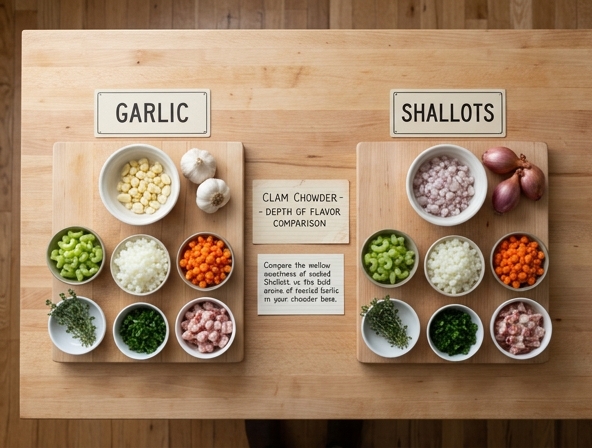
| Ingredient | Flavor Profile | Best Application | Culinary Impact |
|---|---|---|---|
| Garlic | Pungent and intense | Bold, bistro-style chowders | Anchors the dish with powerful depth |
| Shallots | Delicate, caramelized sweetness | Refined, velvety emulsions | Elevates the dish with a nuanced, elegant finish |
The Aromatics of the Sea: Garlic vs. Shallots in Clam Chowder
Clam chowder is a dish defined by restraint and harmony. In the canon of New England comfort food, the goal is to elevate the briny, mineral sweetness of the clams without letting the secondary ingredients turn the soup into a loud, disjointed mess. At the very foundation of this culinary structure lies the aromatic base-the trinity of sautéed vegetables that provide the soul of the broth. While celery and onions are the non-negotiables, the debate between the two most popular "flavor enhancers"-garlic and shallots-often divides home cooks and professional chefs alike. To understand which deserves a place in your next pot, we must examine how these two ingredients interact with the delicate chemistry of cream, potato, and, most importantly, the clam.
The Case for Garlic: The Pungent Rockstar
Garlic is the powerhouse of the aromatic world. It contains high levels of sulfur compounds, specifically allicin, which release a potent, savory punch when crushed or sliced. In many hearty soups, garlic is a welcome addition, providing an earthy backbone that stands up to heavy meats or robust herbs like rosemary.
However, in the context of clam chowder, garlic is a high-risk, high-reward ingredient. Because clams possess a subtle, oceanic sweetness, garlic has the potential to act as a "bully." If the ratio is off, the sharp, biting edge of garlic can overwhelm the delicate flavor of the mollusks. Proponents of garlic argue that a small amount, finely minced and sweated until just translucent, provides a necessary "brightness" that cuts through the fat of heavy cream or butter. It adds a layer of complexity that keeps the chowder from tasting one-dimensionally milky. But, if you are working with high-quality, fresh-shucked clams, garlic might be working against you rather than for you.
The Case for Shallots: The Refined Bridge
If garlic is the rockstar, the shallot is the consummate professional-sophisticated, subtle, and incredibly versatile. A member of the Allium family, the shallot is essentially a hybrid of the sharp onion and the fragrant garlic, yet it lacks the aggressive pungency of either. When cooked, shallots undergo a transformation that is almost buttery in texture and deeply sweet in flavor.
For a clam chowder, the shallot is arguably the superior choice for achieving a "rounded" flavor profile. Because shallots are naturally higher in sugar than garlic, they caramelize beautifully into the base of the soup. This natural sweetness pairs exceptionally well with the salty, mineral character of the clams. Instead of fighting for dominance, the shallot acts as a bridge, pulling together the starchiness of the potatoes and the richness of the dairy. It provides a savory depth-an umami note-that feels professional and polished, ensuring that every spoonful tastes like a singular, unified creation.
The Chemistry of Interaction
To understand the difference, we have to look at how these aromatics react to the cooking process. Chowder is typically built on a base of butter or rendered salt pork fat. Shallots are excellent at absorbing these fats, turning translucent and almost melting into the liquid base. This creates a cohesive "velvet" texture that feels luxurious on the palate.
Garlic, conversely, is less about texture and more about chemical impact. When garlic is sautéed, its heat subsides, but its aromatic essence infuses the base fat immediately. In a slow-simmering soup like chowder, garlic can sometimes lose its character and turn slightly bitter if cooked for too long. If you are determined to use garlic, it must be added toward the end of the aromatic sautéing phase to preserve its integrity. Shallots are much more forgiving; they can simmer for hours, slowly releasing their sweetness into the broth without the risk of turning harsh or acrid.
Finding the Balance: When to Use Which
The choice between garlic and shallots ultimately depends on the style of chowder you are preparing.
- The "Purist" Chowder: If you are aiming for a classic, delicate New England-style white chowder, lean toward shallots. They will protect the integrity of the clam flavor and maintain the creamy, gentle sweetness of the dish.
- The "Rustic" Chowder: If you are creating a more robust, perhaps smoked-bacon-heavy chowder, a hint of garlic can be beneficial. It provides a sharp counterpoint to the saltiness of the pork and the smokiness of the ingredients.
- The "Fusion" Approach: It is entirely possible to use both, but the secret is in the quantity. Use a 4:1 ratio of shallots to garlic. Let the shallots do the heavy lifting for the sweetness and depth, and use a tiny, barely-there amount of garlic to add a whisper of complexity that the palate registers without specifically identifying.
The Verdict
If you are striving for the "perfect" clam chowder-the kind that reminds you of a coastal shanty in Maine-the shallot is the winner. It provides a sophisticated depth of flavor that respects the clams rather than masking them. While garlic is a magnificent aromatic in its own right, its presence in a clam chowder is often an admission that the clams themselves aren't the stars of the show. By choosing shallots, you are opting for harmony, sweetness, and a silky mouthfeel that transforms a simple soup into a memorable culinary experience.
Next time you find yourself at the stove, take a moment to consider the humble shallot. Sauté it slowly in a knob of butter until it is soft and translucent. Listen to the gentle sizzle, smell the subtle, onion-like perfume, and recognize that you are building a foundation of flavor that is far greater than the sum of its parts. Your clams-and your diners-will thank you for the restraint.
Disclaimer:
The information provided on Eateryn is for general educational and informational purposes only and is not intended as medical, nutritional, or healthcare advice. It should not be used to diagnose, treat, cure, or prevent any disease or medical condition.
Always consult a qualified physician, registered dietitian, or other certified healthcare professional before making changes to your diet, exercise routine, or lifestyle, or regarding any medical questions or concerns you may have. Never disregard or delay seeking professional medical advice because of something you have read on this website.