
Garlic Powder vs Fresh Garlic for Fried Chicken - Managing Burn Rates In The Oil
Achieving consistent crust flavor is challenging when fresh garlic particulates carbonize in high-heat frying oil, creating bitter notes. While many kitchens default to traditional fresh aromatics, sophisticated operations prioritize thermal stability. Utilizing premium garlic powder offers superior control over the Maillard reaction, ensuring a balanced profile without compromising oil longevity. Note that hydration levels significantly impact results. Industry leaders like Chick-fil-A have long optimized dry spice blends for this reason. We now explore the specific chemistry required to elevate your signature crunch.
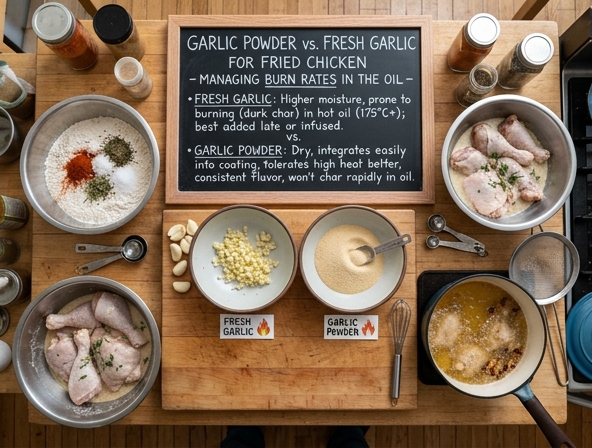
| Feature | Fresh Garlic | Garlic Powder |
|---|---|---|
| Thermal Stability | Low; particulates carbonize quickly | High; resists burning in hot oil |
| Flavor Profile | Risk of bitter notes due to charring | Balanced; consistent Maillard reaction |
| Oil Longevity | Decreased due to burnt residue | Maintained; cleaner frying environment |
| Application | Traditional, but difficult to manage | Professional standard for consistency |
| Key Consideration | High carbonization risk | Monitor hydration levels for best results |
The Great Culinary Dilemma: Garlic Powder vs. Fresh Garlic in Fried Chicken
There is perhaps no aroma more enticing than that of golden-brown fried chicken hitting a warm plate, underscored by the unmistakable, savory punch of garlic. For home cooks and culinary professionals alike, the question of how to incorporate this essential allium into a frying application is a constant point of debate. Should you reach for the bulb of fresh garlic, prized for its pungent, vibrant oils, or the humble shaker of garlic powder? When it comes to the specific physics of frying-where oil temperatures hover between 325°F and 375°F-the answer is dictated by the science of “burn rates.”
The Chemistry of the Burn
To understand why fresh garlic is often the enemy of a perfect fry, we must look at what happens when it hits hot oil. Fresh garlic is composed of approximately 65% water, along with a significant amount of natural sugars and volatile sulfur compounds. When you introduce fresh, minced garlic into a breading or a wet marinade that gets dredged, you are introducing moisture and surface sugars directly into the frying environment.
The Maillard reaction-the chemical process that turns breading golden-brown and delicious-typically occurs between 280°F and 330°F. However, fresh garlic begins to carbonize (burn) at a much lower threshold. Because of its sugar content and water-based structure, fresh garlic will rapidly transition from a golden hue to a dark, bitter char long before the chicken's interior has reached a safe 165°F. This creates a “bitter profile” that permeates the crust, effectively ruining the delicate balance of your seasonings.
The Advantages of Garlic Powder
Garlic powder, on the other hand, is a masterclass in stability. Because it is dehydrated, the water content is negligible-typically less than 6%. This removal of moisture is the key to controlling the burn rate. When garlic powder is integrated into a dry dredge (flour, cornstarch, seasonings), it does not compete with the oil's temperature, nor does it release moisture that would cause the breading to lose its crunch.
Furthermore, garlic powder allows for a uniform distribution of flavor. In a professional kitchen, consistency is king. Fresh garlic often clumps, creating “hot spots” of flavor that can be overwhelming in one bite and absent in the next. Garlic powder adheres to the chicken's exterior evenly, ensuring that every bite delivers that consistent, toasted savory note without the risk of carbonization.
Strategies for Managing Burn Rates
If you absolutely insist on the profile of fresh garlic, you must manage its "burn rate" by changing the application method. Never add fresh, minced garlic directly to the flour dredge. Instead, consider these culinary workarounds:
- Infused Brines: Use fresh garlic in your liquid marinade or brine. The water-based liquid will carry the garlic flavor into the meat without the garlic particles ever touching the hot oil.
- Garlic Oil Finishing: Infuse your frying oil (or a finishing butter) with garlic at low temperatures (under 250°F) to extract the flavor, then strain the solids out before cranking the heat for frying.
- Post-Fry Application: Apply garlic powder or garlic salt *immediately* after the chicken leaves the fryer. The residual heat and surface oil on the hot crust will bloom the garlic powder, releasing its aroma without subjecting it to the prolonged stress of the deep fryer.
"The secret to professional-grade fried chicken isn't just about the recipe; it's about managing the thermodynamics of your ingredients. Garlic powder is a tool for precision; fresh garlic is a tool for aromatics. Knowing when to use each is the difference between a golden crust and a bitter, burnt disaster."
The "Pro" Profile: Building Complexity
To truly elevate your fried chicken, don't view this as an "either/or" choice, but rather as an opportunity to layer flavors. Many of the world's best fried chicken establishments utilize a multi-pronged approach to garlic:
- The Foundation (Brine): Use crushed fresh garlic cloves in your brine to deeply infuse the muscle tissue of the chicken.
- The Crust (Powder): Use high-quality garlic powder in your flour dredge to ensure that the golden-brown crust carries that toasted, savory punch without burning.
- The Finish (Infusion): Brush the fried chicken with a light garlic-infused ghee or herb oil the moment it is plated. This adds a "fresh" brightness that powder alone cannot provide.
Conclusion: The Verdict on Garlic
In the high-heat environment of the deep fryer, garlic powder is the clear winner for safety, consistency, and flavor profile management. By stripping away the moisture, you eliminate the risk of premature burning, allowing your breading to brown beautifully while maintaining that deep, savory garlic essence. Fresh garlic, while undeniably superior in raw applications, is a volatile element in the fryer. Treat it as a long-game ingredient-used for infusions and brines-and leave the drying work to the powder. Your crust will be crispier, your flavors will be balanced, and your kitchen will be free of the acrid smell of burnt garlic.
Mastering this balance is about respecting the chemistry of your ingredients. When you stop fighting against the burn rate and start engineering your seasoning profile around it, you elevate your fried chicken from a simple meal to a culinary masterpiece.
Disclaimer:
The information provided on Eateryn is for general educational and informational purposes only and is not intended as medical, nutritional, or healthcare advice. It should not be used to diagnose, treat, cure, or prevent any disease or medical condition.
Always consult a qualified physician, registered dietitian, or other certified healthcare professional before making changes to your diet, exercise routine, or lifestyle, or regarding any medical questions or concerns you may have. Never disregard or delay seeking professional medical advice because of something you have read on this website.