
Garlic Powder Vs Fresh Garlic For Buffalo Wings - Enhancing The Aromatic Profile
Optimizing Aromatics in Buffalo Wings
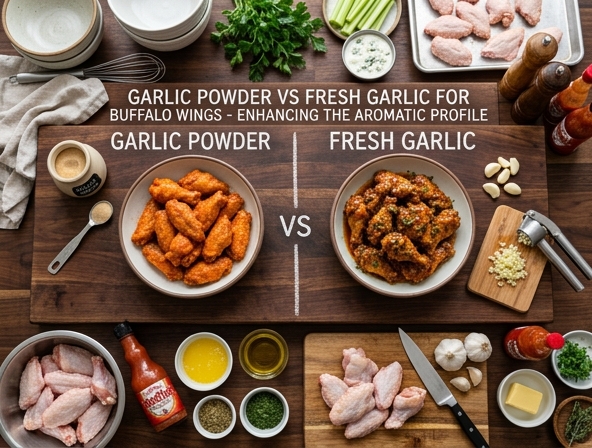
Achieving perfect Buffalo wings often involves the frustrating balance between fresh garlic's tendency to burn and garlic powder's potential lack of depth. While standard seasoning methods rely on simple dry rubs, understanding the precise utility of each medium adds professional nuance to your kitchen output. For instance, fresh garlic thrives in finishing butter emulsions, while powder ensures superior surface adhesion. We will examine how to strategically layer these ingredients to elevate your wings' complex aromatic profile.
| Ingredient | Primary Characteristic | Optimal Usage |
|---|---|---|
| Garlic Powder | Excellent surface adhesion | Used in dry rubs to ensure flavor coats the wing skin. |
| Fresh Garlic | Rich, complex aromatic depth | Best incorporated into finishing butter emulsions to prevent burning. |
| Strategic Strategy | Balanced flavor profile | Layer both ingredients to maximize both adhesion and depth. |
Garlic Powder Vs. Fresh Garlic for Buffalo Wings: Enhancing the Aromatic Profile
The perfect Buffalo wing is a delicate balancing act of texture, heat, acidity, and umami. While the holy trinity of a classic wing-the crispy skin, the tangy cayenne pepper sauce, and the rich butter emulsion-often takes center stage, the aromatic backbone is usually provided by garlic. Yet, a quiet debate persists in kitchens ranging from backyard barbecues to high-end gastropubs: should you reach for the shaker of garlic powder, or should you commit to the labor of mincing fresh cloves?
To master the wing, one must understand the distinct chemical contributions of both. While they share a namesake, they behave like two entirely different ingredients when subjected to the high-heat, high-moisture environment of a wing toss.
The Case for Garlic Powder: Consistency and Crust
Garlic powder is often unfairly dismissed as a shortcut, but in the realm of fried chicken, it is a technical powerhouse. Because it is dehydrated and finely ground, it does not introduce excess moisture to the skin, which is the primary enemy of a crispy Buffalo wing.
- Dry Rub Integration: Garlic powder is essential for the "dry rub" phase. When combined with salt, smoked paprika, and a touch of brown sugar, it adheres perfectly to the surface of the chicken before it ever hits the fryer or the oven. This creates a foundation of savory depth that permeates the skin as the fat renders.
- Uniformity: One of the greatest challenges with wings is ensuring that every bite tastes identical. Garlic powder disperses evenly throughout a spice blend or a flour coating, ensuring that there are no "hot spots" of pungent garlic or gaps of blandness.
- Stability: Unlike fresh garlic, which can bitter and burn at high frying temperatures, garlic powder is stable. It can endure the heat of the fryer without turning acrid, contributing a toasted, mellow sweetness that complements the vinegar-heavy profile of Frank's RedHot or similar cayenne-based sauces.
The Vibrancy of Fresh Garlic: The Aromatic Punch
If garlic powder provides the base, fresh garlic provides the "top note." Fresh garlic contains allicin, a compound responsible for that sharp, aggressive, and incredibly fresh pungent aroma that defines high-quality wing sauces.
When you choose to use fresh garlic, you are moving away from the "sandy" texture of powder and moving toward a silky, emulsified sauce experience. Fresh garlic performs best when it is gently sautéed in the butter that forms the base of your buffalo sauce. This process, known as "blooming," releases the volatile oils into the fat, infusing the entire batch of sauce with a bright, herbaceous, and deeply savory character that powder simply cannot replicate.
However, the danger of fresh garlic lies in its sensitivity. If the garlic is minced too coarsely, it can create a soggy, uneven mouthfeel in the sauce. If the pan temperature is too high, the garlic turns golden brown, then dark brown, then bitter-a catastrophic failure for a wing sauce that should be vibrant and clean.
The Hybrid Approach: The Chef's Secret
The most successful wing recipes rarely commit to just one. By employing a layered approach, you can achieve both the structural integrity of the powder and the aromatic brightness of the fresh bulb.
Step 1: The Dry Seasoning (Powdered)
Dust your raw wings with a dry rub containing high-quality garlic powder. This ensures the flavor is locked into the skin as it crisps up. This provides the "umami anchor" that persists even after the sauce begins to cool.
Step 2: The Infused Sauce (Fresh)
Separately, mince fresh garlic cloves into a near-paste. Gently simmer them in your butter before whisking in your hot sauce. Because the garlic is in a paste form, it emulsifies into the sauce, coating the wings in a fragrant, buttery glaze that carries the raw, vibrant punch of the fresh aromatics.
Culinary Application: When to Use Which
Deciding between the two often comes down to the desired style of service:
1. For "Dry" Wings (Lemon Pepper, Garlic Parmesan)
Stick primarily to garlic powder. These wings rely on the texture of the rub. Fresh garlic releases moisture, which will inevitably soften your crispy skin. If you crave the fresh garlic flavor on a dry wing, try using granulated (not powdered) garlic or toasted dried garlic bits for a better texture profile.
2. For "Wet" Wings (Classic Buffalo, BBQ, Honey Garlic)
This is where the fresh garlic shines. Since the wings are already coated in a sauce, the addition of sautéed, fresh garlic adds a layer of sophistication. The heat of the sauce masks the sharpness of the fresh garlic, leaving only the pleasant, lingering aroma of slow-cooked aromatics.
Conclusion: Elevating the Wing Game
The debate between garlic powder and fresh garlic is not one of quality, but of function. Garlic powder is your structural ingredient-it is the reliable, consistent foundation that holds the flavor profile together under the stress of heat and fat. Fresh garlic is your finishing ingredient-it is the aromatic flourish that provides the "wow" factor and the sensory sharpness that makes a guest reach for a second, third, and fourth wing.
By understanding that these two forms of the same ingredient serve distinct purposes, you can stop choosing between them and start using them in tandem. The next time you prep a batch of Buffalo wings, treat the garlic powder as a seasoning for the chicken, and the fresh garlic as a seasoning for the sauce. Your aromatic profile will shift from one-dimensional to layered, complex, and professional.
Disclaimer:
The information provided on Eateryn is for general educational and informational purposes only and is not intended as medical, nutritional, or healthcare advice. It should not be used to diagnose, treat, cure, or prevent any disease or medical condition.
Always consult a qualified physician, registered dietitian, or other certified healthcare professional before making changes to your diet, exercise routine, or lifestyle, or regarding any medical questions or concerns you may have. Never disregard or delay seeking professional medical advice because of something you have read on this website.