
Garlic Butter vs Plain Butter for Grilled Cheese Sandwich - Enhancing Crust Aromatics
Achieving a restaurant-quality, aromatic grilled cheese crust at home remains a persistent challenge. While standard butter ensures consistent browning, it frequently lacks the necessary flavor depth. Integrating garlic butter introduces essential volatile aromatics that elevate the sensory profile significantly. Note that lower heat is mandatory to prevent garlic solids from burning prematurely. Industry standards, such as those applied in artisanal sandwich shops, confirm this technique creates a superior finish. The following analysis explores optimal ratios and temperature control.
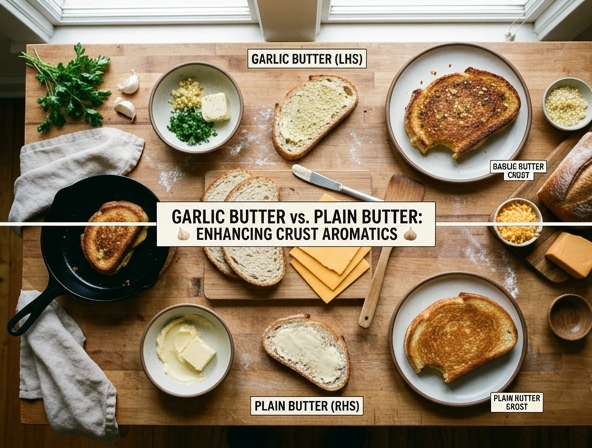
| Feature | Plain Butter | Garlic Butter |
|---|---|---|
| Flavor Profile | Basic, mild | Enhanced, aromatic depth |
| Browning | Consistent and reliable | Requires precise heat control |
| Cooking Technique | Standard heat | Requires lower heat to prevent burning |
| Culinary Result | Functional finish | Restaurant-quality, superior aroma |
The Ultimate Grilled Cheese Showdown: Garlic Butter vs. Plain Butter
There is perhaps no greater culinary icon of comfort than the grilled cheese sandwich. It is a masterpiece of minimalism: bread, fat, and cheese. Yet, for all its simplicity, the grilled cheese is a battleground of technique. The most contentious skirmish in this kitchen war? The choice of fat used to achieve that perfect, golden-brown crust. While traditionalists argue that plain, unsalted butter is the only way to respect the sanctity of the cheese, a growing faction of flavor-seekers swears by the aromatic complexity of garlic butter. But does adding garlic truly elevate the experience, or does it distract from the main event?
The Science of the Golden Crust
To understand the debate, we must first look at the science. The crust of a grilled cheese sandwich is the result of the Maillard reaction-a chemical reaction between amino acids and reducing sugars that gives browned food its distinctive flavor. When butter meets a hot skillet, the water content evaporates, leaving behind milk solids that begin to toast. This is where the magic happens.
Plain butter provides a clean, neutral canvas for this reaction. It allows the natural toasted notes of the bread and the specific characteristics of the cheese-whether it's the sharpness of an aged cheddar or the nutty sweetness of a Gruyère-to take center stage. When you use plain butter, you are essentially creating a high-fidelity crust that highlights the quality of your ingredients.
Plain Butter: The Purist's Choice
Using plain, room-temperature unsalted butter is the gold standard for a reason. Because plain butter has a relatively stable smoke point, it is forgiving. It allows for a "low and slow" approach, ensuring the bread reaches a deep, mahogany crunch without the risk of burnt particulates.
The beauty of the plain butter approach lies in its versatility. If you are using a premium, artisanal loaf of sourdough or a high-end, triple-cream cheese, plain butter acts as a conductor, not a soloist. It creates a savory, salty seal that preserves the structural integrity of the sandwich. For those who believe the grilled cheese is an exercise in restraint, plain butter is the only path forward. It provides that classic, nostalgic buttery richness that hits the palate with a sense of familiarity and comfort.
Garlic Butter: The Aromatic Transformation
Enter the garlic butter contingent. Advocates for this method argue that a grilled cheese, while delicious, can sometimes lean toward the one-dimensional. By infusing the fat with garlic-or by using a garlic-herb compound butter-you introduce a layer of complexity that transforms the sandwich into a more aggressive, bistro-style dish.
Garlic butter does more than just add flavor; it changes the *aromatics*. As the garlic-infused butter hits the pan, it releases volatile compounds that perfume the kitchen, signaling a more savory, intense meal. It acts as a bridge, particularly if you are using assertive cheeses like pepper jack or provolone. The garlic complements the savory profile of the crust, effectively turning the sandwich into a hybrid between a classic grilled cheese and a garlic bread toastie.
The Practical Challenge: Avoiding the Burn
The primary critique of garlic butter is the risk of burning. Fresh garlic contains sugars that caramelize and then char at a much lower temperature than butterfat alone. If you are using minced fresh garlic, the window between "perfectly golden" and "acrid and bitter" is razor-thin.
To master the garlic butter crust, technique is everything. Here are the secrets to success:
- Use Powder, Not Fresh: For the most consistent crust, opt for high-quality garlic powder. It incorporates into the softened butter seamlessly and won't scorch as easily as fresh, fibrous garlic bits.
- The Compound Butter Method: Soften your butter and whip in your garlic, parsley, and a pinch of salt. Apply this compound butter evenly across the bread. This ensures an even distribution of flavor without the hot spots caused by chunks of garlic.
- Temperature Control: When using any garlic infusion, keep your skillet at medium-low heat. The goal is to toast the bread slowly enough for the aromatics to meld with the fats without burning the garlic solids.
The Sensory Verdict: Which Should You Choose?
Ultimately, the choice between plain butter and garlic butter depends on your culinary objective.
Choose Plain Butter if: You are serving the sandwich as a side to a rich tomato soup, or if you are using an exceptionally high-quality cheese where you want the flavor profile to remain pure and unobstructed. It is the classic choice for a reason: it is timeless, balanced, and elegant.
Choose Garlic Butter if: You are eating the grilled cheese as a standalone main course, or if you want to dial up the savory "umami" factor. It is the superior choice for a late-night snack or a robust lunch where you want a "wow" factor that hits the nose as soon as the sandwich is plated.
In the grand theater of the kitchen, there is no loser. Both methods achieve the primary goal: a crispy, golden, molten sandwich that satisfies the soul. Whether you lean toward the purist's simplicity of plain butter or the punchy, aromatic intensity of a garlic-infused crust, the secret remains the same: use enough butter, keep your heat consistent, and don't rush the process. After all, greatness cannot be hurried-especially when there is cheese melting on the line.
Disclaimer:
The information provided on Eateryn is for general educational and informational purposes only and is not intended as medical, nutritional, or healthcare advice. It should not be used to diagnose, treat, cure, or prevent any disease or medical condition.
Always consult a qualified physician, registered dietitian, or other certified healthcare professional before making changes to your diet, exercise routine, or lifestyle, or regarding any medical questions or concerns you may have. Never disregard or delay seeking professional medical advice because of something you have read on this website.