
Frozen Wings Vs Fresh Wings For Buffalo Wings - Quality Differences In Home Cooking
Achieving authentic, crispy Buffalo wings at home is a common culinary struggle. Many rely on convenient frozen options or delivery, yet these often fail to deliver a premium texture. Understanding protein moisture is the key to superior quality. Note that fresh wings require diligent air-drying, mirroring methods used in top-tier gastropubs. This guide evaluates how wing selection dictates the final crispness and flavor, providing the foundation for your next perfect batch.
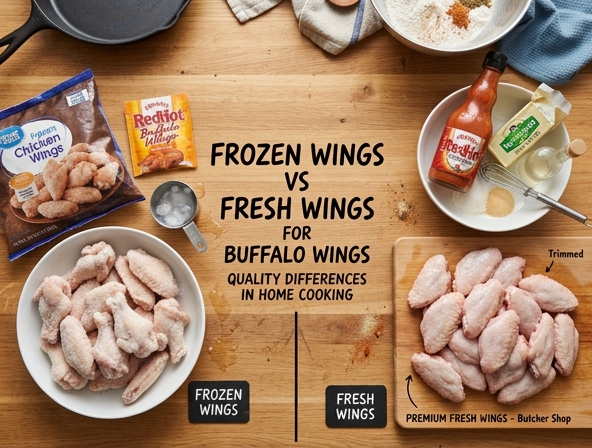
| Comparison Factor | Frozen Wings | Fresh Wings |
|---|---|---|
| Convenience | High; easy to store and prepare. | Moderate; requires planning. |
| Texture & Quality | Often disappointing; struggles to achieve authentic crispiness. | Premium; ideal for achieving professional, gastropub-style results. |
| Preparation Strategy | Minimal prep; thawing required. | Requires diligent air-drying to manage protein moisture. |
| Final Result | Sub-optimal for crispy Buffalo wing enthusiasts. | The foundation for the perfect, crispy batch. |
The Great Debate: Frozen Wings vs. Fresh Wings for the Perfect Buffalo Experience
For the home cook, the Buffalo wing is more than just a snack; it is a culinary quest. The objective is singular and uncompromising: a shatteringly crisp exterior, tender, succulent meat, and a perfect coating of tangy, spicy sauce that clings rather than slides. However, the path to this holy grail often begins in the supermarket aisle, where the choice between fresh and frozen wings becomes the first major decision. While convenience often dictates the purchase, understanding the structural and chemical differences between fresh and frozen poultry is the secret to elevating your game-day spread from "passable" to "legendary."
The Anatomy of the Wing: Why Moisture is the Enemy
To understand why the debate exists, one must understand the physics of frying or roasting a chicken wing. The goal of cooking a wing is to achieve the Maillard reaction-a chemical reaction between amino acids and reducing sugars that gives browned food its distinctive flavor and texture. This reaction only occurs when surface moisture is effectively evaporated.
Fresh wings, by their nature, have a consistent moisture profile. They haven't been subjected to the cellular stress of sub-zero temperatures. Frozen wings, conversely, are a different story. When poultry is frozen, the water inside the cells turns into ice crystals. Because water expands when it freezes, these sharp, jagged crystals can rupture the cell walls of the meat. When the wing begins to thaw or hit the high heat of a fryer or oven, that cellular damage leads to "weeping"-the loss of internal juices that should have stayed in the meat.
The Case for Fresh Wings: The Gold Standard
Fresh wings are widely considered the gold standard for home Buffalo wings for several reasons. First and foremost is the surface texture. Because the skin remains intact and hasn't been subjected to the "freeze-thaw" cycle, it is easier to dry out completely before cooking. Achieving a crispy skin is essentially a battle against water; if the skin is dry before it touches the heat, it will crisp faster and more uniformly.
Furthermore, fresh wings generally offer a better flavor profile. Freezing, even when done professionally, can lead to subtle oxidation over time if the packaging isn't perfect, resulting in a "freezer-burned" or stale taste that, while faint, can be masked by sauce but will be noticed by discerning palates. When you start with fresh wings, you are starting with a blank canvas that is more receptive to dry rubs and seasonings, ensuring a deeper flavor foundation.
The Frozen Challenge: Convenience vs. Quality
Frozen wings aren't inherently "bad," but they require a different level of maintenance. Most frozen wings sold in bulk are "IQF"-Individually Quick Frozen. While this is convenient, it often introduces an added variable: the glaze. Many frozen wing products are glazed with a light coating of ice to prevent dehydration during storage. If you throw these wings directly into a fryer or oven without accounting for that extra ice, you are essentially steaming the wings rather than frying them.
The biggest hurdle with frozen wings is the release of moisture during the cooking process. As the wing heats up, the internal ice melts and the cell walls leak, creating steam. This steam prevents the skin from reaching the high temperatures required to turn golden brown and crispy. The result is often a soft, flabby skin that becomes soggy the moment it is tossed in Buffalo sauce.
Leveling the Playing Field: Tips for the Frozen-Wing Cook
If your budget or local availability forces you to work with frozen wings, don't despair. You can achieve high-quality results by following a few strict culinary protocols:
- The Slow Thaw: Never microwave frozen wings to thaw them. This creates hot spots and begins cooking the meat unevenly. Always thaw your wings in the refrigerator for at least 24 hours. The slower the thaw, the less cellular damage occurs.
- The Paper Towel Technique: Once thawed, pat the wings aggressively with paper towels. Don't just wipe them; press them. Remove as much surface moisture as humanly possible.
- The Air-Dry Method: After patting them dry, place the wings on a wire rack set over a baking sheet and leave them uncovered in the refrigerator for two to four hours. This helps dehydrate the skin, mimicking the conditions of a fresh wing.
- The Baking Powder Hack: If you are baking your wings (and not deep-frying), toss your dried wings in a light dusting of aluminum-free baking powder and salt. The baking powder alters the pH levels of the skin, breaking down the peptide bonds and making it significantly crispier in the oven.
Cooking Technique: The Ultimate Arbiter
Regardless of whether you choose fresh or frozen, the cooking method is the great equalizer. Deep frying remains the superior method for traditional Buffalo wings because the rapid heat transfer of the oil instantly crisps the skin while locking in the meat's juices. For those avoiding the fryer, the air fryer has become a revolutionary tool. Because air fryers circulate high-velocity hot air, they effectively mimic the convection of a deep fryer, making them the best friend of the home cook, especially when dealing with wings that might have a higher moisture content.
The Final Verdict
If you are planning an important event or simply want the best possible version of a Buffalo wing, fresh is undeniably better. It offers a superior textural integrity, a more reliable cooking process, and a cleaner flavor that isn't compromised by ice crystal damage. However, the gap between the two is not as wide as many culinary snobs would have you believe. With the right preparation-specifically, the focus on surface dehydration-even a frozen wing can produce a crispy, satisfying experience that holds its own when tossed in your favorite spicy butter-sauce emulsion.
At the end of the day, a Buffalo wing is defined by its sauce and the spirit in which it is shared. Whether you choose the convenience of the freezer bag or the freshness of the butcher's counter, the secret remains the same: treat the skin with respect, keep the moisture away, and never skimp on the blue cheese dressing.
Disclaimer:
The information provided on Eateryn is for general educational and informational purposes only and is not intended as medical, nutritional, or healthcare advice. It should not be used to diagnose, treat, cure, or prevent any disease or medical condition.
Always consult a qualified physician, registered dietitian, or other certified healthcare professional before making changes to your diet, exercise routine, or lifestyle, or regarding any medical questions or concerns you may have. Never disregard or delay seeking professional medical advice because of something you have read on this website.