
Frozen vs Fresh Berries for Pancakes - Managing Moisture Content
Managing Berry Moisture in Pancakes
Achieving the perfect pancake texture is often hindered by excess fruit moisture. While standard recipes recommend folding berries directly into the batter, this frequently results in structural compromise. Mastering the nuances of berry hydration provides the consistency required for professional results. Notably, blueberries and raspberries retain moisture differently during cooking, necessitating specific preparation adjustments. This guide explores the technical differences between fresh and frozen fruit, offering actionable strategies to ensure your pancakes remain light, airy, and structurally sound.
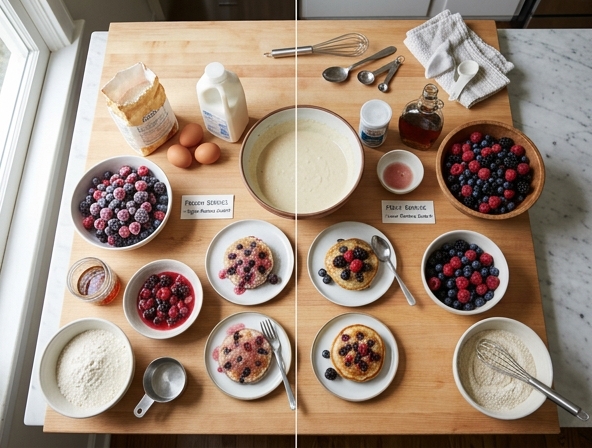
| Aspect | Key Takeaways |
|---|---|
| Core Challenge | Excess moisture from berries can lead to structural compromise and dense pancake texture. |
| Fruit Behavior | Blueberries and raspberries release moisture differently, requiring specific preparation methods. |
| Common Mistake | Folding berries directly into the batter often results in poor consistency. |
| Technical Goal | Balancing hydration to maintain a light, airy, and structurally sound pancake. |
| Recommendation | Implement specific hydration management strategies based on whether fruit is fresh or frozen. |
The Great Berry Debate: Frozen vs. Fresh for Perfect Pancakes
There is perhaps no greater culinary joy than sitting down to a stack of fluffy, golden-brown pancakes, studded with vibrant, bursting berries. It is the quintessential weekend breakfast, a canvas of comfort that feels both indulgent and nutritious. However, any home cook who has attempted to fold berries into their batter has likely encountered the "Pancake Paradox": the beautiful, ruby-red stains that turn the entire batch into a grayish, soggy mess, or the dreaded "bleeding" effect where the berries disintegrate into the batter, leaving behind pockets of raw, watery dough.
Managing moisture content is the secret to a professional-grade pancake. Whether you choose fresh or frozen, your success depends entirely on how you prepare the fruit and manage their cellular structure. Let's dive into the science, the techniques, and the best practices for incorporating berries into your pancakes.
The Science of the Berry: Why Moisture Matters
To understand the behavior of berries in pancakes, we have to look at their anatomy. Berries-especially delicate ones like raspberries, blackberries, and blueberries-are largely composed of water held within fibrous cell walls.
When you use fresh berries, these cell walls are intact. They hold their shape well, even when subjected to the heat of the griddle. The moisture remains contained until you bite into the pancake, providing that delightful "pop" of juice.
Conversely, frozen berries have undergone a destructive process. As berries freeze, the water inside them turns into ice crystals. Because ice takes up more volume than liquid water, these sharp crystals puncture the delicate cell walls of the fruit. When the berry thaws-either in the bag or on the hot griddle-the structural integrity is gone. The berry effectively "weeps," releasing its internal juices into your batter.
The Case for Fresh Berries: Texture and Integrity
If you prioritize structural integrity and a clean, bright aesthetic, fresh berries are the gold standard. They add a bright acidity that cuts through the richness of the pancake batter. However, even fresh berries have a breaking point.
Tips for using Fresh Berries:
- Keep them whole: Avoid chopping fresh strawberries or larger berries unless necessary. The more surface area you expose, the more juice will leak into the batter.
- Rinse and Dry: This is a step many overlook. Rinsing berries is fine, but if you drop wet, dripping berries into your batter, you are adding excess surface water that will weaken the pancake structure. Pat them thoroughly dry with a paper towel.
- Folding at the End: Only fold your fresh berries in at the very last second before the batter hits the pan. The longer they sit in the batter, the more likely they are to soften and release their sugars.
The Case for Frozen Berries: Intensity and Convenience
Don't dismiss frozen berries. They are often picked at the peak of ripeness, meaning they are frequently more flavorful than "fresh" berries purchased out of season. However, they require a different level of intervention to ensure they don't turn your breakfast into a purple-grey slurry.
The Flour Coating Technique
The "flour trick" is a classic baker's hack that works perfectly for pancakes. Take your frozen berries and toss them in a tablespoon of flour before adding them to the batter. The flour acts as a sponge, absorbing the surface moisture as the berries thaw, and creates a barrier that prevents the juice from bleeding directly into the surrounding batter. It essentially "grips" the berry to the batter rather than letting it slide around and streak.
The "Keep it Frozen" Rule
Never thaw your frozen berries before adding them to the pancake batter. The goal is to keep them in a frozen state for as long as possible until they are inside the pan. If you thaw them, you are inviting disaster. Treat them like an ingredient that goes straight from the freezer to the mixing bowl.
The "Plop and Drop" Method: A Game Changer
If you want perfect, professional results, stop folding your berries into the bowl of batter entirely. The act of folding is where the majority of the "bleeding" occurs. Instead, use the "Plop and Drop" method:
- Pour your plain, berry-free batter onto the hot griddle.
- Once the pancake is on the heat, immediately-but gently-press the berries (fresh or frozen) into the surface of the wet batter.
- As the pancake cooks, the heat will surround the berries, cooking them gently in their own juices without staining the rest of the pancake.
- When you flip the pancake, the berries will have set perfectly in place, creating a beautiful display on both sides.
Troubleshooting: The Purple Pancake Syndrome
If you've experienced the dreaded grey/purple pancake, it is usually caused by two things: over-mixing the batter and letting the berries sit too long. When you over-mix, you release the fruit's natural pigments and acids into the alkaline batter (often reacting with baking powder), which causes color shifts. By placing the berries individually on the pancake *in the pan*, you completely eliminate this problem.
Final Verdict: Which to Choose?
Both fresh and frozen have their place in your kitchen. Choose fresh when you are serving a crowd and want the visual appeal of whole, vibrant fruit. Choose frozen when you want that concentrated, jam-like sweetness that only flash-frozen, vine-ripened fruit can provide.
By managing the moisture-either through the flour-coating method for frozen fruit or the "Plop and Drop" method for perfect presentation-you can enjoy the best of both worlds. The next time you heat up the griddle, remember: the battle against the bleeding berry is easily won with a bit of technique and a mindful approach to your batter's chemistry.
Disclaimer:
The information provided on Eateryn is for general educational and informational purposes only and is not intended as medical, nutritional, or healthcare advice. It should not be used to diagnose, treat, cure, or prevent any disease or medical condition.
Always consult a qualified physician, registered dietitian, or other certified healthcare professional before making changes to your diet, exercise routine, or lifestyle, or regarding any medical questions or concerns you may have. Never disregard or delay seeking professional medical advice because of something you have read on this website.