
Fried vs Steamed Tortillas for Tacos - Changing the Structural Integrity
Optimizing Tortilla Integrity
Chefs frequently face the frustration of tortillas failing under the pressure of moisture-rich fillings. While standard griddling remains the industry baseline, it rarely provides sufficient structural resistance for complex builds. Implementing controlled frying or steaming techniques significantly bolsters durability. Note, however, that success demands strict thermal management to maintain optimal elasticity. High-volume establishments, like those using oil-tempered corn shells, prove these methods prevent breakage. The following analysis details how these specific treatments stabilize your taco service.
| Aspect | Summary Details |
|---|---|
| The Challenge | Standard griddling often fails to provide the structural integrity required for moisture-heavy taco fillings. |
| Primary Solutions | Utilizing controlled frying or steaming techniques to enhance tortilla durability. |
| Critical Success Factor | Precise thermal management is essential to ensure the tortilla retains its elasticity while gaining strength. |
| Operational Benefit | Reduces breakage in high-volume settings, resulting in a more stable and reliable taco service. |
The Foundation of the Taco: Fried vs. Steamed Tortillas and the Science of Structure
In the world of culinary architecture, few elements are as deceptively simple yet fundamentally critical as the tortilla. Whether you are crafting a street-style carnitas taco or a complex, fusion-inspired creation, the tortilla is not merely a vessel; it is a structural foundation. The method by which you prepare this foundation-specifically the choice between frying and steaming-dramatically alters the structural integrity, texture, and flavor profile of the final dish. Understanding the physics and chemistry behind these two methods is the hallmark of a master taco maker.
The Physics of Frying: Creating a Barrier
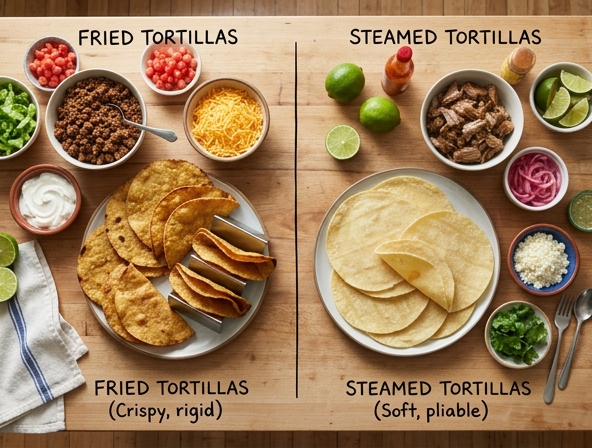
When a tortilla is submerged in hot oil, a rapid transformation occurs. This process is far more than just "cooking"; it is a feat of structural engineering. As the surface temperature rises above 300°F (150°C), the water within the corn or flour tortilla begins to evaporate instantly. This rapid moisture loss creates the iconic crispness we associate with hard-shell tacos or tostadas.
Beyond the simple evaporation of water, frying facilitates the Maillard reaction. This chemical reaction between amino acids and reducing sugars creates the complex, nutty flavors associated with golden-brown crusts. From a structural standpoint, the fat replaces the water, creating a hydrophobic barrier. This barrier is the tortilla's primary defense against the inevitable "sog-factor" that occurs when acidic salsas or fatty meats are added.
- Structural Benefit: Increased rigidity allows for a higher load-bearing capacity for heavy, saucy fillings.
- Sensory Profile: Provides a satisfying, audible "crunch" that contrasts with the softness of the interior ingredients.
- The Risk: Over-frying can lead to brittleness, causing the tortilla to shatter under the pressure of the first bite, leading to "structural failure" on the plate.
The Science of Steaming: Maximizing Elasticity
In contrast to the rigidity of the fried shell, steaming is a process of preservation and hydration. Steaming, often performed via a bamboo basket or simply by placing a damp cloth over a stack of tortillas, relies on the introduction of moisture to the cellulose and starch matrix of the tortilla.
At a molecular level, heat and humidity cause the starch granules within the corn or flour to swell and gelatinize. This process makes the tortilla pliable, elastic, and resistant to tearing. While a fried tortilla acts as a rigid platform, a steamed tortilla acts as a flexible hinge. The goal here is to achieve a state of "bend-without-break."
Steaming is the preferred method for the classic taco de calle (street taco). The high elasticity allows the tortilla to cradle the filling, effectively "hugging" the meat and onions. Because the tortilla is hydrated, it is less prone to cracking when folded, ensuring the integrity of the taco remains intact from the first bite to the last.
The "Sauce Test": A Comparison of Integrity
The true test of a taco's structural integrity is how it handles the "sauce test"-the application of a thin, acidic salsa verde or a rich, fatty braising liquid. This is where the divide between frying and steaming becomes most apparent.
The Fried Tortilla acts as a temporary reservoir. If you consume the taco immediately, the fat-sealed surface prevents the liquid from penetrating the starch matrix. However, if the taco sits for too long, the steam trapped underneath the taco (from the heat of the meat) will eventually soften the underside, causing the structure to lose its snap and become unpleasantly gummy. The "crunch" is ephemeral.
The Steamed Tortilla, conversely, is already in a state of hydration. It is designed to be eaten quickly. While it may absorb more liquid than its fried counterpart, its structural integrity is derived from its inherent tensile strength. It won't shatter, but it may eventually reach a saturation point where it becomes fragile. This is why double-stacking tortillas-a common practice in Mexican street food-is a brilliant structural workaround; the second layer acts as a safety net if the first layer loses its integrity.
Choosing the Right Method for Your Filling
To elevate your taco game, the preparation method must match the filling:
- For Moist, Slow-Cooked Meats (Barbacoa, Birria): Steaming is mandatory. You want the tortilla to be soft enough to fold without resistance, allowing the juices of the meat to meld with the corn flavor.
- For Dry, Spiced Meats (Carne Asada, Al Pastor): A light "plancha" (griddle) sear or a shallow fry is superior. It adds a slight texture that complements the char on the meat without creating the fragility of a deep-fried shell.
- For Textured Toppings (Slaws, Radishes, Pickled Onions): A fried shell offers the best contrast. The rigidity supports the weight of the crunchy vegetables, providing a multifaceted sensory experience.
Conclusion: The Balance of Tradition and Utility
Ultimately, the choice between frying and steaming is a dialogue between the ingredients and the consumer. Frying seeks to conquer the moisture of the filling through lipid-based reinforcement, resulting in a bold, aggressive textural experience. Steaming seeks to harmonize with the filling, prioritizing pliability and the preservation of the tortilla's delicate flavor.
Whether you choose the crisp, golden snap of a deep-fried shell or the soft, yielding warmth of a steamed corn tortilla, remember that your choice defines the taco's journey from your hand to your palate. A master of structural integrity knows that a taco is not just food-it is a functional masterpiece of balanced architecture.
Disclaimer:
The information provided on Eateryn is for general educational and informational purposes only and is not intended as medical, nutritional, or healthcare advice. It should not be used to diagnose, treat, cure, or prevent any disease or medical condition.
Always consult a qualified physician, registered dietitian, or other certified healthcare professional before making changes to your diet, exercise routine, or lifestyle, or regarding any medical questions or concerns you may have. Never disregard or delay seeking professional medical advice because of something you have read on this website.