
Fresh vs Leftover Reheated For Meatloaf - Optimizing Flavor Development Over Time
Many cooks struggle to achieve deep, complex flavors in freshly baked meatloaf. While common methods rely on standard spice blends, true culinary mastery often rests on protein maturation. Leftovers inherently benefit from a chemical "flavor meld," where umami-rich binders like Worcestershire and tomato paste integrate fully into the fibers. However, effective reheating requires precise thermal control to prevent moisture loss. This guide evaluates techniques to replicate this deep flavor profile immediately, optimizing your meatloaf's savory potential.
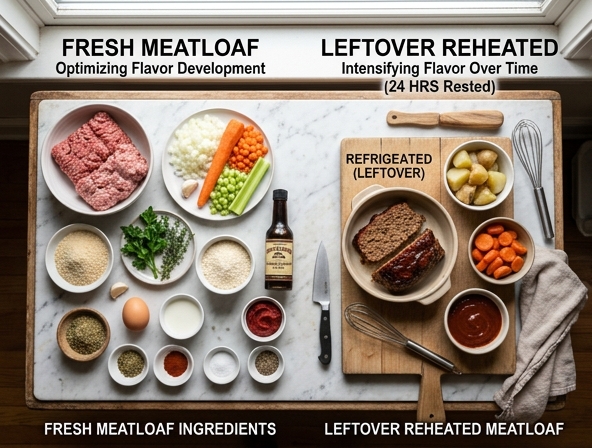
| Feature | Fresh Meatloaf | Leftover Meatloaf | Optimization Goal |
|---|---|---|---|
| Flavor Profile | Lacks deep, complex nuances. | Superior "flavor meld" and umami depth. | Achieve mature flavor instantly. |
| Ingredient Integration | Ingredients remain largely distinct. | Binders fully integrated into protein fibers. | Accelerate ingredient fusion. |
| Core Challenge | Development of savory complexity. | Maintaining moisture during reheating. | Balance flavor depth with hydration. |
| Culinary Focus | Standard spice reliance. | Chemical maturation over time. | Precise thermal control techniques. |
The Meatloaf Paradox: Optimizing Flavor Development Between Fresh and Reheated
In the pantheon of comfort food, few dishes command as much reverence-or spark as much debate-as the humble meatloaf. It is a staple of home kitchens, a canvas for culinary creativity, and, perhaps most interestingly, a dish that often undergoes a fascinating transformation over time. While the aroma of a fresh, piping-hot meatloaf pulling away from the oven is undeniable, seasoned home cooks often whisper a clandestine truth: the second-day slice is frequently superior to the first.
The Culinary Science of "Flavor Melding"
To understand why meatloaf behaves differently after twenty-four hours, we must look at the science of ingredient integration. When meatloaf is first removed from the oven, it is a collection of distinct components: ground proteins, aromatics (onions, celery, garlic), binders (breadcrumbs, eggs), and seasonings. At this stage, the flavors are essentially living side-by-side, but they haven't yet become a unified whole.
Over the course of a night in the refrigerator, several processes occur:
- Sodium Osmosis: Salt, a primary component of any good meatloaf, acts as a vehicle for flavor. During storage, the salt continues to work its way through the muscle fibers of the meat, drawing moisture into the protein structure. This softens the texture and ensures that every bite is seasoned consistently from center to edge.
- Protein Degradation and Emulsification: The cooling process allows the fats rendered during the initial bake to solidify and then re-incorporate into the breadcrumbs and meat fibers. This creates a more cohesive, dense, and "meaty" texture that holds together better than the loose, crumbly structure often found in a fresh, steaming loaf.
- Aromatic Infusion: Essential oils from herbs like thyme, rosemary, and sage, as well as the sugars from onions, continue to diffuse through the fats. In a fresh loaf, you might get a "burst" of an onion piece. In a reheated loaf, the essence of that onion has permeated the entire matrix of the dish.
The Case for the Fresh Experience
However, we should not discount the merits of the "Fresh Bake." The primary advantage of serving meatloaf immediately is the textural contrast. A fresh meatloaf offers a caramelized exterior crust-the result of the Maillard reaction between the sugars in the glaze and the proteins in the meat. This crust provides a satisfying snap that inevitably softens as the meatloaf sits in the refrigerator, absorbing moisture from the interior.
If you are a devotee of the fresh slice, the secret to optimizing flavor without the benefit of time is "resting." Just as a steak requires rest to redistribute juices, a meatloaf needs at least 15 to 20 minutes of sitting before slicing. This allows the internal temperature to stabilize and the juices to thicken, preventing the slice from falling apart on the plate.
The Art of the Reheat
If the science suggests that time improves flavor, why does "leftover meatloaf" sometimes have a bad reputation? It almost always comes down to the reheating method. The microwave is the primary offender here; it causes the proteins to tighten rapidly, squeezing out moisture and leaving the meat dry, while turning the breadcrumb binders into a mushy, unappealing paste.
To capture the flavor-optimized potential of a cold meatloaf, you must approach the reheating process with intentionality:
- The Pan-Sear Method: Slice the cold meatloaf into thick slabs (about 3/4 inch). Heat a heavy-bottomed cast iron skillet with a small amount of oil or butter. Sear the slices until a deep brown, crispy crust forms on both sides. This mimics the Maillard reaction lost during storage and creates an incredible textural contrast between the crispy edges and the tender, flavor-dense center.
- The Low-and-Slow Oven Method: If you prefer to reheat a larger portion, place the slices in a baking dish, add a tablespoon of beef broth or water to the bottom, and cover tightly with foil. Bake at 300°F (150°C) until warmed through. The moisture in the dish prevents the loaf from drying out and encourages the flavors to bloom without overcooking the meat.
Future-Proofing Your Meatloaf
If you know you are making a meatloaf specifically for its "second-day potential," you can adjust your preparation to maximize those results. Use a slightly higher fat content in your meat blend-a mix of 80/20 ground beef, pork, and veal provides enough fat to withstand the storage and reheating process without turning dry. Furthermore, don't be afraid to increase the ratio of aromatics. Finely minced sautéed onions and mushrooms will contribute significantly more depth on day two than they do on day one.
Additionally, consider your binder. Using slightly stale, high-quality sourdough bread instead of standard breadcrumbs provides a heartier structure that survives the refrigeration process better. The larger crumb structure holds onto the juices and fat, preventing the loaf from becoming mealy.
Conclusion: The Best of Both Worlds
The debate between fresh and reheated meatloaf need not be a binary choice. By understanding the science behind flavor maturation, you can leverage both experiences to your advantage. Enjoy the fresh, caramelized crust on night one, and treat the leftovers not as an afterthought, but as a culinary upgrade-a dish whose ingredients have spent the night in quiet conversation, resulting in a more complex, unified, and satisfying meal. Whether sliced cold on a piece of sourdough with a touch of spicy mustard or pan-seared to crispy perfection, the optimized leftover meatloaf is a testament to the idea that, in cooking, patience is the most important ingredient.
Disclaimer:
The information provided on Eateryn is for general educational and informational purposes only and is not intended as medical, nutritional, or healthcare advice. It should not be used to diagnose, treat, cure, or prevent any disease or medical condition.
Always consult a qualified physician, registered dietitian, or other certified healthcare professional before making changes to your diet, exercise routine, or lifestyle, or regarding any medical questions or concerns you may have. Never disregard or delay seeking professional medical advice because of something you have read on this website.