
Fresh Vs. Frozen Meat For Burger - Quality Standards Debated
Fresh Vs. Frozen Meat for Burger Quality Standards
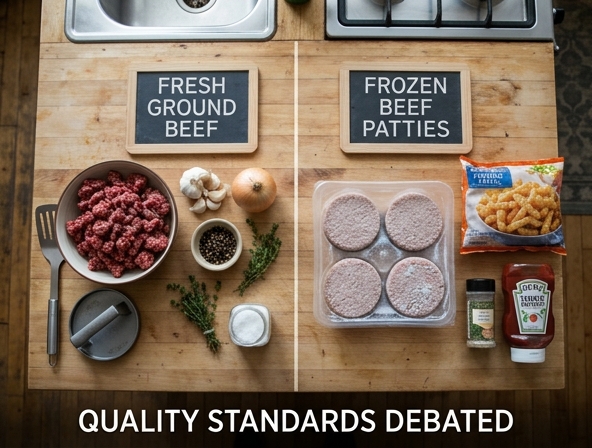
Selecting the optimal patty is a common dilemma for professionals balancing consistency against flavor. While industry standards often prioritize cost-efficient frozen products, the impact on texture remains debated. Fresh grinding offers a superior mouthfeel, providing a distinct competitive edge. Stipulated, however, that rigorous cold-chain management is essential to maintain safety. As seen in top-tier gastropubs using custom brisket blends, quality dictates reputation. This analysis examines the technical variables defining performance.
| Feature | Fresh Meat | Frozen Meat |
|---|---|---|
| Texture/Mouthfeel | Superior quality; provides a distinct competitive edge. | Generally standard; prioritized for consistency. |
| Operational Needs | Requires rigorous cold-chain management for safety. | Cost-efficient and logistically simpler. |
| Market Positioning | Preferred by top-tier gastropubs for premium custom blends. | Commonly used for baseline consistency and cost control. |
| Core Conflict | Higher quality vs. higher maintenance. | Lower cost vs. debated texture quality. |
The Great Burger Debate: Fresh vs. Frozen Meat Quality Standards
The hamburger is arguably the most ubiquitous icon of modern dining. From high-end, chef-driven gastropubs to fast-casual chains and backyard barbecues, the quest for the "perfect" burger is a constant pursuit. Central to this quest is a debate that has raged in professional kitchens and home pantries for decades: should you use fresh or frozen meat?
For years, the industry consensus leaned heavily toward "fresh is best." It was a marketing mantra that suggested frozen meat was synonymous with poor quality, freezer burn, and a lack of care. However, as food science has advanced and supply chain technology has evolved, that binary distinction has become increasingly blurred. To understand which is truly superior, we must look past the marketing and examine the chemistry, the logistics, and the culinary outcomes of both methods.
The Case for Fresh: The Gold Standard of Bloom
When a chef insists on fresh ground beef, they are usually referring to meat that has never undergone a phase change. The primary argument for fresh meat is "bloom"-the process by which the muscle pigment myoglobin reacts with oxygen to create a vibrant, appetizing red color. Fresh meat is generally considered to have superior structural integrity. Because the meat has not been subjected to the formation of ice crystals, the proteins and fats remain intact, providing a specific mouthfeel that many purists argue cannot be replicated.
Furthermore, fresh meat offers the cook complete control over the grind. In a professional kitchen, this means being able to dial in the perfect fat-to-lean ratio, incorporating specific cuts like brisket, short rib, or chuck to achieve a unique flavor profile. The lack of prior processing allows for a loose pack, which is the secret to a juicy, tender burger that doesn't feel compressed or "rubbery."
The Science of Frozen: Challenging the Stigma
The traditional stigma against frozen meat was born in an era of home-freezer technology that was largely inadequate. Slow freezing leads to the formation of large, jagged ice crystals that rupture the cell walls of the muscle fibers. When the meat is thawed, these ruptured cells leak moisture-a process known as "purge." The result is a dry, flavorless patty that loses its fat prematurely during cooking.
However, modern industrial food science has changed the game through a process called "flash freezing" or "blast freezing." By using cryogenic tunnels that drop temperatures to extreme lows in mere seconds, companies can prevent large crystals from forming. Instead, tiny micro-crystals form, preserving the integrity of the cell structure. When thawed correctly, a high-quality flash-frozen burger is often indistinguishable from its fresh counterpart in a blind taste test.
Safety, Consistency, and Logistics
Beyond taste, there is the vital issue of food safety. Pathogens like *E. coli* and *Salmonella* are the primary concerns when dealing with ground meat. Fresh meat has a very short window of safety; the moment it is ground, its surface area increases exponentially, providing a massive playing field for bacterial growth. Maintaining the cold chain from the grinder to the grill is difficult and prone to error.
Frozen meat, conversely, offers a level of safety that is difficult to ignore for high-volume operations. By flash-freezing the patty immediately after the grind, producers can effectively "pause" the clock on bacterial growth. Furthermore, frozen patties provide a level of consistency that is hard to achieve with fresh product. In a chain restaurant environment, where the burger at a location in New York must taste identical to the burger in Los Angeles, the standardized weight, shape, and moisture content of a frozen patty are immense logistical assets.
Culinary Application: How the Choice Changes the Cook
Knowing how to handle your meat is just as important as the quality of the meat itself. If you are working with fresh meat, the priority is to keep it cold until the last possible second. Overworking the meat by forming the patties too firmly will lead to a dense, tough texture. Seasoning should be done right before it hits the heat to prevent the salt from drawing out moisture prematurely.
With frozen patties, the strategy changes. Many professional griddle chefs actually prefer to sear frozen patties directly from the freezer. The temperature differential between the frozen core and the blazing hot surface of the griddle creates a superior crust-the Maillard reaction-before the center is overcooked. This "sear-to-center" gradient is a technique that is hard to pull off with a room-temperature fresh patty, which might overcook on the outside before developing a proper crust.
The Verdict: It Depends on Your Priorities
So, where does the debate settle? It is rarely as simple as "fresh is better than frozen."
- Choose Fresh If: You have access to a high-quality butcher, you value the ability to customize your fat ratios and grind coarseness, and you are cooking for a small group where you can manage the timing effectively.
- Choose Frozen If: You are managing a large-scale operation where food safety and portion consistency are paramount, or if you want the convenience of keeping high-quality ingredients on hand for a last-minute meal without worrying about spoilage.
The ultimate takeaway is that quality is not determined by the temperature at which the meat is stored, but by the quality of the raw input and the precision of the handling process. A poorly handled, low-quality "fresh" patty will almost always lose to a high-quality, flash-frozen patty sourced from a reputable provider. As technology continues to improve, the gap will only narrow further, shifting the focus away from the "fresh vs. frozen" debate and back to what really matters: the quality of the beef, the integrity of the grind, and the skill of the cook at the grill.
Whether you prioritize the artisanal tradition of the butcher's block or the scientific reliability of the modern cold chain, one thing remains certain: the burger is a masterpiece of culinary engineering. By understanding the science behind the storage, you can ensure that your next burger is, regardless of its starting temperature, nothing short of exceptional.
Disclaimer:
The information provided on Eateryn is for general educational and informational purposes only and is not intended as medical, nutritional, or healthcare advice. It should not be used to diagnose, treat, cure, or prevent any disease or medical condition.
Always consult a qualified physician, registered dietitian, or other certified healthcare professional before making changes to your diet, exercise routine, or lifestyle, or regarding any medical questions or concerns you may have. Never disregard or delay seeking professional medical advice because of something you have read on this website.