
Fresh vs Frozen Chicken for Fried Chicken - Impact On Moisture Retention
Chefs often struggle with achieving a juicy, succulent interior while maintaining a crispy crust. While traditional wisdom favors fresh poultry, understanding the nuance of cellular integrity is crucial for consistency. We must stipulate that temperature control during thawing is as vital as the bird's origin. Whether utilizing air-chilled fresh birds or properly thawed IQF cuts, moisture retention remains the ultimate benchmark. This analysis evaluates how these states impact protein structure and final bite quality.
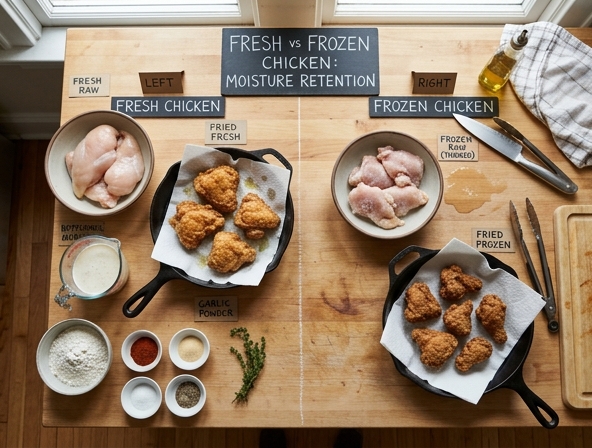
| Aspect | Summary Insight |
|---|---|
| Core Objective | Achieving a perfect balance between a juicy interior and a crispy exterior crust. |
| Chicken Source | Both fresh (air-chilled) and properly thawed IQF (Individually Quick Frozen) cuts can produce high-quality results. |
| Critical Success Factor | Precise temperature control during the thawing process is essential to maintain cellular integrity. |
| Performance Metric | Moisture retention is the definitive benchmark for assessing final bite quality and protein structure. |
The Golden Standard: Moisture Retention in Fried Chicken
The pursuit of the perfect piece of fried chicken-one characterized by a shatteringly crisp, golden-brown crust and a succulent, flavor-packed interior-is a culinary obsession shared by home cooks and professional chefs alike. At the heart of this endeavor lies a singular, critical variable: moisture retention. When a bite of fried chicken feels dry, fibrous, or "chalky," the entire experience collapses, regardless of how well-seasoned the breading might be. A frequently debated topic in culinary circles is whether using fresh chicken or frozen chicken significantly impacts this moisture retention. To understand the outcome, one must look past the skillet and delve into the cellular biology of meat and the thermodynamics of the freezing process.
The Anatomy of Moisture
To understand why chicken dries out, we must first recognize that meat is roughly 75% water. This water is held within the muscle fibers by proteins, primarily actin and myosin, which act as a structural cage. When we cook chicken, these proteins denature and contract, squeezing the water out. If this process is managed poorly, the result is dry meat. When we introduce the variable of freezing, we are essentially altering the structural integrity of that "cage" before the chicken even hits the fryer.
The Physics of Freezing: The "Ice Crystal" Problem
The primary argument against frozen chicken for high-quality frying lies in the physics of crystallization. In professional flash-freezing (cryogenic freezing), temperatures drop so rapidly that the water inside the muscle tissue forms microscopic, uniform ice crystals. These do minimal damage to the cell membranes. However, most domestic or commercial freezers operate at a slower rate. In this slower environment, water molecules have time to migrate together, forming large, jagged, needle-like ice crystals.
These crystals act like internal shrapnel. As they grow, they puncture the delicate cell walls of the chicken muscle. When the chicken is subsequently thawed, these compromised membranes can no longer hold onto the intracellular fluid. This fluid, often referred to as "purge" or "drip loss," leaks out of the meat. When you eventually dredge and fry that piece of chicken, it starts the cooking process already deprived of a significant percentage of its natural moisture. The result is a tighter, drier protein structure that is inherently more difficult to keep juicy.
The Case for Fresh Chicken
Fresh chicken, by definition, has not undergone the rigors of crystal formation. The cell walls remain intact, and the interstitial spaces are still filled with the natural juices intended to keep the meat tender during the intense, dry heat of the deep fryer. Furthermore, fresh chicken possesses a more neutral pH and protein surface that typically adheres better to flour-based batters. The moisture on the surface of fresh chicken-if patted dry properly-creates a perfect "glue" for the breading, ensuring a consistent crust that acts as a moisture-trapping shield during the frying process.
Can Frozen Chicken Be Saved? The Art of Thawing
Does this mean frozen chicken is destined to be dry? Not necessarily. The culinary impact of frozen chicken is heavily dictated by the thawing methodology. If a chef or home cook allows frozen chicken to thaw rapidly-such as in a microwave or under hot running water-they accelerate the loss of moisture. The rapid temperature change causes the meat to expel even more liquid.
The most effective strategy for mitigating the drawbacks of frozen chicken is a slow, controlled thaw in the refrigerator (40°F or below) over 24 to 48 hours. This allows the meat to reabsorb some of the moisture released by the melting ice crystals through osmotic pressure. While it will never be identical to fresh, a slow-thawed bird can produce acceptable results, provided the cook employs additional moisture-management techniques.
Intervention Strategies: Brining as a Moisture Buffer
If you must use frozen chicken, the deficit in moisture retention must be compensated for through external intervention. This is where brining becomes mandatory, not optional. Brining-soaking the chicken in a salt-water solution-works through osmosis. The salt denatures the outer protein strands, allowing the meat to absorb additional water and, crucially, to hold onto that water even when subjected to the high heat of the fryer.
For frozen chicken, an "equilibrium brine" (a precise percentage of salt relative to the weight of the water and chicken) is superior to a simple salt-water soak. By adding buttermilk to the brine, the lactic acid provides a secondary benefit: it gently tenderizes the muscle fibers, effectively softening the tissue that was toughened by the freezing process. This creates a "safety net" for the moisture, ensuring that even if the cellular structure was compromised by ice crystals, the added hydration keeps the meat succulent.
The Frying Process: Crust as a Barrier
The frying process itself acts as a double-edged sword. Frying is a method of dehydration-the hot oil evaporates surface moisture to create a crispy crust. If that crust forms too slowly, moisture escapes from the interior, leading to a dry result. If it forms too quickly, the exterior becomes overly dark while the interior remains undercooked. Regardless of whether the chicken was fresh or frozen, the goal is to create a crust barrier that effectively "seals" the interior. A high-quality batter or breading, applied to dry (but not dehydrated) meat, acts as a thermal insulator, preventing the meat from reaching the extreme temperatures that cause excessive protein contraction.
Conclusion: The Practical Verdict
Ultimately, while science dictates that fresh chicken holds a distinct advantage in terms of cellular integrity and moisture retention, the gap can be significantly narrowed by the skillful cook. Fresh chicken remains the gold standard for high-end fried chicken, offering a superior texture and structural reliability that cannot be perfectly replicated. However, frozen chicken is far from a death sentence for your fried chicken dinner. Through patient, slow thawing and the strategic use of brining to restore lost liquid, the modern cook can successfully navigate the challenges of frozen poultry.
The choice between fresh and frozen often comes down to the balance of convenience versus precision. For the casual weeknight fry-up, frozen chicken-properly prepped-is a perfectly viable option. But for that elusive, soul-satisfying crunch and the perfect "juice-to-crust" ratio that defines the best fried chicken in the world, fresh remains, quite literally, the freshest choice.
Disclaimer:
The information provided on Eateryn is for general educational and informational purposes only and is not intended as medical, nutritional, or healthcare advice. It should not be used to diagnose, treat, cure, or prevent any disease or medical condition.
Always consult a qualified physician, registered dietitian, or other certified healthcare professional before making changes to your diet, exercise routine, or lifestyle, or regarding any medical questions or concerns you may have. Never disregard or delay seeking professional medical advice because of something you have read on this website.