
Fresh Roll vs Stale Roll for Philly Cheesesteak - Ensuring The Best Structural Integrity
Philly Cheesesteak Integrity
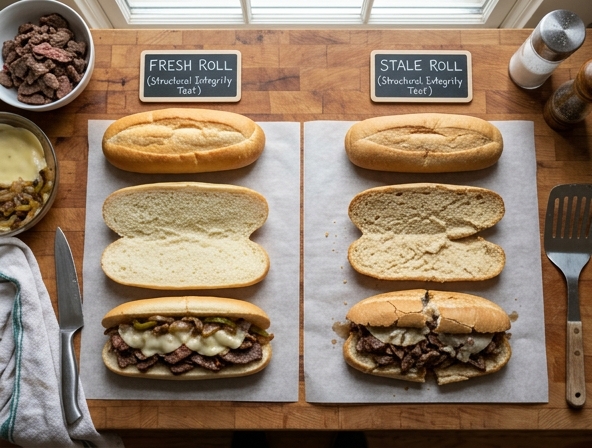
Achieving the perfect Philly cheesesteak is often marred by a disintegrating roll. While many enthusiasts rely on regional staples like Amoroso's, understanding roll hydration is essential for structural integrity. Note that moisture tolerance varies significantly by baking method. Iconic vendors like Dalessandro's prove that precise preparation is the difference between success and failure. The following analysis evaluates fresh versus slightly toasted rolls, ensuring your sandwich retains its composition until the final, satisfying bite.
| Topic | Key Considerations | Primary Takeaway |
|---|---|---|
| Structural Integrity | Preventing sandwich disintegration through proper roll selection. | Moisture management is critical to maintaining the composition of the cheesesteak. |
| Roll Preparation | Comparison between fresh rolls and slightly toasted rolls. | Moisture tolerance depends heavily on the specific baking method used. |
| Industry Standard | References to iconic vendors like Dalessandro's and staples like Amoroso's. | Precise preparation techniques are the determining factor between success and failure. |
Fresh Roll vs. Stale Roll for Philly Cheesesteak: Ensuring The Best Structural Integrity
To the uninitiated, the Philly cheesesteak is a simple assembly: thinly sliced ribeye, melted cheese, and a roll. But for those who have spent time in the kitchens of Philadelphia or North Jersey, the cheesesteak is a complex engineering project. The most critical, and often most debated, component of that project is the roll. Specifically, the battle between the "fresh" roll and the "stale" (or slightly dried) roll is a culinary debate that touches on the very physics of sandwich architecture.
The Anatomy of the Roll: Why Structure Matters
Before we weigh the merits of freshness, we must define the job of the roll. A properly prepared cheesesteak is a heavy, greasy, moisture-laden vessel. You are dealing with rendered beef fat, the liquid gold of melting provolone or Cheez Whiz, and potentially sautéed onions and peppers that have released their own juices. If the roll lacks structural integrity, the "cheesesteak experience" turns into a "cheesesteak catastrophe"-a soggy bottom, a split hinge, and a sandwich that collapses before you reach the halfway point.
The Myth of the Stale Roll
When aficionados suggest using a "stale" roll, they aren't suggesting you dig a rock-hard loaf out of the back of your pantry. Nobody wants a sandwich that tastes like dusty wheat. Instead, what they are advocating for is reduced crumb hydration. A bread roll fresh out of the oven is soft, pillowy, and highly absorbent. In the world of sandwiches, high absorbency is the enemy of structural integrity. When boiling-hot meat hits that fresh, soft crumb, the bread immediately absorbs the grease and moisture. Within thirty seconds, the structural fibers of the bread weaken, leading to the dreaded "hinge blowout."
A roll that has been allowed to sit out-or one that is a day old-has had time for the surface moisture to evaporate. The crumb becomes tighter and more resilient. It acts less like a sponge and more like a barrier. This is the secret to the legendary cheesesteaks of South Philly: the bread is designed to hold the payload, not drink it.
The Science of the Crumb
Understanding the difference requires looking at the gluten network. In a very fresh roll, the protein structure is relaxed and tender. When it encounters heat and fat, it softens further. A slightly "aged" roll has a "tug." This resistance-the effort required to chew through the roll-is essential. It provides a tactile satisfaction that offsets the melt-in-your-mouth texture of the ribeye. If both the meat and the bread are soft, the eating experience becomes monotonous. You need the contrast of a resilient, chewy roll to balance the velvet texture of the steak and cheese.
The "Toasting" Compromise: Achieving Integrity Without Staling
If you don't have the patience to let your rolls sit out, you can simulate the structural integrity of a "stale" roll through proper toasting technique. This is how many high-volume sandwich shops maintain excellence.
- The Griddle Sear: By applying the cut side of the roll to the hot griddle-often with a light coating of rendered beef fat-you are essentially creating a hydrophobic barrier. This toasted surface prevents the juices from soaking into the heart of the roll.
- The "Steam-Seal": Some chefs argue that a quick toast followed by a brief wrap in foil creates a "steam-sealed" environment. The heat from the meat gently softens the interior of the bread while the toasted exterior remains crisp, effectively locking in the moisture without allowing it to compromise the structural fibers.
Selecting the Right Roll: The Amoroso Standard
It is impossible to discuss this topic without mentioning the gold standard: the Amoroso-style roll. These rolls are specifically engineered for the cheesesteak. They are characterized by a long, slender shape, a semi-firm crust, and a crumb that is dense enough to hold up under pressure but light enough to not feel like eating a baguette. They are not artisanal, crusty sourdough loaves; they are industrial-grade bread designed for utility. If you are using a crusty Italian loaf or a soft, supermarket-style brioche bun, you have already lost the battle. The former will shred the roof of your mouth, and the latter will dissolve into mush.
The Verdict: Is Stale Better?
If we define "stale" as dry, brittle, and unpalatable, then no-stale is never better. But if we define "stale" as "having lower moisture content and increased surface tension," then yes, it is the superior choice for a cheesesteak.
The goal is to find the "Goldilocks" state of the roll. You want the roll to be just dry enough that it won't yield to the grease, but fresh enough that it still possesses a pleasant, yeasty flavor. For the home cook, the best practice is to purchase your rolls early, keep them in a cool, dry place, and never keep them in a sealed plastic bag. Letting them breathe for a few hours before the assembly will do wonders for your final product.
Final Considerations for Assembly
Even with the perfect roll, how you handle it matters. Never cut the roll all the way through; keep the "hinge" intact to provide a natural wall. Avoid over-loading the sandwich with excessive amounts of watery vegetables like raw onions, which can compromise the integrity faster than the meat itself. If you incorporate your onions into the meat during the final minute of the sear, they will caramelize and lose their excess water, ensuring they add flavor without adding structural weakness.
Ultimately, the cheesesteak is a marvel of balance. By respecting the bread-by treating it as a functional component rather than an afterthought-you elevate the sandwich from a messy pile of ingredients into the iconic, handheld masterpiece it was meant to be. Don't be afraid of a roll that feels a little firm to the touch; your structural integrity depends on it.
Disclaimer:
The information provided on Eateryn is for general educational and informational purposes only and is not intended as medical, nutritional, or healthcare advice. It should not be used to diagnose, treat, cure, or prevent any disease or medical condition.
Always consult a qualified physician, registered dietitian, or other certified healthcare professional before making changes to your diet, exercise routine, or lifestyle, or regarding any medical questions or concerns you may have. Never disregard or delay seeking professional medical advice because of something you have read on this website.