
Fresh Mozzarella vs Low-Moisture Mozzarella for Pizza - Achieving the Ideal Melt
Mastering the Mozzarella Melt
Many home bakers struggle with soggy centers or rubbery, burnt cheese. While choosing between fresh balls in brine and low-moisture blocks is common, understanding the chemistry of moisture content is critical to achieving a professional melt.
Fresh mozzarella suits high-heat Neapolitan pies, while low-moisture variants offer better structure for NY-style bakes. This analysis clarifies how to align your cheese selection with your specific oven environment for the perfect slice.
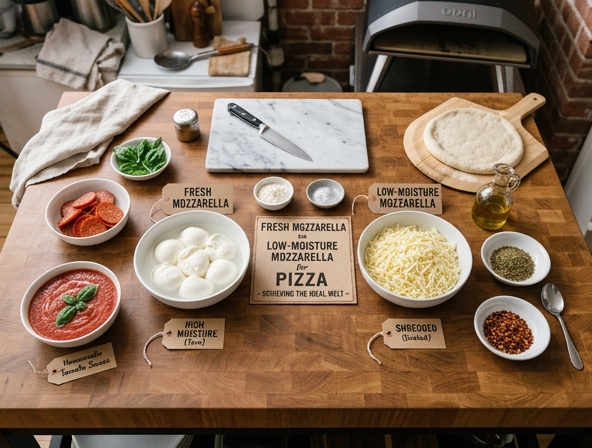
| Cheese Type | Ideal Pizza Style | Key Characteristics | Recommended Environment |
|---|---|---|---|
| Fresh Mozzarella | Neapolitan | High moisture content; creamy texture. | High-heat ovens. |
| Low-Moisture Mozzarella | New York Style | Provides structural integrity; melts evenly without excess water. | Standard home ovens / longer bakes. |
Fresh Mozzarella vs. Low-Moisture Mozzarella for Pizza: Achieving the Ideal Melt
For the home pizza maker, few choices are as consequential-or as hotly debated-as the selection of mozzarella. When you slide that pizza into the oven, you are looking for that elusive, perfect pull: a golden-brown, bubbling landscape that tastes as good as it looks. But why does one pizza end up with a puddle of water in the center, while another comes out looking like an uninspired, plastic-like sheet of rubber? The secret lies in the moisture content of the cheese.
Understanding the Contenders
To master the pizza melt, we must first distinguish between the two primary categories of mozzarella found in supermarkets and delis: Fresh Mozzarella and Low-Moisture Mozzarella.
1. Fresh Mozzarella
Fresh mozzarella, often sold packed in water, whey, or brine, is the traditional choice for authentic Neapolitan-style pizzas. It is typically made from cow's milk (fior di latte) or water buffalo milk (mozzarella di bufala). Because it is not aged, it retains a high percentage of water, resulting in a soft, delicate, and porcelain-white curd. Its flavor is subtle, milky, and slightly tangy.
2. Low-Moisture Mozzarella
Low-moisture mozzarella is the workhorse of the pizza world. It has been cooked, stretched, and often slightly aged to reduce its water content and increase its shelf life. It is firmer, saltier, and more concentrated in flavor. This is the cheese you typically find in blocks at the grocery store or shredded in bags. It is engineered to melt predictably and withstand the dry heat of standard home ovens.
The Science of the Melt: Water vs. Fat
The fundamental difference in how these cheeses behave on a pizza comes down to the balance between water evaporation and the melting point of milk fats.
When you place fresh mozzarella on a pizza, that water has to go somewhere. In a blistering, 900°F (480°C) wood-fired oven, the pizza cooks in roughly 90 seconds. The water in the cheese evaporates rapidly, keeping the cheese cool enough that it doesn't break down into an oily mess before the crust is done. In a standard home oven-which usually caps out between 450°F and 550°F-it takes much longer for the pizza to cook. During this extended time, the fresh mozzarella releases so much moisture that it floods the pizza, leaving you with a “soupy” center and a soggy, undercooked crust.
Conversely, low-moisture mozzarella contains a higher ratio of fat-to-water. As it heats up, the fat melts and creates that desirable, stretchy “stringiness.” Because there is significantly less water content, it doesn't release steam as it cooks, allowing the cheese to brown (the Maillard reaction) rather than simply boil.
Choosing the Right Cheese for Your Setup
Your oven is the deciding factor. If you are baking in a high-temperature outdoor pizza oven, fresh mozzarella is the gold standard. It provides the authentic, creamy experience that defines a classic Margherita.
If, however, you are using a conventional home oven, low-moisture mozzarella is your best friend. It provides the structural integrity needed to hold up against the longer bake times required by domestic appliances. The cheese will melt into a cohesive, golden layer without turning the pizza into a soup bowl.
Pro Tips for the Best Results
Regardless of which cheese you choose, technique is paramount. Here is how to get the most out of your mozzarella:
- If using Fresh Mozzarella at home: Slice it into small pieces and let it drain on a paper towel or a wire rack for at least 30 to 60 minutes before using. This removes excess surface moisture. Furthermore, consider adding the cheese in the last few minutes of baking to prevent it from over-saturating the dough.
- If using Low-Moisture Mozzarella: Avoid the pre-shredded bags. Pre-shredded cheese is coated in potato starch or cellulose to prevent clumping, which prevents the cheese from melting into a smooth, uniform layer. Always buy a solid block and shred it yourself using a box grater for a superior melt.
- The Blend Method: Many professional pizza makers use a 50/50 blend. They combine the creamy, delicate flavor of fresh mozzarella with the reliable melting and browning properties of low-moisture mozzarella. This hybrid approach gives you the best of both worlds.
Conclusion
The "ideal melt" is not an accident; it is the result of matching your ingredients to your equipment. Fresh mozzarella is a masterpiece of texture that demands high-heat environments to shine, while low-moisture mozzarella is a reliable, high-fat powerhouse perfect for the standard home kitchen. By controlling the moisture, managing your shred, and understanding the constraints of your oven, you can move away from the dreaded soupy pizza and toward a pie with that perfect, golden, restaurant-quality stretch.
Next time you prepare your dough, take a moment to consider the cheese. Whether you prioritize the milky, rustic charm of fresh curd or the decadent, gooey stretch of a low-moisture block, your pizza will be better for the thoughtful choice.
Disclaimer:
The information provided on Eateryn is for general educational and informational purposes only and is not intended as medical, nutritional, or healthcare advice. It should not be used to diagnose, treat, cure, or prevent any disease or medical condition.
Always consult a qualified physician, registered dietitian, or other certified healthcare professional before making changes to your diet, exercise routine, or lifestyle, or regarding any medical questions or concerns you may have. Never disregard or delay seeking professional medical advice because of something you have read on this website.