
Extra Virgin Olive Oil vs Butter for Pizza - Enhancing the Crust Texture
Achieving a consistent, professional-grade pizza crust often feels elusive for home bakers. While standard recipes typically rely on basic vegetable oils, discerning pizza makers now weigh the merits of extra virgin olive oil against butter. Each fat provides distinct advantages in moisture retention and crumb elasticity, effectively transforming dough performance. Note that precise hydration adjustments are essential for success. For example, olive oil excels in thin-crust styles, while butter creates luxurious, tender structures. This article compares their unique contributions.
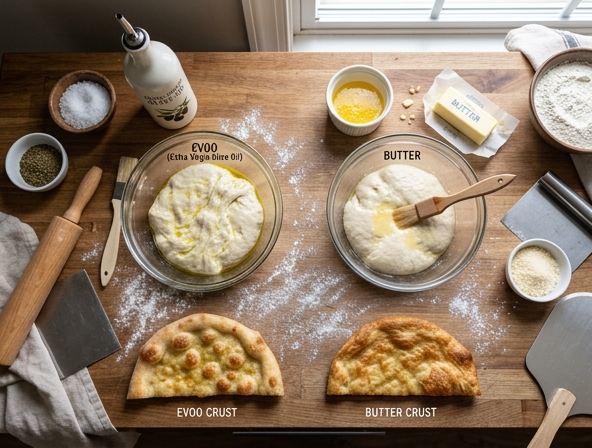
| Fat Type | Best Use Case | Crust Texture/Result | Key Characteristic |
|---|---|---|---|
| Extra Virgin Olive Oil | Thin-crust pizza styles | Improved crumb elasticity | Excellent moisture retention |
| Butter | Luxurious, artisan crusts | Tender and rich structure | Softens the dough architecture |
Extra Virgin Olive Oil vs. Butter for Pizza: Enhancing the Crust Texture
In the world of pizza making, the dough is the canvas, and the fat is the brushstroke that determines the final masterpiece. Whether you are aiming for a razor-thin Roman crust or a pillowy, deep-dish Detroit-style pie, the choice of fat is not merely a matter of flavor-it is a fundamental structural decision. While Extra Virgin Olive Oil (EVOO) has long been the gold standard for Mediterranean-style pies, butter has carved out its own niche in modern, indulgent pizza styles. Understanding how these two fats interact with flour, yeast, and heat is the secret to elevating your crust from "homemade" to "artisan."
The Science of Fat in Pizza Dough
To understand the difference between EVOO and butter, we must first look at the role of fat in dough. Fat is a "shortening" agent. By coating the glutenin and gliadin proteins in the flour, fat prevents them from forming long, tight, elastic chains. This leads to a more tender crumb. Without fat, pizza dough tends to be chewy and tough; with fat, it becomes supple, easier to stretch, and carries a more delicate bite.
However, fats do more than just shorten gluten. They also provide moisture, aid in browning (the Maillard reaction), and contribute to the "mouthfeel" of the crust. Because EVOO and butter have different chemical compositions-oil being 100% fat and butter being a mixture of fat, water, and milk solids-they affect these processes in distinctly different ways.
Extra Virgin Olive Oil: The Mediterranean Standard
EVOO is the quintessential fat for pizza. Its impact on the crust is subtle yet profound. Because it remains liquid at room temperature and is composed entirely of fat, it acts as a very efficient lubricant for the dough structure.
- Structural Impact: EVOO helps create a crust that is crispy on the exterior but retains a slight chew in the center. It allows for a more "elastic" stretch, which is ideal for tossing dough by hand.
- Flavor Profile: High-quality EVOO imparts a subtle, fruity, and slightly grassy note to the crust. This aroma pairs exceptionally well with tomato-based sauces and fresh basil, effectively tying the components of the pizza together.
- Crispiness: Because olive oil doesn't contain the water found in butter, it encourages a crispier, shatter-like crust. It doesn't soften the dough as much as dairy fats, making it the preferred choice for thin-crust, high-heat bakes like Neapolitan or New York styles.
Butter: The Secret to Decadence
While less traditional in Italian-American pizzerias, butter is the secret weapon for thicker, more bread-like crusts. Butter is roughly 80-82% fat, with the remainder being water and milk solids (proteins and sugars).
- Tenderness and Crumb: The water content in butter creates a small amount of steam during the bake, which helps to puff the dough. The milk solids, meanwhile, contribute to a richer, biscuit-like crumb structure. This makes butter an excellent choice for Pan-style, Detroit-style, or Focaccia-based pizzas.
- Browning and Flavor: The milk solids in butter are "flavor bombs." Under high heat, these sugars and proteins caramelize quickly, leading to a deep golden-brown color and a nutty, savory flavor profile.
- Texture: A crust made with butter will be significantly softer and more "pillowy." If you are aiming for a crust that you can practically eat on its own like a dinner roll, butter is your best friend.
The Texture Comparison: Crunch vs. Softness
When choosing between the two, consider the intended "bite" of your pizza. EVOO-based doughs tend to hold their own against heavy toppings without becoming soggy, provided the crust is thin enough. The oil acts as a barrier, preventing the sauce from penetrating the crumb too deeply.
Butter, conversely, creates a more porous, bread-like structure. If you are baking a deep-dish pizza, butter provides the necessary "lift" and richness to support a heavy layer of cheese and thick sauce. However, because butter has a lower smoke point than high-quality olive oil, it can sometimes be risky to use in extremely high-heat wood-fired ovens (800°F+), where the milk solids might burn before the crust is fully cooked through.
Application: When to Use Which?
Use Extra Virgin Olive Oil when:
- You are crafting a classic thin-crust pizza (Neapolitan, New York).
- You want the dough to have a light, crispy exterior.
- You are cooking at very high temperatures where smoke points matter.
- You want a clean, classic flavor that highlights the quality of your flour and toppings.
Use Butter when:
- You are making a heavy-duty pan pizza, such as Detroit, Sicilian, or Chicago deep-dish.
- You want a "brioche-like" crust that is soft, tender, and rich.
- You are baking at moderate temperatures (under 500°F/260°C) where the milk solids can toast perfectly without burning.
- You want to impress guests with a crust that feels more like a gourmet pastry.
The "Hybrid" Approach: Can You Use Both?
For the experimental pizzaiolo, there is a middle ground. Some recipes call for a blend-a small amount of butter added to the dough for tenderness, with a brush of olive oil on the crust before baking for that golden shine and crispy finish. This hybrid approach gives you the best of both worlds: the rich, complex flavor of butter within the crumb, and the reliable, crispy, aromatic profile of olive oil on the surface.
Conclusion
Choosing between EVOO and butter isn't about finding the "right" answer; it's about matching your fat to your vision. If you crave the crisp, clean crunch of a traditional pizzeria crust, lean into the Mediterranean tradition with a high-quality Extra Virgin Olive Oil. If you are chasing a decadent, bread-forward experience that challenges the conventions of what a pizza crust can be, butter will provide the structure and indulgence you need. Ultimately, both fats are powerful tools that, when used intentionally, transform simple flour and water into something truly remarkable.
Disclaimer:
The information provided on Eateryn is for general educational and informational purposes only and is not intended as medical, nutritional, or healthcare advice. It should not be used to diagnose, treat, cure, or prevent any disease or medical condition.
Always consult a qualified physician, registered dietitian, or other certified healthcare professional before making changes to your diet, exercise routine, or lifestyle, or regarding any medical questions or concerns you may have. Never disregard or delay seeking professional medical advice because of something you have read on this website.