
Electric vs Wood-Fired Ovens for Pizza - Determining Your Best Cooking Method
Achieving professional-grade crust consistency often feels like a struggle between authenticity and operational efficiency. While wood-fired ovens remain the industry gold standard, advanced electric alternatives are narrowing the performance gap. Both methods offer unique advantages for heat management and output scaling. However, success hinges on aligning your kitchen's logistical constraints with specific thermal requirements. From Marra Forni's artisan builds to high-performance electric decks, we will now analyze the technical variables to determine your optimal cooking method.
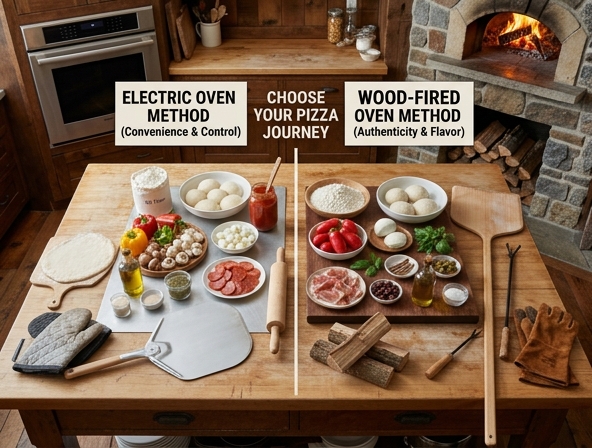
| Feature | Wood-Fired Ovens | Electric Ovens |
|---|---|---|
| Market Status | Industry gold standard for authenticity. | Modern, high-performance alternatives closing the gap. |
| Performance | Known for unique crust texture and traditional heat profiles. | Offers superior heat management and consistent results. |
| Operational Scaling | More complex to manage for high-volume output. | Highly efficient for scaling and operational consistency. |
| Decision Factor | Prioritizes artisanal tradition and legacy flavor. | Prioritizes kitchen logistics and technical thermal control. |
The Great Pizza Debate: Electric vs. Wood-Fired Ovens
For the home enthusiast and the aspiring pizzaiolo alike, the quest for the perfect crust is a journey that often ends in the same central conflict: the choice of oven. Should you embrace the primal, flickering flames of a wood-fired hearth, or lean into the clinical, repeatable precision of a modern electric pizza oven? As the artisanal pizza movement continues to explode in popularity, the gap between these two technologies has narrowed, yet the philosophical and practical differences remain vast.
The Romantic Allure of Wood-Fired Ovens
There is an undeniable magic to cooking with wood. For many, the wood-fired oven is the ultimate culinary statement-a piece of history repurposed for the backyard. The primary advantage of a wood-fired oven is the intense, radiant heat and the unique flavor profile it imparts. When wood burns, it releases moisture and aromatic compounds that interact with the pizza crust, adding a subtle, smoky complexity that is impossible to replicate perfectly through electricity alone.
Beyond flavor, there is the texture. A high-performing wood-fired oven can reach temperatures exceeding 900°F (480°C). At this heat, a properly fermented Neapolitan dough undergoes "leopard spotting"-those beautiful, charred bubbles that signify a crust that is crispy on the outside yet airy and soft on the inside. This requires a rapid, high-intensity bake that typically finishes in 60 to 90 seconds. It is a spectacle, a skill, and a sensory experience that defines the traditional Italian pizza craft.
The Precision Revolution: Electric Pizza Ovens
For decades, electric pizza ovens were dismissed as mere "toasters." However, the last five years have seen a massive technological leap. Modern high-end electric ovens, equipped with sophisticated heating elements and reflective materials, can now mimic the thermal environment of a brick oven with incredible accuracy. The main advantage here is consistency.
With an electric oven, you are not wrestling with humidity, log quality, or fire management. You set the thermostat, wait for the oven to soak, and every pizza that enters comes out under the exact same conditions. For the home cook who wants to focus on perfecting their dough recipe rather than learning how to maintain a rolling flame, electric is a game-changer. Furthermore, electric ovens are infinitely more practical for indoor use, requiring no ventilation chimneys or large outdoor footprints, making them accessible to apartment dwellers and those in climates where outdoor cooking is seasonal.
Critical Factors for Your Decision
1. Temperature Management
Wood-fired ovens require a "soak time"-the duration needed for the floor and dome of the oven to absorb enough heat to cook efficiently. This process can take anywhere from 45 minutes to two hours. If your fire management is poor, your oven floor will be cold while the dome is hot, leading to burnt toppings and a raw bottom. Electric ovens remove this variable entirely, providing even heat distribution from the start, often reaching target temperatures in less than 20 minutes.
2. The Flavor Profile
Is the "wood-fired flavor" real? While some critics argue that at 900°F the pizza bakes so fast that smoke absorption is minimal, the presence of wood vapor (which contains small amounts of moisture and particulates) does leave a signature. It is an earthy, slightly charred sweetness. If you are a purist chasing the quintessential Neapolitan experience, the wood-fired oven is the only path that gets you 100% of the way there.
3. Maintenance and Logistics
Wood-fired ovens demand work. You need a supply of seasoned hardwood, a place to store it, and the time to clean out ashes after every session. It is a commitment. Electric ovens are essentially "plug and play." They require little to no maintenance beyond basic cleaning of the pizza stone, making them a more realistic option for weekday dinners and spur-of-the-moment cravings.
Determining Your Best Cooking Method
Deciding between the two depends entirely on your goals as a pizza maker.
- Choose Wood-Fired if: You view pizza making as a weekend ritual or a social hobby. You enjoy the meditative act of tending a fire, you have the outdoor space, and your primary goal is to replicate the authentic, rustic experience of a traditional pizzeria. You are willing to endure a steep learning curve in exchange for the aesthetic and flavor rewards.
- Choose Electric if: You are an obsessive "tinkerer" who wants to isolate variables to perfect your hydration and fermentation techniques. You prioritize ease of use, indoor convenience, and consistency. You want the ability to bake a high-quality pizza on a Tuesday night without the hassle of fire management.
Conclusion
The divide between electric and wood-fired is no longer about which oven is "better"-it is about which oven fits your lifestyle. We live in a golden age of home pizza making. Whether you choose the ancient, primal dance of fire or the modern, calculated efficiency of digital thermal control, the ultimate success rests on your dough. A mediocre dough will taste average in a $5,000 wood-fired oven, but a masterful, cold-fermented dough will shine in even the most modest electric unit.
Start by identifying what you value more: the experience of the process, or the reliability of the result. Once you answer that, you will know exactly which oven belongs in your kitchen. Happy baking.
Disclaimer:
The information provided on Eateryn is for general educational and informational purposes only and is not intended as medical, nutritional, or healthcare advice. It should not be used to diagnose, treat, cure, or prevent any disease or medical condition.
Always consult a qualified physician, registered dietitian, or other certified healthcare professional before making changes to your diet, exercise routine, or lifestyle, or regarding any medical questions or concerns you may have. Never disregard or delay seeking professional medical advice because of something you have read on this website.