
Egg Whites vs Whole Eggs for Pancakes - Getting Fluffier Results
Many home cooks struggle with dense, flat pancakes that lack the expected height. While standard recipes rely on whole eggs for stability, this approach frequently compromises aeration. Utilizing whipped egg whites provides the structural integrity necessary for superior fluffiness. Please note that this technique demands careful folding to prevent deflation, a method frequently employed by professional pastry chefs to achieve impeccable results. This guide compares both approaches to help you master the perfect pancake.
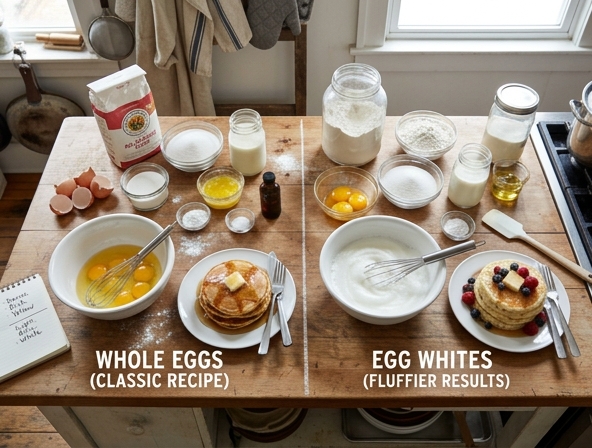
| Approach | Primary Benefit | Key Consideration |
|---|---|---|
| Whole Eggs | Provides essential structural stability to the batter. | Often results in denser, flatter pancakes with less aeration. |
| Whipped Egg Whites | Creates superior fluffiness and height. | Requires professional "folding" technique to prevent air deflation. |
The Great Pancake Debate: Egg Whites vs. Whole Eggs for Fluffier Results
Every home cook knows the disappointment of the "flat pancake." You follow a recipe, the batter looks perfect, but when you pour it onto the griddle, you end up with a dense, chewy disc rather than the cloud-like, towering stack you see in magazines. While many factors influence pancake texture-baking powder, flour type, and resting time-the most critical variable often lies in how you handle the eggs.
Is it better to use whole eggs, or should you be separating them to whip the whites into a frenzy? To master the fluffiest pancakes of your life, you need to understand the chemistry of the egg and how it dictates the structure of your breakfast.
The Science of Structure: Why Eggs Matter
Eggs act as the structural backbone of a pancake. They provide two distinct components that behave very differently during the cooking process: the yolk and the white.
- The Yolk: Composed largely of fats, proteins, and emulsifiers (like lecithin). While the yolk provides a rich, custardy flavor and a tender crumb, the fats within the yolk can actually hinder the development of the air bubbles that make a pancake rise.
- The White (Albumen): Composed mostly of water and proteins. When agitated (whipped), these proteins uncoil and trap air bubbles, creating a foam. This foam is essentially a scaffold for heat to build upon.
The Case for Whole Eggs: The "Everyday" Approach
Using whole eggs is the standard method for most pancake recipes. It is convenient, fast, and results in a reliable, homestyle pancake. When you whisk a whole egg into your batter, the yolk acts as an emulsifier, binding the flour's proteins and the liquid ingredients together. This creates a cohesive batter that is easy to handle and produces a moist, slightly rich flavor.
However, the trade-off is height. Because the yolk's fat interrupts the protein network, whole-egg pancakes rely almost entirely on chemical leaveners (like baking powder and baking soda) to provide lift. If your leaveners are old or your batter is over-mixed, the result will be heavy.
The "Cloud" Method: The Secret of Whipped Egg Whites
If your goal is maximum fluffiness-the kind of pancake that stands an inch tall-you must embrace the "meringue" method. By separating the eggs and whipping the whites separately, you are essentially pre-loading the batter with air.
How to Execute the Whipped White Technique:
- Separate Carefully: Ensure no yolk ends up in the white. Even a speck of fat can prevent the whites from reaching "soft peak" consistency.
- Whip the Whites: Using a clean bowl and whisk, beat the egg whites until they reach soft, billowing peaks. You aren't looking for the stiff, dry peaks used for pavlova; you want something that looks like shaving cream and holds its shape when you lift the whisk.
- Prepare the Base: Mix your dry ingredients with the yolks, milk, and melted butter. This base will look quite thick and dense-that is expected.
- The "Fold": This is the most crucial step. Gently fold about one-third of the whipped whites into the thick base to lighten it. Then, add the rest of the whites, folding them in with a spatula using a circular motion. Do not overmix. You want to keep those delicate air bubbles intact.
Why the Folding Method Wins
When these bubbles hit the hot griddle, the air trapped inside the whites expands rapidly. Simultaneously, the heat sets the protein structure around these expanding bubbles, locking in the height before the pancake has a chance to collapse. The result is an incredibly light, airy texture that is physically impossible to achieve with a standard whole-egg mix.
Practical Considerations: Is it Worth the Effort?
While the whipped-white method yields superior results, it does require more equipment and time. Here are a few things to consider before you commit:
1. The Time Factor
If you are cooking for a crowd on a Tuesday morning, the effort of separating and whipping eggs might be overkill. However, for a slow Sunday brunch, the ritual of whipping whites adds a sense of accomplishment to the meal.
2. The Texture Difference
Whipped-white pancakes have a "soufflé" quality. They are delicate and melt-in-the-mouth. Whole-egg pancakes are sturdier and provide a bit more "chew." Neither is "wrong," but they offer different dining experiences.
3. Heat Management
Regardless of which method you choose, heat control is vital. A griddle that is too hot will burn the outside of the pancake before the inside is set, causing your "fluffy" whites to collapse. Keep your heat at medium-low and be patient. Wait for the surface to show bubbles that stay open rather than immediately filling back in-this indicates the structure is strong enough to flip.
Final Verdict
If you have ever wondered why your pancakes never look quite as light as the ones in cafes, the culprit is likely the whole-egg method. By switching to the whipped-white technique, you transition from "basic breakfast" to "culinary art."
For everyday cooking, sticking with whole eggs is perfectly acceptable. But when you want to impress or simply treat yourself to the ultimate pancake experience, separate your eggs, whip those whites to soft peaks, and fold them in with love. Your breakfast stack will never be the same again.
Disclaimer:
The information provided on Eateryn is for general educational and informational purposes only and is not intended as medical, nutritional, or healthcare advice. It should not be used to diagnose, treat, cure, or prevent any disease or medical condition.
Always consult a qualified physician, registered dietitian, or other certified healthcare professional before making changes to your diet, exercise routine, or lifestyle, or regarding any medical questions or concerns you may have. Never disregard or delay seeking professional medical advice because of something you have read on this website.