
Egg Wash vs Milk Wash for Apple Pie - Determining the Ideal Golden Gloss
Perfecting Your Apple Pie Finish
Achieving a professional golden-brown crust often proves elusive for home bakers. While many rely on standard milk washes or plain butter, these methods frequently fall short of achieving a true, high-gloss finish. Choosing the correct wash elevates your pastry from amateur to artisan. Note that egg-based applications prioritize rich coloration, whereas milk washes yield a subtle, matte texture. We will evaluate how these proteins alter your crust's final appearance and bite, guiding your path to perfection.
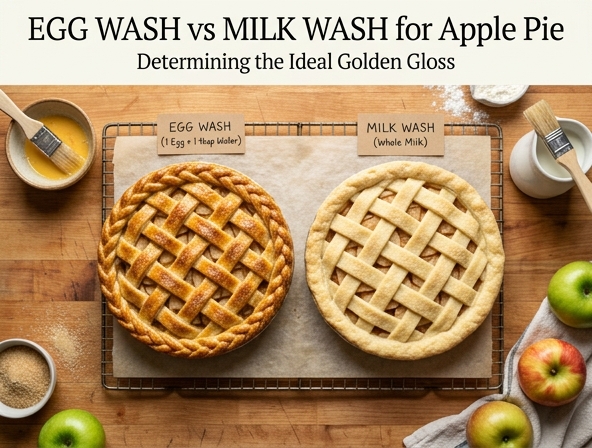
| Wash Type | Visual Finish | Resulting Aesthetic |
|---|---|---|
| Egg Wash | High-gloss | Rich coloration; professional, artisan appearance. |
| Milk Wash | Matte | Subtle finish; understated, home-style appearance. |
Egg Wash vs. Milk Wash for Apple Pie: Determining the Ideal Golden Gloss
There are few things in the culinary world more satisfying than pulling a perfectly baked apple pie from the oven. The scent of cinnamon and caramelized apples fills the room, but the true mark of a masterful pie lies in its appearance. That mahogany-to-golden crust-shining, crisp, and inviting-is the final frontier of home baking. While the dough recipe and the fruit filling are critical, the finishing touch is almost always determined by a thin layer of liquid brushed onto the crust before it hits the heat. The two most frequent contenders for this job are the egg wash and the milk wash. But which one produces the superior result?
The Science Behind the Shine
To understand why these washes work, we must look at the science of browning. Both eggs and milk are rich in proteins and sugars, which are the primary ingredients for the Maillard reaction-a chemical reaction between amino acids and reducing sugars that gives browned food its distinctive flavor and color. When you brush a pastry with a protein-rich liquid, you are essentially setting the stage for a concentrated browning effect on the surface of the dough, creating a shell that is not only visually appealing but structurally sound.
The Egg Wash: The Gold Standard for Brilliance
If you are aiming for a professional-grade, high-gloss shine, the egg wash is your best friend. Eggs are composed of proteins (which provide structure and shine) and fats (which provide richness and color). Because egg yolks are significantly richer in fat than egg whites, they produce a deeper, more golden hue.
Variations of the Egg Wash
- Whole Egg: Provides a balanced, standard golden-brown color with a decent shine.
- Egg Yolk + Water/Cream: This creates a deep, intense golden-orange color. It is ideal for pies where you want a luxurious, "bakery-style" look.
- Egg White + Water: This creates a thinner, brittle, and highly glassy shine. It is less about color and more about the mirror-like finish.
The Verdict: Egg wash is the undisputed champion of aesthetics. It creates a crisp, protective barrier that keeps the crust from getting soggy while highlighting the fluted edges and lattice work of your pie. However, it can be tricky; if the wash pools in the crevices of the crust, it can cook into an unsightly, rubbery texture. It also requires a steady hand and a light touch to avoid "burning" the edges if your pie requires a long bake time.
The Milk Wash: The Soft, Matte Glow
Sometimes, a high-gloss sheen can feel a bit too artificial for a rustic, homemade pie. This is where the milk or cream wash comes into play. Milk, especially whole milk or heavy cream, contains lactose (sugar) and proteins. When the oven heat hits these ingredients, they caramelize beautifully, albeit more subtly than eggs.
A milk wash produces a softer, matte finish. It doesn't provide that "mirror" quality, but it does encourage a gentle, uniform browning that feels cozy and nostalgic. If you are aiming for a classic American-style apple pie that looks like it came from your grandmother's kitchen rather than a high-end patisserie, milk or cream is the superior choice.
The Advantages of Dairy Washes
- Forgiveness: Milk washes don't pool or become rubbery. They soak into the dough, leading to an even, consistent golden color.
- Texture: Because dairy fats help soften the proteins in the flour, a milk wash can contribute to a slightly more tender crust surface compared to the sometimes-brittle shell created by an egg white wash.
- Ease: It is remarkably low-maintenance. There is no risk of the "sulfurous" scent that some people associate with excessive egg wash, and there is no need to worry about whisking away clumps.
Comparison Table: Which One Should You Choose?
| Feature | Egg Wash | Milk/Cream Wash |
|---|---|---|
| Visual Finish | High-gloss, brilliant shine | Soft, matte, rustic glow |
| Color Intensity | Deep gold to dark brown | Light, golden-tan |
| Application Skill | High (needs thin, even coats) | Low (hard to mess up) |
| Best For | Intricate lattice, decorative crusts | Rustic, everyday apple pies |
Pro-Tips for the Perfect Finish
Regardless of which wash you choose, application is key. Always use a high-quality pastry brush, preferably one with natural or silicone bristles that won't leave streaks. For an even more professional touch, consider these two techniques:
- The Chilling Method: Brush your pie with the wash, then place the pie back in the refrigerator for 10-15 minutes before baking. This chills the fat in the crust and sets the wash, ensuring the glaze doesn't run and creating a much crisper finished product.
- The Sugar Sprinkle: If you are using an egg wash, sprinkling a bit of coarse turbinado sugar on top immediately after applying the wash creates a beautiful, sparkling texture that contrasts perfectly with the golden sheen.
- Avoid the Edges: If your pie takes 50-60 minutes to bake, the edges will likely get too dark. Apply your wash, but consider covering the crimped edges with a foil shield for the first half of the bake to ensure the crust browns evenly without burning.
Conclusion: The Choice is Yours
Ultimately, the choice between egg wash and milk wash comes down to the personality of your pie. If you have spent hours weaving a complex lattice crust, you want that work to shine; choose an egg yolk-based wash. If you have made a classic double-crust pie and want a comforting, inviting aesthetic, a simple brush of heavy cream will serve you perfectly.
There is no "wrong" way to finish an apple pie. Whether you choose the high-sheen drama of the egg or the soft, rustic embrace of the cream, the most important part of the process is the care you put into the bake. Experiment with both, observe how your oven handles each finish, and you will eventually find the signature look that makes your apple pie the one everyone asks for at the holidays.
Disclaimer:
The information provided on Eateryn is for general educational and informational purposes only and is not intended as medical, nutritional, or healthcare advice. It should not be used to diagnose, treat, cure, or prevent any disease or medical condition.
Always consult a qualified physician, registered dietitian, or other certified healthcare professional before making changes to your diet, exercise routine, or lifestyle, or regarding any medical questions or concerns you may have. Never disregard or delay seeking professional medical advice because of something you have read on this website.